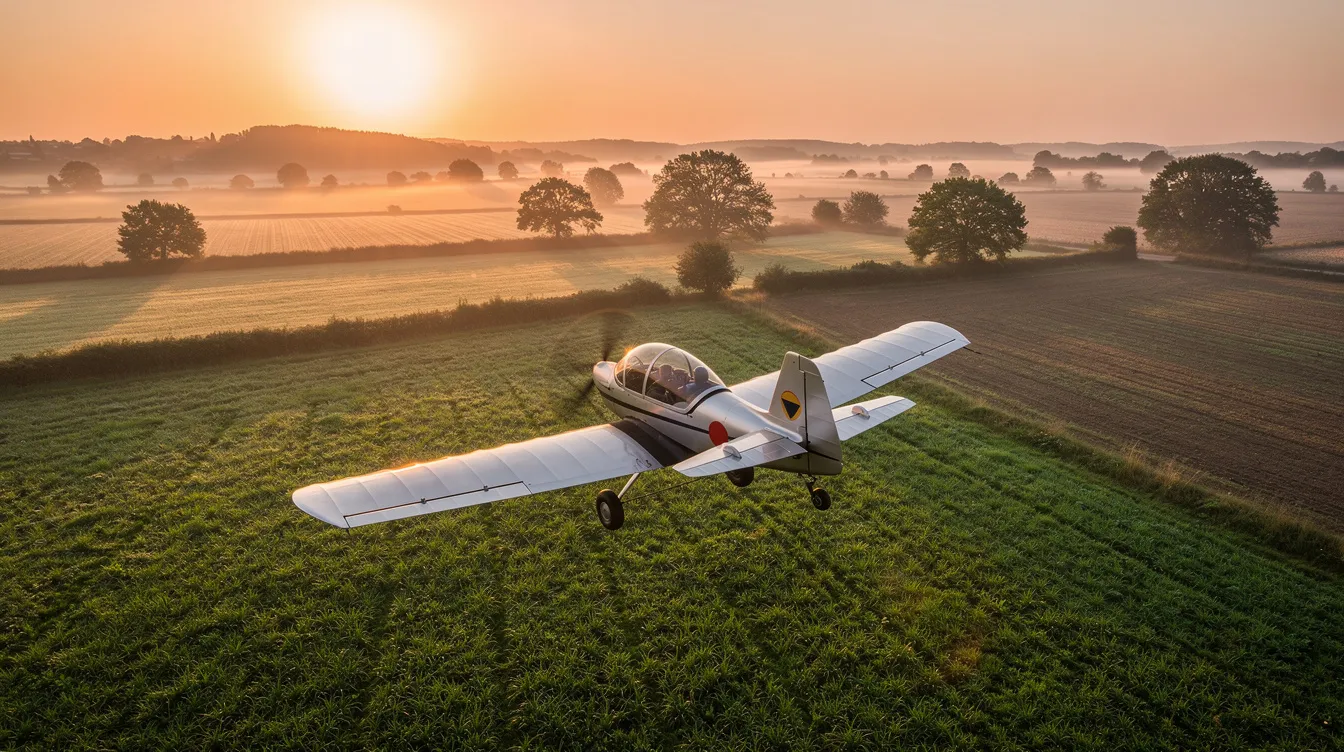
Ultralight aircraft and private jets occupy opposite ends of the aviation spectrum, yet both deliver something commercial airlines cannot: control over where, when, and how you fly. This guide breaks down the regulations, aircraft types, costs, and mission profiles of ultralight flights under FAA Part 103, then explains how BlackJet Jet Cards serve as the natural complement when range, speed, and passenger capacity matter.
Ultra Light Flights vs Private Jets: Two Very Different Kinds of Freedom
Picture a calm Saturday morning in rural Florida. A pilot straps into a single seat, open-cockpit, tube-and-fabric ultralight on a grass strip, lifts off at sunrise, and cruises at 50 mph over swamp and farmland for 40 minutes. Total distance: about 30 miles. Total cost: a few gallons of fuel. That same morning, a business traveler departs Teterboro on a BlackJet light jet, lands at Opa-Locka two and a half hours later, and reaches downtown Miami with door-to-door time of roughly four to five hours compared to seven or eight hours on a commercial itinerary.
Ultralight flights involve very small minimalist aircraft meant for single-person recreation and sport. They emphasize recreational flying over transportation capability, offering a visceral and intimate flying experience compared to heavier planes. Many aviation enthusiasts own an ultralight aircraft for the same reason they might own a sailboat or personal watercraft: the pleasure is in the doing, not in the arriving.
Private jet access through programs like BlackJet serves a different purpose. It moves multiple passengers with luggage across 1,000+ nautical miles in pressurized cabins, with professional crews, real-time support, and carbon-neutral operations. Both forms of flight appeal to individuals who value autonomy. One delivers hands-on microlight aviation at low altitude; the other delivers strategic mobility when time, weather, or distance demands exceed what any powered parachute, fixed-wing ultralight, or light sport aircraft can provide.
The sections that follow cover Part 103 regulations, aircraft types, pilot training paths, medical exam exemptions, ownership costs, and how BlackJet Jet Cards extend the freedom of flight into a different dimension of capability, especially when you understand the different types of private jets for every traveler.
What Qualifies as an Ultralight Aircraft Under FAA Part 103?
Ultralights in the United States are governed by FAA Part 103 (14 CFR Part 103), a federal aviation regulation that defines "ultralight vehicles" with strict numerical limits:
Max empty weight: 254 pounds for a powered ultralight (unpowered ultralights have a weight limit of 155 pounds)
Fuel capacity: no more than 5 U.S. gallons (approximately 19 liters)
Maximum level flight speed: 55 knots (about 63 mph) at full power
Stall speed: power-off stall speed not exceeding 24 knots (approximately 28 mph)
A true ultralight under Part 103 must be a single-seat aircraft used for recreation or sport only. It cannot carry passengers or operate for hire. Ultralight aircraft do not require registration or airworthiness certificates. They receive no N-number, no formal inspection cycle, and no FAA-issued paperwork, which is why they are often considered among the best cheap light aircraft for budget-friendly flying adventures.
This contrasts with light sport aircraft, which permit two seats, allow max takeoff weights around 1,320 lbs for landplanes, and require both aircraft registration and a sport pilot certificate. European microlight aviation uses different rules entirely; national standards in France, the UK, and Germany allow heavier two-seat machines with different speed and weight thresholds than U.S. Part 103.
Types of Ultralight Aircraft: From Fixed Wing to Powered Parachutes
Ultralight aviation covers several distinct aircraft types, and the experience of flight changes with each one. Ultralight aircraft can include fixed-wing, weight-shift trikes, and powered paragliders, among other configurations.
Fixed-wing ultralights resemble miniature airplanes with high or low wings, tube-and-fabric construction, and traditional flight controls including ailerons and rudder pedals. Fixed wing ultralights cruise at 45 to 65 mph, and the ride is raw: wind noise fills the cockpit, and you feel every bump of thermal activity. These are closest in feel to "flying a real airplane" at a fraction of the weight.
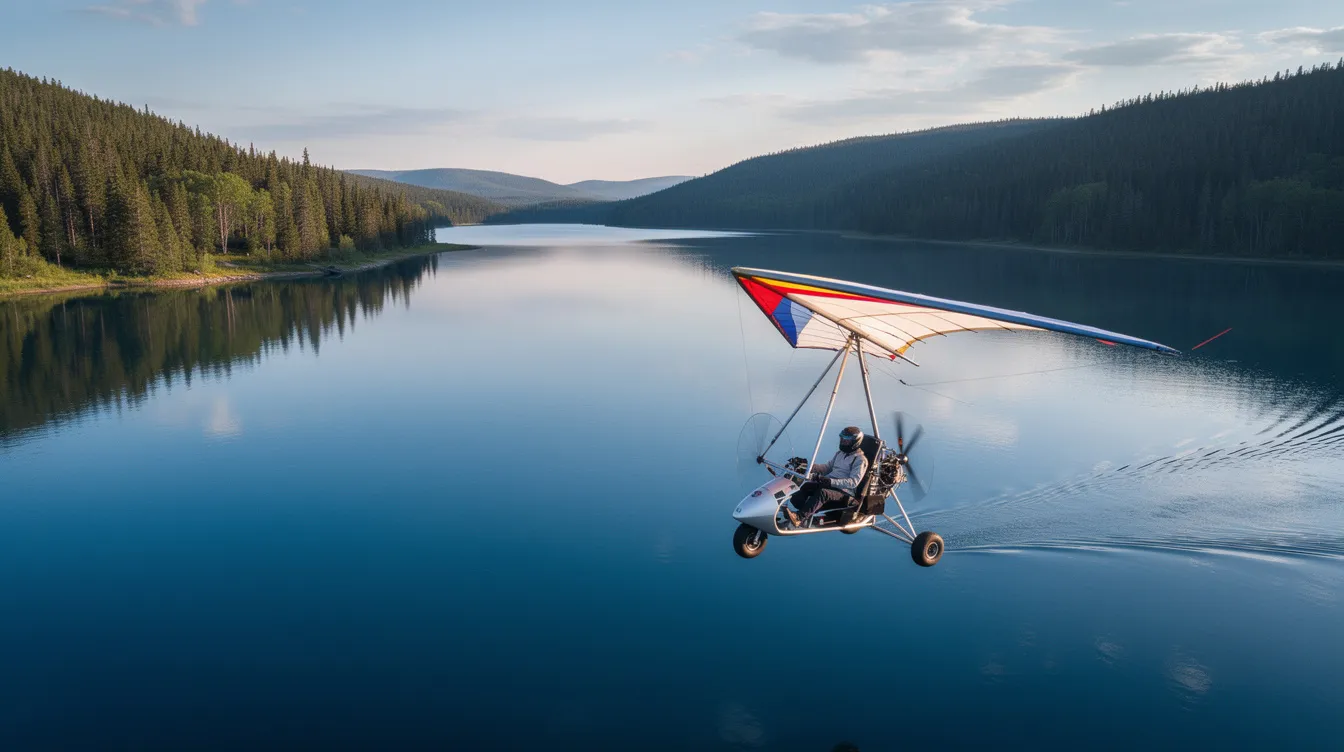
Weight shift trikes suspend a pilot and engine beneath a large delta wing. Instead of a yoke or stick, the pilot uses a control bar to shift body weight relative to the wing, changing pitch and roll. Cruise speed is lower than fixed-wing designs, and trikes are more sensitive to turbulence.
Powered parachutes use a large fabric canopy inflated by forward motion, with a motorized carriage beneath. Powered parachutes fly at very low speeds of 25 to 35 mph, making them ideal for aerial photography and low-level sightseeing rather than cross-country travel, and they sit at the extreme low end of cost compared to the cheapest private aircraft options in general aviation.
Ultralight rotorcraft (gyrocopters) exist, though many exceed the 254-pound max empty weight or the 55-knot speed limit. Most are registered as experimental amateur-built or LSA rather than true Part 103 ultralights.
Amphibious ultralights add floats for water operations, but the extra weight of floats and hull structure frequently pushes the aircraft beyond the Part 103 empty weight ceiling. Many end up classified as LSA or experimental.
Typical UUltralightFlight Profile: Range, Speed, and Weather Limits
A typical ultralight flight begins at dawn. The pilot pre-flights a fixed-wing ultralight at a private grass strip, checks fuel and controls, warms the engine, and lifts off by 7:00 AM into still air. Cruise altitude sits between 1,000 and 2,000 feet AGL. The flight lasts 30 to 60 minutes, covering perhaps 25 to 35 miles from the departure point before returning. Fuel consumed: 2 to 4 gallons.
With a 5-gallon fuel capacity, maximum range on a fixed-wing ultralight sits around 60 to 120 miles in calm conditions, depending on engine efficiency and cruise speed. The practical operational radius for most ultralight pilots is 20 to 50 miles, because reserves and headwinds eat into theoretical maximums. Powered parachutes, with their higher drag, cover less ground.
Ultralight flights are limited to daylight hours only. Part 103 also prohibits flying over congested areas and requires good visibility. Ultralight pilots should avoid flying in poor visibility, strong winds, and convective weather. There is no instrument flight rules (IFR) capability; all flying happens under visual flight rules in uncontrolled airspace or controlled airspace only with prior authorization.
For comparison: a private jet cruises at 400 to 500+ knots in a pressurized cabin above weather systems, flies at night, and covers 1,500+ nautical miles nonstop. The ultralight and the jet solve fundamentally different problems, and understanding whether chartering a private jet is worth it — and how much it costs to rent a private jet for a given route — depends on your time sensitivity and mission profile.
FAA Part 103 Rules: Freedom Without a Pilot License
Ultralight aviation offers fewer regulatory requirements compared to traditional aviation. Under Part 103, the FAA imposes no requirement for:
A pilot's license or private pilot license
A medical certificate or medical exam
Aircraft registration
An airworthiness certificate
A written test or formal flight exam
Under Part 103, ultralight aircraft fly without a pilot license. The regulation contains no formal minimum age, though instructors and insurance providers often set practical limits.
The core operating constraints are:
Single seat; ultralight aircraft are restricted to a single occupant
Recreational or sport use only; no commercial operations
Daylight hours only (night flying requires specific lighting and authorization)
Cannot fly over congested areas or assembled crowds
Must obtain prior authorization to enter controlled airspace (Class B, C, or D)
This freedom comes with a trade-off. Beyond broader aviation regulations, there is no FAA safety net. No inspector checks the aircraft. No examiner certifies the pilot. Part 103 places full responsibility on the individual, which is why voluntary training and mentorship matter so much.
By contrast, private jet operators fly under FAR Part 135, which requires professional crews, recurrent training, maintenance programs, and regulatory audits. Different rules govern different segments of aviation, and the gap between Part 103 self-regulation and Part 135 professional oversight is wide, which helps explain why private jets are considered highly safe and able to cruise far higher than airlines, a topic explored in detail when asking how high a private jet flies compared to commercial flights.
When Ultralights Become Light Sport Aircraft or Experimental
A builder adds a second seat to a design for training purposes. The aircraft now fails Part 103 compliance. The moment your aircraft has two seats, an empty weight above 254 lbs, fuel capacity over 5 gallons, or a top speed above 55 knots at full power, it must be treated under a different regulatory category, similar to many of the cheapest new plane options for aspiring pilots that intentionally sit outside strict Part 103 limits.
Light sport aircraft allow up to two seats with a maximum takeoff weight of approximately 1,320 lbs on land (1,430 lbs for seaplanes). They require aircraft registration, and the pilot needs a sport pilot certificate. A traditional medical certificate is often not required; a valid U.S. driver's license can substitute if the pilot has no disqualifying conditions.
Experimental amateur-built aircraft carry an N-number, require an airworthiness certificate, demand logbook entries, and follow maintenance schedules. Many two-seat "ultralight trainers" fall into this category. They are not true ultralights under Part 103 and are governed by different FAA parts.
The decision tree is straightforward: if the aircraft meets Part 103 weight, speed, fuel, and single-seat criteria, and the pilot flies only for recreation, Part 103 applies. If the aircraft exceeds any limit, or the pilot wants to carry passengers or fly commercially, the machine needs registration, the pilot needs a license, and different rules apply — just as travelers stepping into private aviation often begin by exploring BlackJet premium private jet cards and programs.
Safety in Ultralight Flights: Training, Maintenance, and Judgment
Ultralight aircraft are not inherently dangerous, but they have less structural margin, no redundant systems, and no crew beyond the pilot. Training is essential for all ultralight pilots despite no formal requirements from the FAA, just as thoughtful aircraft selection and maintenance are essential when evaluating the best cheapest planes for every budget.
Flight training includes emergency procedures and weather judgment, pattern work, airspace awareness, and forced-landing practice. Most instructors recommend dual instruction in a two-seat LSA or experimental trainer before the student solos a Part 103 machine.
Pre-flight inspections should check control linkages and fuel integrity, along with:
Wing fabric or skin condition
Cable tension and bracing
Propeller for nicks and cracks
Engine mounts and fasteners
Fuel lines and connections
Accident data shows that 32% of fatal ultralight accidents involve airframe failure, often traced to poor construction, deferred maintenance, or modifications that compromise structural integrity. Loss-of-control events during takeoff and landing account for another large share, while on the private aviation side, many safety-conscious travelers look at the cheapest private jet options that still meet rigorous maintenance and oversight standards.
Organizations like the Experimental Aircraft Association (EAA) and local ultralight clubs provide mentorship programs, fly-ins, and safety education that reduce risk by building decision-making habits.
Private jet operations occupy the opposite end of the safety spectrum. BlackJet's safety standards rely on Part 135 operators, third-party audits (ARGUS, IS-BAO), professionally trained crews, and recurrent training cycles, similar to the rigor applied to the best long-range private jets for sale that fly intercontinental missions. The gap between self-regulated ultralight safety and professionally audited jet operations is one of the clearest reasons different missions call for different aircraft.
Amphibious Ultralights and Water Operations
Amphibious ultralights can land on water and land, appealing to lakefront property owners and adventure-oriented pilots in regions like Minnesota's lake country or coastal Florida, and they often sit alongside other affordable options for aspiring pilots who want maximum access to nearby lakes and backcountry strips.
The challenge is weight. Floats and hull structures add pounds that frequently push empty weight above 254 lbs, moving the aircraft out of Part 103 and into LSA or experimental categories. Performance trade-offs include lower useful load, reduced climb rate, increased drag (slower cruise speed), and more complex proper maintenance around saltwater corrosion and water exposure.
Pilots flying amphibious ultralights should carry life jackets, complete water egress training, and respect local rules around marine traffic and noise. Flying from water also means dealing with waves, current, and debris on the surface, while larger groups may prefer the best private jet for 20 passengers when traveling to the same waterfront destinations.
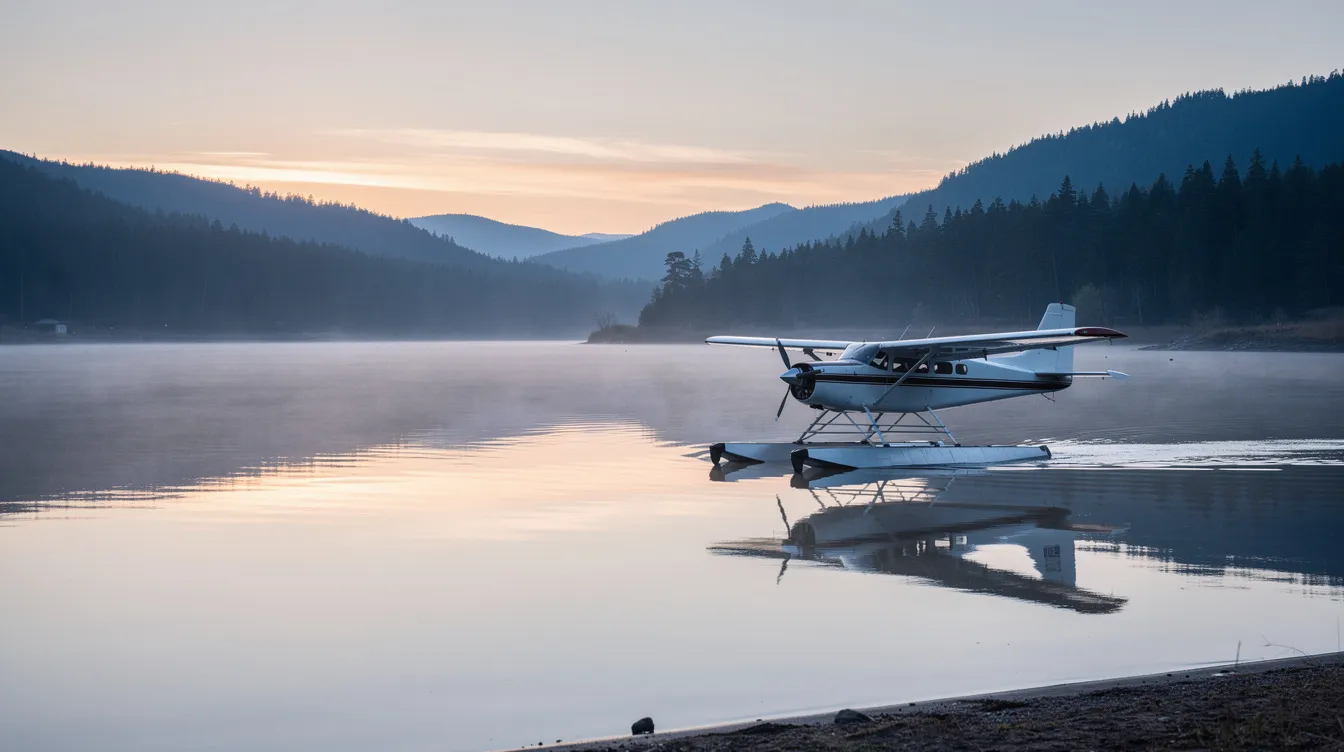
A sunrise flight on an inland lake in an amphibious ultralight offers mirror-still reflections, a quiet takeoff roll, and intimate connection with the water. That same lake region, accessed via a BlackJet super-midsize jet landing at a nearby FBO, delivers a different experience: enclosed cabin, luggage capacity, crew services, and onward ground transport to the yacht harbor, similar to the considerations you weigh when evaluating how much a 12-seater private jet costs.
Getting Started: First Flights, Pilot Training, and Costs
Most new ultralight pilots start with discovery flights at local ultralight schools or EAA chapters, typically using two-seat trainers (LSA or experimental) for initial instruction, before some eventually graduate into the best options for the cheapest plane that can handle longer hops.
Training progression:
Ground school covering airspace, weather, aerodynamics, and Part 103 rules
Dual instruction in a two-seat trainer (10 to 15 hours for most students)
First solo in a single-seat Part 103 machine
Continued practice with instructor oversight
Ultralight pilots typically require 10 to 25 hours of training to reach basic proficiency. At roughly $200/hour for flight time and $75/hour for ground instruction, total training costs run $3,750 to $8,750 depending on region and aircraft type. No medical exam or written test is mandated under Part 103, but studying aerodynamics and weather patterns before flying solo is not optional in practice. For many, this is a stepping stone into the best cheap light aircraft for budget-friendly flying adventures or even exploring the cheapest private aircraft and other top affordable private planes for budding aviators that can handle longer regional trips.
Ownership costs:
Used ultralights cost between $6,000 and $20,000, putting them well below many of the best cheapest planes in certified categories
Kit-built ultralights range from $20,000 to $40,000
Operating costs include fuel at 2 to 3 gallons per hour
Hangar fees for ultralights range from $200 to $500 per month
Insurance varies; optional under Part 103 but advisable
Ultralight flying is one of the most affordable aviation options. Costs of ultralight aircraft are lower than traditional aircraft by an order of magnitude, which is why many aviation enthusiasts enter powered flight through this path before later learning how to buy a seat on a private jet or how much it costs to charter a small plane for longer-distance or all-weather travel.
Choosing the Best Ultralight Aircraft for Your Mission
The best ultralight aircraft depends on how and where you plan to fly ultralights, not on a generic ranking list. Mission-based selection means evaluating:
Empty weight margin: how much room under the 254-lb ceiling for safety gear or personal equipment
Useful load: weight available for the pilot after accounting for 5 gallons of fuel (~30 lbs)
Cruise speed: fixed-wing designs offer 45 to 65 mph; powered parachutes sit at 25 to 35 mph
Field requirements: many ultralights need only a few hundred feet of grass; some need more
Open vs. enclosed cockpit: affects comfort, weather tolerance, and noise
Folding wings: some designs feature folding wings for trailer transport and storage without a hangar
If you want a one seat cross-country machine capable of covering 80+ miles on a calm morning, a fixed-wing ultralight with efficient cruise speed near the 55-knot limit is the logical choice. If your mission is slow scenic flights and aerial photography near home, a powered parachute at 30 mph delivers unmatched views and gentle landings.
If you anticipate wanting a second seat for training or carrying a passenger, plan for light sport aircraft or experimental from the start. Many ultralights that initially seem like two-seaters are actually LSA or experimental aircraft with different certification requirements, and at that point it can be worth comparing them with other cheap private aircraft options or the best small private aircraft for every need that might better fit your mission.
Attend ultralight fly-ins, EAA AirVenture, or local club events to see aircraft in person, talk with owners, and book demo flights before committing.
From Ultralight to Private Jet: Stepping Up in Capability
The progression is natural. Many pilots start in single-seat ultralights, move to lightweight aircraft in the LSA category, advance to certified piston planes, and eventually discover private jet charter or Jet Cards for longer distances, evaluating the best jet cards for frequent flyers once their travel volume justifies it.
Skills transfer directly. Weather awareness learned in an open-cockpit ultralight makes you a more informed private aviation customer. Checklist discipline from pre-flighting a tube-and-fabric machine carries into how you evaluate operators and safety standards.
The capability gap is straightforward: an ultralight carries one pilot on short hops in good weather; a light jet carries four to eight passengers with luggage at 400+ knots, in instrument conditions, at night, across 1,200 to 1,800 nautical miles, which is where small private jets for luxury travel become the natural upgrade.
A concrete example: an entrepreneur flies her own ultralight aircraft on weekend mornings near Dallas for 50-mile scenic loops over ranch country. When business or family travel requires moving four people with ski gear to Aspen, she uses a BlackJet Jet Card. Midsize cabin, two-hour flight from Dallas Love Field, professional crew, climate-controlled cabin, and a clear understanding of jet card cost and private jet membership pricing. The ultralight and the jet are complements, not competitors, and frequent flyers may even explore unlimited private jet flight memberships once their travel cadence justifies a subscription-style model.
How BlackJet Jet Cards Elevate Travel Beyond Ultralight Flights
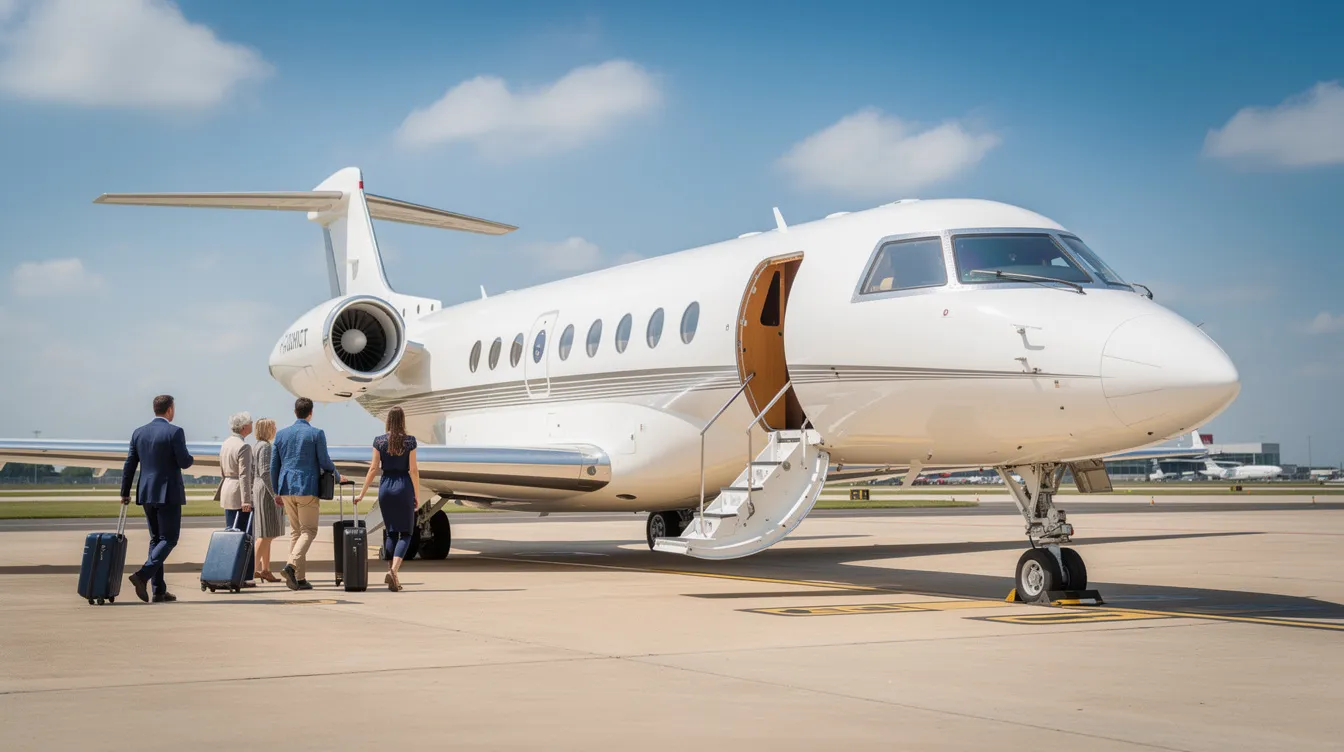
BlackJet offers Jet Card programs in 25-hour and 50-hour tiers, providing prepaid access to light, midsize, super-midsize, and large cabin jets. Each card locks in predictable hourly rates and priority access, replacing per-trip negotiations with a single membership contract, much like the dedicated BlackJet 25+ Hour Jet Card that extends these benefits further and makes it easier to understand your jet card cost per hour.
Where ultralight flying is hands-on and analog, BlackJet is turn-key and digital. The mobile booking platform delivers instant quotes, aircraft category selection, and trip tracking. Professional crews handle flight planning, weather routing, and ground coordination. Client support operates 24/7.
Safety: BlackJet's network operates under FAR Part 135 with operators meeting BlackJet Certified standards, including third-party safety audits. Crews complete recurrent training on defined schedules.
Sustainability: Since 2021, every BlackJet Jet Card flight has been carbon and emissions-neutral at no additional cost to members. Offsets cover not only CO₂ but also water vapor, aerosols, and nitrous oxide, applying 300% offsets to address the full climate impact of aviation. Sustainable aviation fuel (SAF) is used where available.
Cost benchmarks: Light jet hourly rates typically run $3,500 to $5,000; midsize jets $5,000 to $7,500; large cabin jets $9,000 to $14,000+. A one-way light jet flight from New York to Miami costs roughly $17,000 to $24,000 depending on aircraft and timing — figures that matter even more when you evaluate the 100-hour jet card cost for frequent travel.
Mission Planning: When to Choose an Ultralight, When to Choose BlackJet
Choose an ultralight for:
Local evening sightseeing within 20 to 50 miles of home
Aerial photography from low altitude on calm days
Pattern practice and skill-building from a rural grass strip
The pure joy of open-air flight on your own schedule
Choose BlackJet for:
Multi-city business trips covering 500+ miles in a single day
Family travel to resorts (Teterboro to Palm Beach, for example), or even large-group movements where understanding charter plane 100-passenger cost becomes critical
Reaching secondary airports closer to vacation homes in underserved regions, or coordinating major events where you might compare options like the best private jet for 50 passengers
Night flights, adverse weather, or any mission requiring IFR capability
Ultralights cannot solve problems that require heavier planes: pressurized cabins, de-icing, multi-passenger seating, or long-range fuel capacity. BlackJet solves all of these with professional flight planning, large baggage capacity, and access to thousands of airports, and its programs follow clear jet card pricing structures so travelers can budget with confidence while still accessing many of the top 10 best private jets in the world through charter.
If you fly ultralights for the love of air and open sky, BlackJet extends that love of flight into affordable access to strategic, time-sensitive mobility. Explore BlackJet Jet Card options as the natural step when range, comfort, and time demand more than any ultralight can deliver, especially once you understand how private jet charter pricing works across different aircraft sizes.
Frequently Asked Questions About Ultralight Flights and Private Jet Access
The following questions cover the most common topics around ultralight regulations, pilot license requirements, and how private jet services fit into the broader aviation picture.
Do I need a pilot license to fly an ultralight aircraft? No. Under FAA Part 103, no pilot license is required for ultralight flying. The regulation imposes no written test, flight exam, or certification. That said, proper training through an instructor or EAA chapter is strongly recommended before flying solo.
Is a medical exam required for ultralight flying? No formal medical certificate is required under Part 103. Pilots are expected to self-assess fitness. For light sport aircraft or certified planes beyond Part 103, a medical exam or valid driver's license substitute is required depending on the certificate type.
Can I use an ultralight aircraft for commuting to work? Practically, no. The single-seat limitation, 55-knot top speed, 5-gallon fuel capacity, daylight-only restriction, and weather sensitivity make ultralights unsuitable for reliable daily transportation. They are one of the purest ways to experience recreational flight, not a commuting tool.
How do ultralight ownership costs compare to private jet charter or Jet Cards? Ultralight aircraft cost $6,000 to $40,000 to acquire and pennies per mile to operate. A single one-way private jet flight on a light jet (New York to Miami, for example) costs $17,000 to $24,000. The missions are fundamentally different: local recreation vs. long-range, multi-passenger travel with professional crews — especially once you consider 50-hour jet card cost and value for frequent flyers or compare programs in a NetJets jet card cost overview.
How does BlackJet ensure safety and sustainability on private jet flights? BlackJet partners with operators certified under FAR Part 135 and audited by third-party standards including ARGUS. Every Jet Card flight since 2021 has been carbon- and emissions neutral by default, with 300% offsets covering CO₂, water vapor, and aerosols, at no extra cost to members, which is a key factor when deciding if chartering a private jet is worth it for your travel needs and when reviewing any broader private jet price list of options.
Enjoying the Full Spectrum of Flight with Confidence and Control
Part 103 ultralight aircraft offer one of the most accessible paths into powered flight. No license required, no registration, no medical exam. For many aviation enthusiasts, ultralight flying is where the love of air begins.
But the spectrum of flight extends far beyond a grass strip and a 254-pound machine. Light sport aircraft, certified general aviation planes, and private jets each serve different missions under different rules. The pilot who files a pre-flight checklist on a tube-and-fabric ultralight at dawn and books a BlackJet Jet Card flight to a board meeting that afternoon understands both ends of that spectrum and the trade-offs described in most jet card cost guides.
Whether your next flight is an open-cockpit dawn patrol at 50 mph or a carbon-neutral transcontinental journey in a pressurized cabin, control over your time and experience is what makes private aviation worth pursuing. Discover how BlackJet Jet Card membership can reshape the way you travel, and speak with an advisor about tailoring access to your lifestyle.


 Sign up with google
 Sign up with Apple