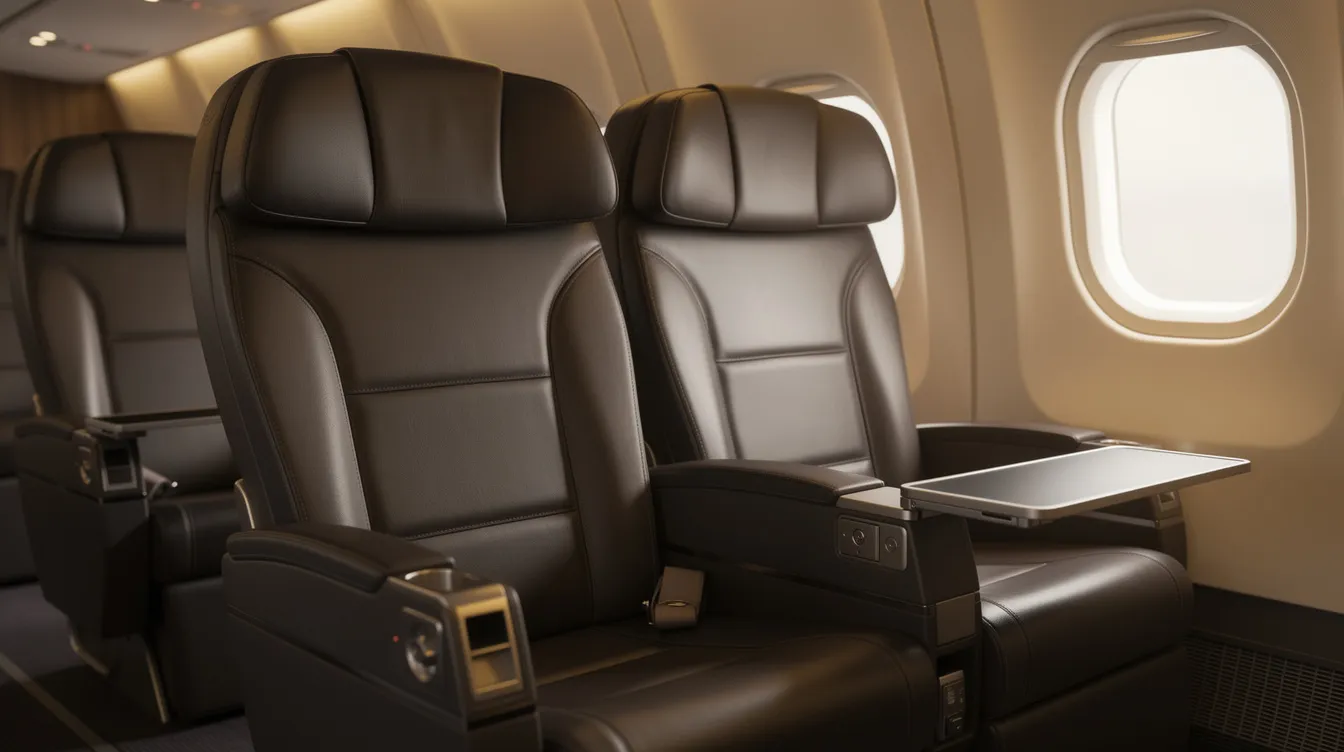
United Airlines First Class is the airline’s domestic premium cabin, offering larger recliner-style seats on most U.S. and short-haul international flights, along with priority boarding, complimentary meals and drinks, and two free checked bags; unlike Polaris, it usually does not include lie-flat seats except on limited transcontinental routes. This guide is built for frequent business travelers and high-net-worth leisure flyers weighing United First Class, Polaris business class, and United Business in 2026 against private jet options like BlackJet Jet Cards. It compares the cabins on the details that drive premium-travel decisions: seating, amenities, ground experience, entertainment, pricing, booking strategy, safety, sustainability, and when a commercial premium seat makes more sense than private aviation.
Quick Answer: What United First Class Actually Gets You in 2026
United First Class is the carrier's domestic premium cabin, available on most U.S. flights and short-haul international routes to Canada, Mexico, and Latin America. Flying first class on a Boeing 737 MAX or Airbus A320 means recliner-style first-class seats in a 2-2 configuration with 37 to 39 inches of pitch and roughly 20 inches of width. You get class meals scaled to flight distance, complimentary drinks (including complimentary alcoholic beverages on all flights), priority boarding, and two free checked bags. These are not lie-flat seats on most domestic routes.
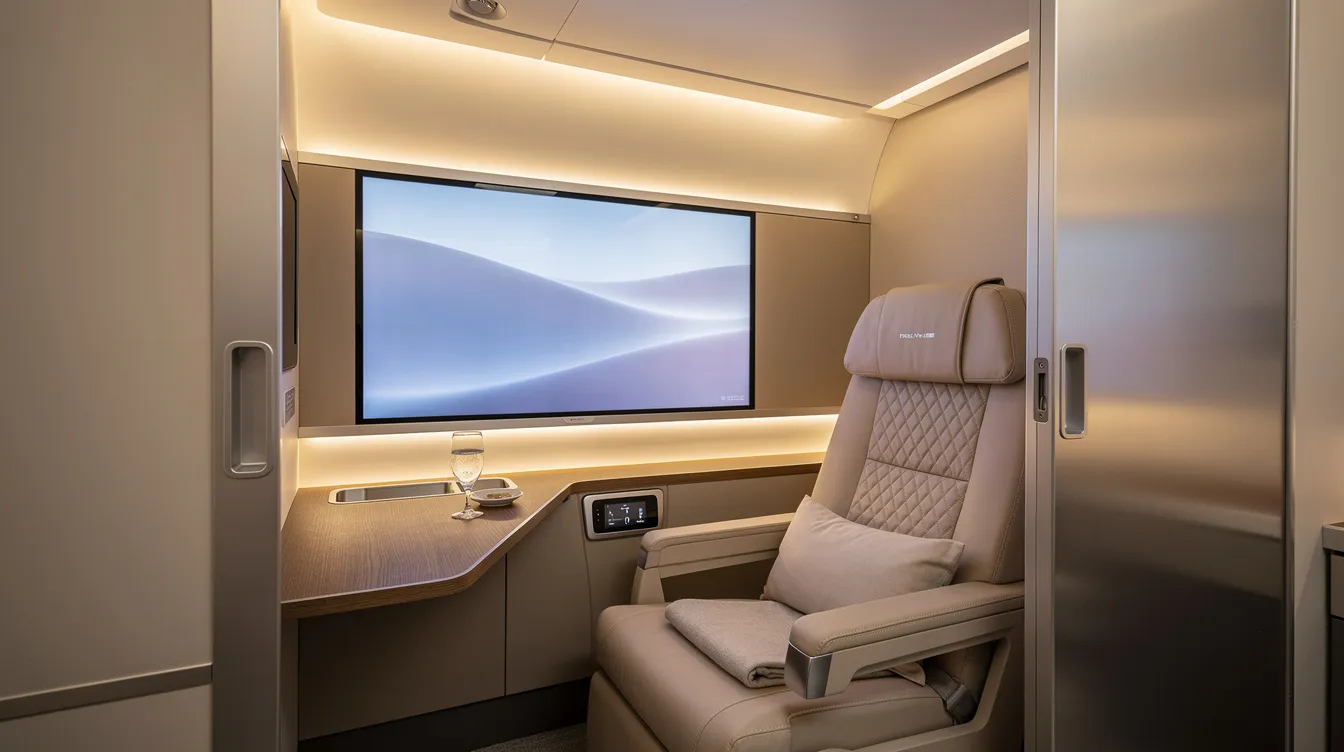
For long-haul international flights, United Polaris business class is the true premium product. United Airlines does not have a traditional international first class cabin; Polaris fills that role. Polaris offers lie-flat seats extending to a flat six feet six inches, Saks Fifth Avenue bedding, amenity kits, and access to dedicated Polaris lounges at select hubs. The newest Polaris Studio suites on 787-9 aircraft add sliding privacy doors and 27-inch 4K OLED screens.
Here is how the three options compare for premium travelers:
Privacy: United First is an open recliner cabin shared with other passengers. Polaris (especially Studio) adds suite doors and personal space. BlackJet provides full cabin exclusivity with no cabin mates, supported by its portfolio of premium private jet card programs and charter options, including alternatives to major providers such as NetJets jet card cost structures.
Time savings: United first offers priority check-in, priority boarding, and faster baggage claim. BlackJet eliminates security lines entirely via FBO terminals, with arrivals 15 to 20 minutes before departure, while private jets also cruise at higher altitudes than most airlines, as detailed in this guide to how high private jets fly compared to commercial flights and in overviews of the best private jets in the world favored by global executives.
Schedule control: United flight schedules are fixed around hub timetables. BlackJet Jet Cards allow departure from secondary airports at custom times, and travelers who want even more flexibility can also explore options to buy individual seats on private jets or study jet card membership pricing and value.
Best use: United First is a tactical tool for hub-to-hub flying united on frequent routes. BlackJet Jet Cards deliver door-to-door efficiency for time-critical or privacy-sensitive missions, functioning similarly to many of the best jet card programs for frequent flyers that emphasize predictable pricing and guaranteed access, particularly when you compare the 50-hour jet card cost and benefits.
Understanding United's Cabin Hierarchy: First Class vs Business Class vs Polaris
United's cabin naming confuses even frequent flyers. First-class tickets, business-class tickets, and Polaris refer to distinct products on different route types.
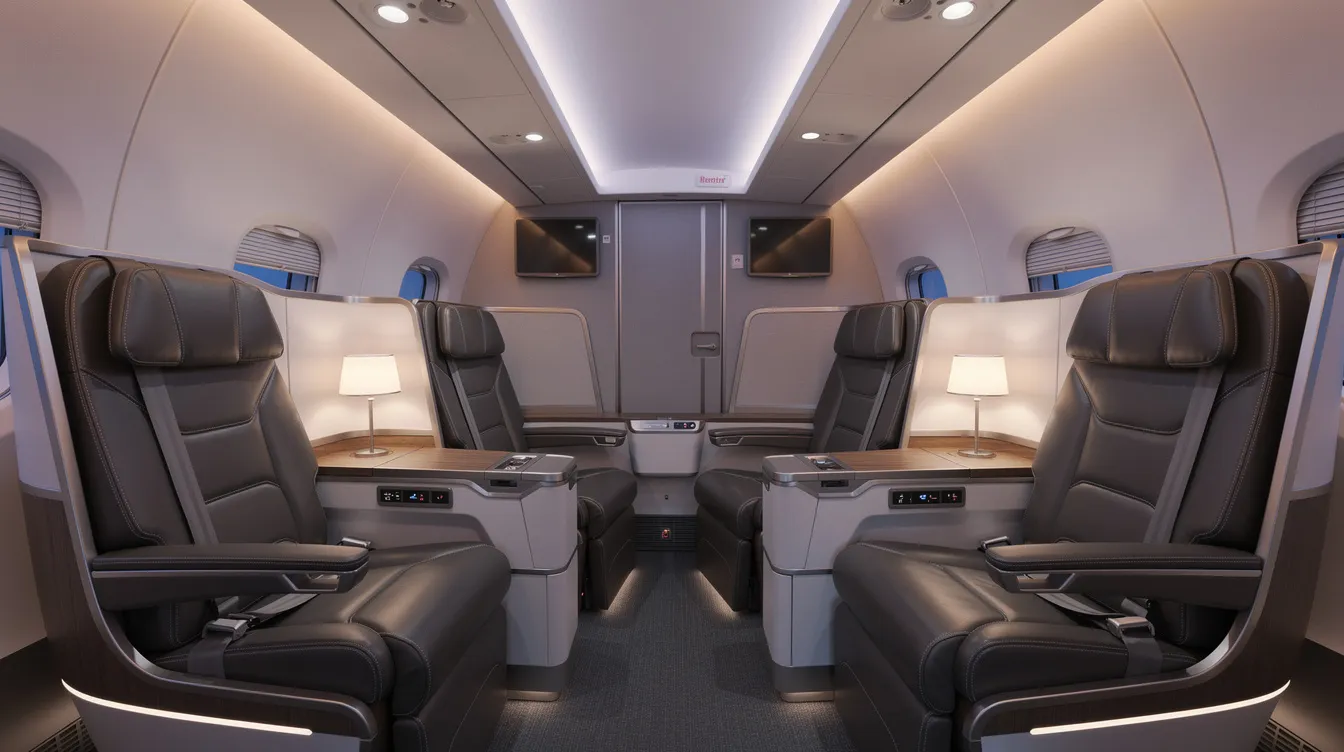
United First is the premium cabin on U.S. domestic flights and short-haul international routes. Hardware is recliner-class seats in a 2-2 layout; no lie-flat capability except on rare widebody transcon deployments. United first-class seats offer more room and better food than economy class, but they are not suites.
United Business appears on premium transcontinental flights (Newark to San Francisco, for example) and U.S. to Latin America routes. The business class product on these routes sometimes uses identical hardware to domestic first class, sometimes lie-flat widebody seats. Branding differs, but hardware overlaps depending on the aircraft.
United Polaris Business Class is the flagship product for long-haul international flights on 777 and 787 widebodies. It features lie-flat seats, direct aisle access for every passenger, premium amenities, and dedicated lounge access. United introduced Polaris Studio suites on new 787-9 aircraft in 2026.
United Premium Plus (premium economy) sits between United Economy and Polaris on long-haul routes with wider seats and a better meal, but no lie-flat bed or suite doors.
Feature | United First (Domestic) | United Business (Transcon/LatAm) | Polaris (Long-Haul Intl) |
|---|
Seat type | Recliner, 2-2 | Recliner or lie-flat (varies) | Lie-flat suite, 1-2-1 |
Typical routes | Domestic, short-haul intl | Transcon, U.S.–Latin America | Transatlantic, transpacific |
Checked bags | Two free checked bags | Two free | Two free (up to 70 lbs) |
Lounge access | No (requires membership) | Varies by route/fare | Polaris Lounge at select hubs |
United Domestic First Class: Seats, Cabin Layouts & Comfort
Boarding a United First Class cabin on a Boeing 737 MAX 9 in 2026, you walk into a 16-seat cabin arranged in four rows of 2-2 with no middle seats. The cabin is quieter than economy, and the seats are wider, with more space around your shoulders and knees.
Domestic United first-class seats are wider, recliner-style,e with more legroom than economy. On the 737 MAX 9, seats measure 20 inches wide with 37 inches of pitch. On the 757-300, first class expands to 24 seats at a 38-inch pitch and 20.4-inch width. The A320 pushes pitch to 39 inches with a 19-inch width. These numbers represent a measurable upgrade over economy class, where pitch typically hovers around 30 to 31 inches.
On selected premium transcontinental flights between Newark and San Francisco or Los Angeles, United sometimes deploys widebody aircraft with international-style lie-flat seats. These do not carry Polaris branding and lack full Polaris ground perks, but they offer a bed-like surface for cross-country overnights.
Power outlets and USB ports are available at every United First seat. Aircraft with United's Signature Interior add large HD seatback screens, Bluetooth audio pairing, and upgraded cabin finishes. By late 2025, 68% of United's narrowbody fleet had received these updates, including larger overhead bins and refreshed materials.
Ergonomic touches for business travelers include adjustable headrests, fold-out tray tables built into armrests, under-seat storage for a personal device or briefcase, and AC power at every seat. The comparison between United First and Economy shows clear benefits in space and service: wider, spacious seats, more legroom, a better food and drink offering, and a quieter cabin environment.
Ground Experience in United First: Premier Access, Boarding & Baggage
For executives, the 90 minutes spent navigating check-in, security, and boarding at a hub airport can cost more productivity than the flight itself. United first reduces that friction with a bundle of ground perks collectively called premier access.
Premier Access includes priority check-in at dedicated counters, shorter security screening lanes at many hubs, and priority boarding in Group 1, after preboarding for select United elites and other eligible customers. United Airlines provides priority check-in and expedited baggage handling for first-class passengers, which means less time standing in lines at airports like Newark, Chicago O'Hare, Denver, Houston Intercontinental, Washington Dulles, and San Francisco.
United first allows two free checked bags per passenger. Each checked bag can weigh up to 70 pounds. Passengers can also bring one full-sized carry-on bag and one personal item. Checked bags receive priority handling upon arrival, appearing earlier on the baggage claim carousel. Priority baggage handling after the flight offsets upgrade costs for travelers carrying multiple suitcases or heavy equipment.
The contrast with private aviation is stark. With a BlackJet Jet Card, luggage loads directly from car to aircraft at the FBO, and groups can even size up to 12-seater private jets when mission requirements demand more seats or baggage capacity. There are no security lines, no baggage carousels, and no weight conversations within the aircraft's operating limits, and large parties can select from private jets suited for 15 passengers when traveling together. Private jets bypass TSA entirely, and passengers typically arrive 15 to 20 minutes before departure, while still benefiting from the fact that private jets manage turbulence effectively despite their smaller size, even on private jets configured for 20 passengers on larger group itineraries.
United First Class Meals, Drinks & Service
Domestic first-class meals are a clear upgrade over economy, with a better meal than economy on longer routes, but not on par with international flagship products from carriers like Singapore Airlines or Emirates. Set expectations accordingly.
Meal service on United First varies depending on flight distance:
Flights over 900 miles receive a full meal service with hot entrees or substantial plated dishes.
Flights between 300 and 900 miles offer cold plates or snack boxes.
Flights under 300 miles do not include snacks or meals; only beverages are served.
Pre-departure beverages may include water, orange juice, or sparkling wine, depending on route and flight attendant service style. Complimentary alcoholic beverages, including beer, wine, and cocktails, are served on all United first flights. Free drinks extend to soft beverages as well, all served in glassware rather than plastic cups.
Passengers can pre-order meals starting five days before departure through the United app or website, locking in a main meal choice on many longer flights. A 2026 example menu on a Newark to San Francisco class flight might include grilled chicken with roasted vegetables, seared salmon with grain salad, or a vegetarian pasta option.
Service style in first class is more personalized: coats hung at the door, drinks in real glasses, and a better cabin crew ratio compared to economy. Consistency varies by route and crew seniority.
American Airlines still holds an edge in domestic first-class catering on select routes through its James Beard Foundation partnership, with chef-curated menus on premium transcontinental flights. United focuses on consistency and speed across most flights rather than ultra-gourmet touches on every domestic leg.
Inflight Entertainment, Wi-Fi & Amenity Kits in Premium Cabins
Business travelers and high-net-worth individuals treat flight time as either productive work hours or deliberate downtime. In-flight entertainment and connectivity matter for both.
United's "Private Screening" system delivers seatback screens with on-demand movies, TV shows, and live channels on most 737 MAX, 787, 777, and retrofitted A319/A320 aircraft. On older planes without seatback screens, entertainment streams to a personal device via the United app. Passengers can watch movies, browse content libraries, or stream live TV depending on aircraft configuration.
Wi-Fi on domestic routes typically costs $8 to $10 per flight segment for MileagePlus members, with monthly and annual subscription plans available for frequent flyers. United is rolling out SpaceX Starlink connectivity fleet-wide, which will improve speed and coverage on many flights.
United Polaris offers comprehensive entertainment options, including a large selection of media, with screens ranging from 16 to 19 inches on standard Polaris seats up to 27-inch 4K OLED displays in Polaris Studio suites. United Polaris includes premium Saks Fifth Avenue bedding and noise-reducing headphones for overnight international flights.
On domestic flights, amenity kits are rare; you might receive socks or an eye mask on longer flights. On Polaris and longer international routes, amenity kits include skincare products, sleep masks, socks, and other premium amenities.
Private jets through BlackJet offer a different advantage: privacy and control. Travelers can take confidential calls, run presentations on cabin monitors, or simply enjoy total quiet, and large organizations can even charter private jets for 30 passengers to keep entire teams together. The edge is not content volume; it is the ability to use the cabin as a private office or living room, scaling up to private jets for 50 passengers when corporate or event travel requires an entire aircraft.
United Polaris: Long-Haul "First Class" Experience in Business Class Branding
United Polaris is the carrier's answer to international first class, packaged under business class branding. On transatlantic routes like Newark to Frankfurt or transpacific routes like San Francisco to Singapore, Polaris delivers the lie-flat bed, premium dining, and ground services that define true long-haul premium travel.
United Polaris offers lie-flat seats on qualifying long-haul international flights, with beds extending up to six feet six inches. Every seat has direct aisle access in a 1-2-1 staggered layout across 777-300ER, 777-200ER, and 787-8/9/10 aircraft. On the newest 787-9 "Elevated" interiors, the cabin holds 64 standard Polaris seats plus 8 Polaris Studio suites with sliding doors, companion ottomans, 27-inch 4K OLED screens, and wireless charging.
Polaris bedding uses Saks Fifth Avenue premium bedding: duvets, pillows, and optional mattress pads on overnight flights. Amenity kits feature Perricone MD skincare. Class meals step up to multi-course service with a curated wine list, and select ultra-long-haul routes include pajamas and slippers.
Polaris Studio launched April 22, 2026, on the San Francisco to Singapore route, followed by San Francisco to London on April 30. The Studio upcharge runs approximately $499 one-way on top of a standard Polaris fare. United expects roughly 30 aircraft with the Elevated interior by the end of 2027.
Polaris competes well against American Airlines Flagship Business and Delta One suites in terms of space and privacy. But it remains a shared cabin with dozens of other passengers. For travelers who need total discretion, bespoke catering, or access to secondary airports closer to their destination, a BlackJet Jet Card covers what Polaris cannot, particularly when chartering 16-seat private jets for executive teams.
Lounges & Ground Experience: United Club vs Polaris Lounge
Premium travelers often value the ground experience as much as the seat itself, particularly before long-haul international flights with tight connections.
Standard domestic United First does not automatically include United Club access. Travelers need a United Club membership, a qualifying international business class ticket, or Star Alliance Gold status to enter. United Club lounge locations offer snacks, basic hot food at hubs, an open bar with standard beverages, Wi-Fi, workspaces, and showers at select locations. Hubs like Denver, Houston, and Newark have received major renovations in 2025 and 2026.
In United Polaris, passengers have access to exclusive Polaris lounges at certain airports, which function as United's version of a flagship lounge experience for long-haul premium travelers: Chicago O'Hare, Newark, Houston Intercontinental, San Francisco, Washington Dulles, and Los Angeles. These lounges feature à la carte dining, premium buffets, craft cocktails, barista coffee, spa-style showers, and quiet rooms with daybeds. Lounge access is reserved for international premium cabin passengers flying long-haul Polaris or eligible Star Alliance partner business/first class.
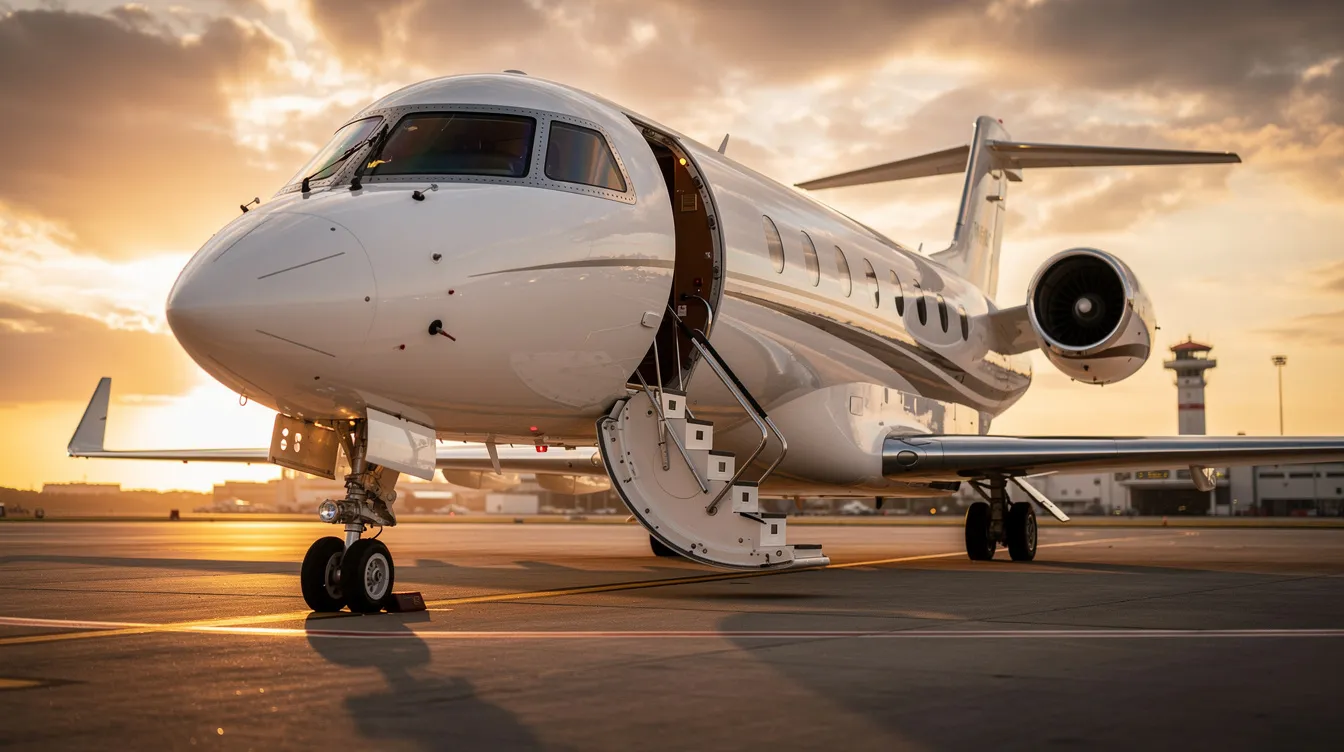
BlackJet's ground experience operates differently. Travelers use private terminals (FBOs) with direct curbside-to-aircraft boarding. There are no security lines, no crowded gate areas, and no need to arrive hours early. A BlackJet 25-hour Jet Card holder simply drives to the FBO and boards within minutes, leveraging the benefits of the BlackJet 25+ Hour Jet Card program and, when appropriate, the comfort of the largest private jets for sale or charter.
Value & Pricing: When United First Class Makes Sense vs Private Jets
United First and Polaris are best understood as tools in a broader premium travel strategy, not as the only option or the lesser option, but as a specific solution for specific missions.
Typical 2026 first-class fares on domestic routes range from $350 to $1,000+ one-way, depending on the market, which is modest compared with the capital required for 10 million-dollar private jet ownership. A Newark to San Francisco class flight in first class might run $900 to $1,200 during peak demand. Long-haul Polaris round trips commonly cost $2,500 to $8,000+ in business class, varying by route and season, still far below the investment level of a 15 million private jet but attractive when balanced against ongoing ownership costs.
BlackJet Jet Cards offer fixed hourly rates across cabin categories: light jets at approximately $7,000 to $8,000 per hour on a 25-hour card, large cabin jets at $13,000+ per hour on a 50-hour card, aligning with broader benchmarks for jet card cost per hour in private aviation and the economics of a 100-hour jet card program. These rates are all-inclusive, covering fuel, federal excise tax, and carbon neutrality.
Consider this scenario: a team of four executives needs to fly from New York to Chicago to Toronto and back to New York in a single day for three separate meetings. Commercial first class requires at least two connections, rigid departure windows, and likely an overnight hotel. A single BlackJet itinerary covers all three legs door-to-door, with flexible timing and no overnights, and savvy travelers can still look for ways to fly private more cheaply by optimizing aircraft size, routing, and membership options. When dividing the private jet cost across four passengers and subtracting the hotel and ground transport costs, the per-person premium narrows, especially compared with the ultra-high budgets associated with the most expensive private jet options reserved for extreme luxury use cases, or contrasted with budget-friendly private aircraft options at the other end of the spectrum.
The guidance: use United first or Polaris on dense trunk routes where schedule frequency, alliance miles, and frequent flyer status matter, reserving private aviation for missions where its premium justifies the broader private jet price list of options and access models. Use BlackJet for time-critical, multi-city, or secondary airport missions where schedule control and privacy outweigh fare savings, much as you would with any of the top private jet companies for luxury travel, even if you are primarily comparing against the cheapest private jet options available on the market.
How to Book or Upgrade to United First & Polaris (Cash, Miles & Cards)
Accessing first-class tickets and Polaris does not always require paying the published walk-up fare.
United first-class tickets can be purchased directly when booking on United.com or the mobile app. Passengers can also pay cash to upgrade from economy to United First using "buy-up" offers that appear after initial booking, when available inventory exists. For Polaris, select the Polaris fare on eligible long-haul routes, or add the Studio upcharge of approximately $499 one-way on flights operated by Elevated-interior 787-9 aircraft.
You can upgrade to United First using MileagePlus miles via upgrade awards (miles plus a cash co-pay) on eligible fare classes. Premier Platinum and 1K members can use PlusPoints for long-haul business class upgrades into Polaris. Complimentary upgrades to domestic first are processed based on elite tier priority, with 1K members clearing first.
United credit cards like the Explorer, Quest, and Club Infinite help earn miles faster, confer priority boarding, and sometimes include United Club membership or discounted United Club lounge access. The Presidential Plus card grants United Club access for the cardmember and a guest.
Practical tips: check the aircraft type before booking to confirm the best first-class seats. Target off-peak days like Tuesdays and Wednesdays for lower first-class fares. Use flexible date search tools to spot price dips on premium cabins.
Safety, Sustainability & Technology: United vs Private Jets with BlackJet
Premium travelers increasingly weigh safety certifications, environmental impact, and technology alongside seat comfort. Both commercial and private aviation have distinct frameworks.
United operates under FAA Part 121 regulations with rigorous maintenance programs, crew certification requirements, and safety reporting systems. The carrier reported strong on-time departure rates across early 2026. On sustainability, United targets net-zero carbon emissions by 2050 and has used blended sustainable aviation fuel at six of its seven U.S. hub stations. Newer 737 MAX and 787 fleets burn less fuel per seat than the aircraft they replace.
BlackJet flights operate through audited Part 135 operators vetted through the BlackJet Certified program, which requires third-party safety ratings and strict pilot experience minimums that mirror the wider reality that private jet travel is highly safe. Every Jet Card flight is carbon-neutral at no extra cost to members, with 300% offset coverage built into hourly rates.
On technology, United's mobile app handles boarding passes, seat selection, rebooking, and in-flight entertainment streaming. BlackJet's 24/7 digital platform offers instant quoting, aircraft selection across multiple cabin categories, and real-time human support for complex itineraries, while also making it easy to understand how much to rent a private jet for different mission profiles.
Frequently Asked Questions About United Airlines First Class & Polaris
What is the difference between United First Class and United Polaris?
United First Class is the domestic premium cabin with recliner seats and priority services, mainly for U.S. and short-haul international flights. United Polaris is the international business class product featuring lie-flat seats, premium bedding, and access to exclusive Polaris lounges.
Does United First Class include lounge access?
No, United First Class on domestic flights does not include United Club lounge access automatically. Lounge access is reserved for Polaris passengers on long-haul international flights or requires a separate United Club membership.
How many bags can I check for free in United First Class?
Passengers flying United First Class can check two bags for free, each weighing up to 70 pounds, with priority baggage handling.
Can I upgrade to United First Class using miles?
Yes, MileagePlus members can upgrade to United First Class using miles plus a cash co-pay on eligible flights and fare classes.
Are meals included in United First Class?
Yes, United First Class offers complimentary meals on flights over 900 miles, with snack or cold plates on medium-haul flights, and complimentary beverages including alcohol on all flights.
What type of seats does United First Class have?
United First Class seats are wider recliners in a 2-2 configuration, offering more legroom and comfort than economy, but they do not lie flat except on select transcontinental widebody flights.
How does United Polaris compare to international first class?
United Polaris is a business class product with lie-flat seats and premium amenities but does not have a separate international first class cabin. It is considered United's top international premium offering.
How does flying United First compare to private jet travel?
United First offers priority boarding, larger seats, and enhanced service on fixed schedules. Private jet travel via BlackJet offers full cabin exclusivity, flexible scheduling, access to secondary airports, and carbon-neutral flights.
Can I pre-order meals in United First Class?
Yes, passengers can pre-order meals starting five days before departure on eligible flights through the United app or website.
What technology is available in United First Class?
United First Class seats have power outlets, USB ports, and on many aircraft, HD seatback entertainment screens. Wi-Fi is available for purchase on most flights.
Strategic Use Cases: When to Choose United First vs Flying Private with BlackJet
Most BlackJet clients do not choose exclusively between commercial and private. They blend both to match the tool to each trip.
United First or Polaris works best for:
Solo travel on major trunk routes like Newark to San Francisco or Chicago to London, where commercial schedules align with meeting times
International flights where Star Alliance alliance miles, lounge access, and elite status deliver compounding value
Routes where fixed schedules match your calendar and cost per seat stays reasonable
BlackJet wins for:
Same-day multi-city itineraries that commercial routing cannot support
Peak holiday travel to resort destinations lacking nonstop commercial service
Flights into secondary airports closer to a home or meeting location
Privacy-sensitive trips involving M&A teams, public figures, or family travel with security requirements
A practical example: a BlackJet member based in Miami uses United Polaris for Miami to Newark to London Heathrow a few times per year, earning miles and accessing the Polaris Lounge at Newark. That same traveler relies on a 25-hour Jet Card for frequent Miami to Nassau and Miami to Aspen trips with family, where commercial options require connections and eat hours.
The right choice is not ideological. It is about selecting the right tool for each mission, whether that tool is a United first-class seat, a Polaris suite, or a private jet. Explore how BlackJet's Jet Card programs can serve as the private backbone of your travel strategy, with United first and Polaris filling gaps on global hub routes.


 Sign up with google
 Sign up with Apple