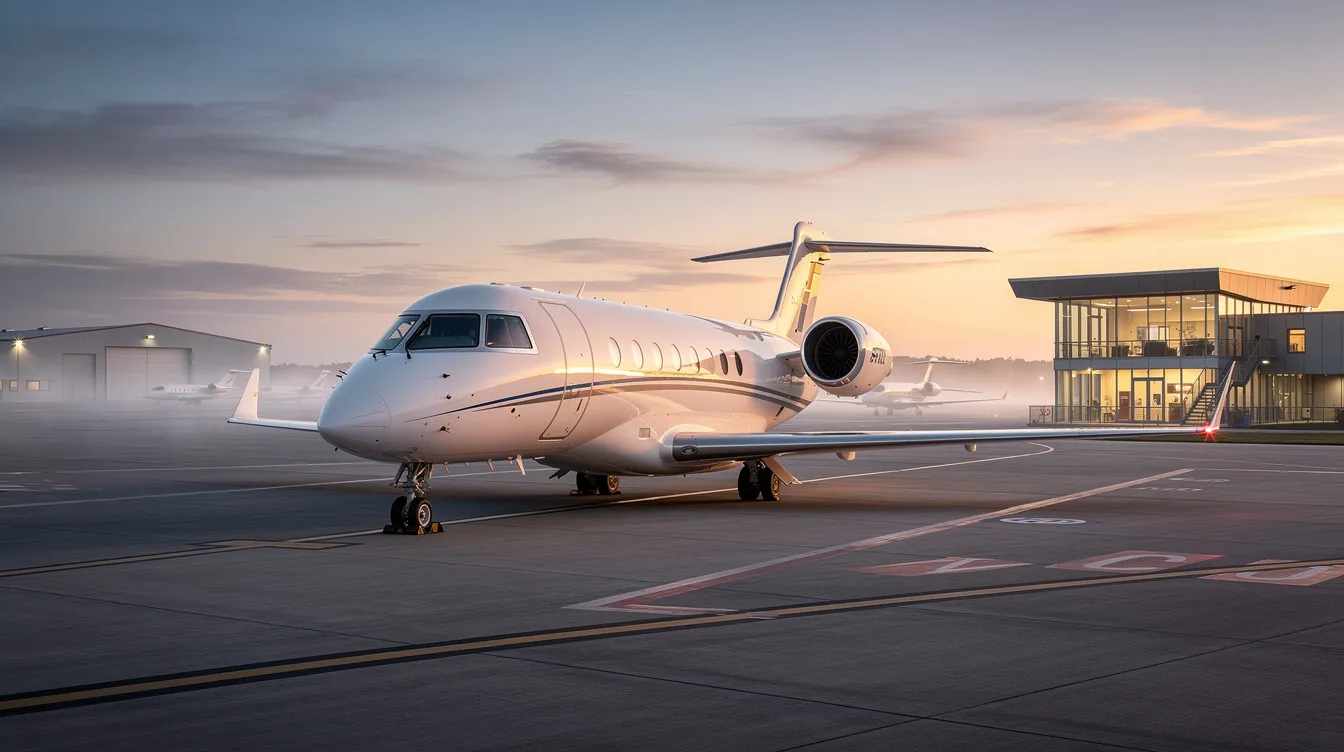
Private jet access is no longer just a luxury purchase; for executives, founders, family offices, and discerning travelers, it is a strategic advantage. This guide is designed for executives, entrepreneurs, family offices, and serious travelers considering private jet ownership or alternative access models. Private travel can compress door-to-door itineraries, protect sensitive conversations, and reach thousands of airports that commercial airlines do not serve.
Key Takeaways: Real Private Jet Listings vs Jet Card Access in 2026
As of 2026, private jets for sale range from older light jets priced under USD $2 million to late-model long-range jets exceeding USD $20 million; new private jets typically cost between USD $30 million and USD $80 million.
Currently, there are approximately 550 private jets listed on GlobalAir.com with an average price of USD $7,543,333, providing a benchmark for buyers.
Full ownership is generally suited for those flying more than 300 hours annually, whereas charter or membership options better serve travelers logging under approximately 200 to 250 hours per year.
The private jet market remains tight but more balanced than 2021–2022, with demand strongest for late-model, program-supported business aircraft.
BlackJet Jet Cards provide prepaid access, carbon-neutral flights, and 24/7 digital booking without committing to one specific aircraft.
Introduction: Why the “Private Jet for Sale Real” Question Matters in 2026
High-net-worth buyers search “private jet for sale real” because they want actual aircraft, not stale broker funnels. Authentic private jet listings provide critical details such as the aircraft's serial number, year of manufacture, total airframe and engine hours, enrollment in maintenance programs, and records of recent inspections. A real private jet listing should show serial number, registration, year, total airframe time, engine time, enrollment status, avionics, inspection history, and asking price.
Private jets also outperform commercial first class in flexibility: access to 5,000+ U.S. airports versus roughly 500 airline-served airports, schedule control, private terminals, and confidential cabin space, while typically cruising higher than airlines, as outlined in how high a private jet flies versus commercial. The core question is whether purchasing, charter, fractional ownership, or jet cards best fit your mission profile, particularly as billionaire private jet price trends and broader market dynamics continue to evolve.
The 2026 Private Jet Market: What “Real” Inventory Looks Like
The global fleet includes roughly 24,000+ aircraft across light, midsize jet, super-midsize, and large cabin jet categories, broadly consistent with global private jet fleet counts and trends. Public inventory remains below historical norms, near 4–5% of the fleet, with late-model Dassault Falcon, Bombardier, and Gulfstream aircraft showing the strongest price resilience.
Market drivers include post-COVID private flying habits, corporate flight department planning, and higher financing costs. The International Aircraft Dealers Association (IADA) vets brokers heavily and upholds a strict ethical code, which matters because a certified broker provides access to off-market inventory and protects against fraudulent online listings.
Older light jets and some Cessna Citation models are more negotiable; large private jets for sale, such as Gulfstream G650ER, Falcon 7X, and newer Falcon 8X inventory, are tighter. Jet Cards can bridge the market while a disciplined buyer waits for the right aircraft, including private jets for sale under 10 million that balance capability and value, and align closely with 10 million dollar private jet options many buyers consider.
Real Private Jet Listings: Concrete Examples by Category
Examples serious buyers may see:
Category | Example | Indicative price | Mission |
|---|
Light | 2019 Phenom 300E | $7M–$10M | NY–Miami |
Very light | 2022 HondaJet Elite S | $5M–$6M | regional airports |
Midsize | 2016 Citation Sovereign+ | $11M–$14M | coast-to-coast with stops |
Super-mid | 2014 Dassault Falcon 2000LXS | around $23.5M | U.S.–Europe capable |
Large | 2012 G550 | mid-to-high teens | transatlantic missions |
A true listing includes airframe hours, engines, cabin configuration, manufacturer records, Garmin or Honeywell avionics, and last inspections, whether you are reviewing how many private jets exist worldwide or a specific UK private jet for sale. One Falcon example showed engines enrolled in ESP GoldHoneywell MSP APU enrolled, Honeywell MSP APU in MSP Gold, ADS-B Out, FANS, CPDLC, and low cycles. BlackJet customers often use Jet Cards to test routes and cabin classes before purchasing, and some also evaluate a small private aircraft, such as a turboprop,p on real routes before deciding what type of aircraft to buy.
Real-World Price Ranges & Depreciation: From Light Jets to Long-Range Flagships
Used light aircraft may trade from under $2M to $8M, midsize and super-mid aircraft from $7M–$18M, and large-cabin aircraft from $18M–$70M+, while travelers seeking entry-level options often explore the cheapest private jet categories, 2 million dollar private jet options, and comparable turboprops. Most private jets lose about 35–50% of value over the first 10–12 years, though rare 20-million-dollar private jets and other late-model flagships can outperform. Many owners sell within three years, which is one reason near-term resale value matters when comparing aircraft, especially when you understand the broader private jet price list context and how fractional jet ownership depreciation can affect your overall economics.
Programs matter. Two similar jets can differ by $500K–$1M based on engine program enrollment, apu enrolled status, avionics upgrades, new paint, cabin refurbishment, ads b compliance, Wi‑Fi, and records—gaps that become even more pronounced with the most expensive private jet options. Price verification is essential; buyers should compare asking prices with multiple broker assessments, aircraft valuation tools, and recent sales data.
Beyond the Sticker Price: True Cost of Owning a Private Jet
Total ownership cost has two components: fixed costs, which accrue whether the aircraft flies or sits in the hangar, and variable costs, which scale with usage, whether you ultimately buy, lease a private jet, or rely on jet cards. Annual fixed costs include crew salaries, training, hangar, subscriptions, insurance, management, and maintenance planning.
For a midsize jet, annual fixed costs generally range from $800,000 to $1.2 million, with variable expenses adding between $2,200 and $2,800 per flight hour depending on fuel prices and engine program enrollment—figures that should be compared with your expected jet card cost per hour and a realistic private jet charter cost comparison. In contrast, a large-cabin jet such as the Gulfstream G550 incurs fixed annual costs between $1.4 and $1.8 million, alongside variable costs of $3,500 to $4,500 per hour, which can be benchmarked against typical jet card membership pricing.
Maintenance reserves, catering, navigation fees, and 96/192-month checks can add six or seven figures. Aircraft management companies are often hired to oversee the logistics of managing pilots and flight attendants. BlackJet converts this complexity into predictable Jet Card access, underpinned by transparent jet card pricing structures that bundle many operational variables into a fixed hourly rate, which you can benchmark against NetJets jet card cost details.
How to Verify a “Private Jet for Sale” Listing
Finding a legitimate private jet for sale requires navigating a heavily guarded industry to avoid phantom listings and hidden operational liabilities. Serious buyers should check for date stamps on listings, as outdated pages often reflect sold or unavailable aircraft.
Before committing to a pre-purchase inspection (PPI), buyers can screen out unsuitable aircraft by examining total airframe hours, engine hours since overhaul, and maintenance records. The most unsuitable aircraft often show incomplete logs, unclear enrollment status, damage history, or deferred avionics work.
Request serial number, registration, title search, lien review, maintenance summaries, ADS B proof, RVSM/FANS status where applicable, and escrow terms. Corporate subscription databases like JETNET and VREF track ownership history, flight hours, and valuations of registered aircraft.
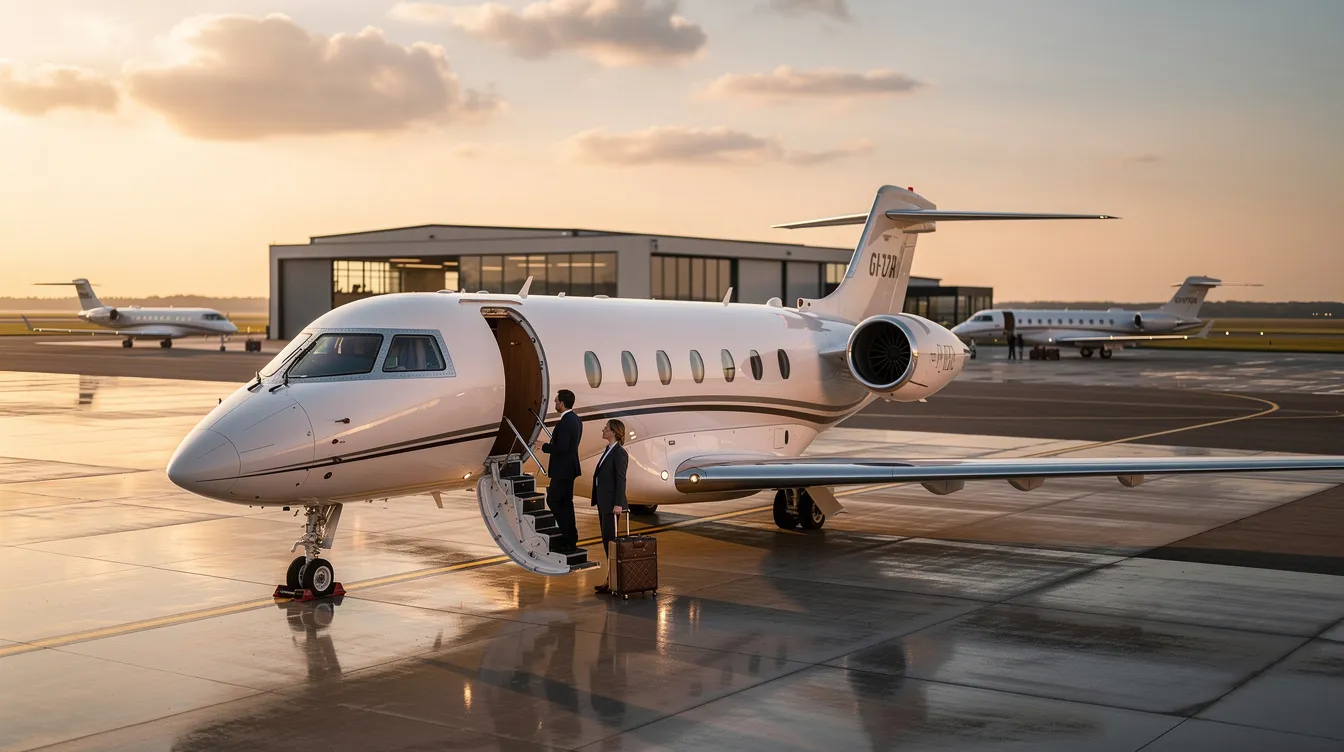
Pre Buy Inspection: Protecting Yourself Before You Close
From the initial search to closing, a well-managed private jet purchase typically spans 60 to 120 days, provided the buyer remains disciplined and the seller is cooperative. The purchase process begins with mission analysis and budget definition to establish realistic performance and economic parameters before identifying a target aircraft.
Once a target aircraft is identified, the buyer negotiates under a letter of intent, which typically takes one to two weeks before commissioning a pre-buy inspection at an approved maintenance facility, especially if funding involves nontraditional approaches such as purchasing a private jet with cryptocurrency. This may be an OEM center, Gulfstream Savannah, Dassault-authorized facility, West Star, or Duncan Aviation.
The pre-buy inspection typically lasts three to five days and results in a detailed squawk list, which serves as the foundation for negotiating price adjustments, requesting seller-funded repairs, or potentially terminating the deal if significant issues are uncovered. Complex findings may extend downtime one to three weeks. Following inspection acceptance, the administrative mechanics of closing, title search, escrow arrangement, and FAA registration transfer typically add another two to three weeks to the process.
Specific Aircraft Spotlight: Dassault Falcon and Other Popular Choices
Dassault Falcon aircraft are known for runway performance, efficiency, and long-range capability. A Falcon 2000LXS suits New York–Los Angeles or selective oceanic missions; a Falcon 7X or other long-range private jet supports Paris–Dubai and broader intercontinental flying and appears frequently among the top private jets in the world.
Falcon buyers watch EASy avionics version, winglets, engine programs, APU coverage, interior age, and service-center history. Comparable options include Gulfstream G450/G550, Bombardier Global 5000/6000, and Rolls-Royce-powered aircraft with Rolls-Royce corporate care, as well as large-cabin jets highlighted in private jets for 20 passengers discussions. BlackJet members can fly Falcons and comparable private jets without committing to one serial number.
Jet Cards vs Buying a Private Jet: Which Makes More Sense for You?
Jet cards are prepaid blocks, such as BlackJet’s 25-hour Jet Card programs and 50-hour programs, with access by cabin class, vetted operators, digital request tools, and real-time support. The industry breakeven for whole aircraft ownership versus fractional programs is generally accepted at 200 to 250 hours annually; below that threshold, the fixed cost burden of ownership typically exceeds the premium paid for fractional access or jet cards, and many flyers instead compare top private jet companies and programs to match their usage profile.
Many buyers now compare real purchase offers with flexible charter options before committing, as on-demand charter often proves more cost-effective for those flying under 250 hours annually, especially once they understand how much it costs to rent a private jet. At 150 hours, Jet Card access usually wins. At 250 hours, run a detailed analysis. At 400 hours, ownership may make sense if missions are consistent, though heavy users sometimes consider a dedicated 100-hour jet card cost analysis before committing to full ownership.
A CEO flying 180 hours among New York, Chicago, and London may need a light, midsize, and large-cabin lift in the same year. Buying one model can create a mismatch; BlackJet lets the passenger select the right jet for each trip.

Safety & Certification: Non-Negotiables Whether You Buy or Use Jet Cards
Safety is not cosmetic. Buyers should review maintenance culture, operator audits, crew training, recent flight hour experience, type ratings, security check procedures, TCAS, EGPWS, and advanced avionics.
BlackJet filters operators through rigorous safety and certification standards, including respected benchmarks such as ARG/US, Wyvern, and IS‑BAO, where applicable, reflecting the broader realities of private jet safety standards and risks. Apply the same scrutiny to every sales candidate, not just cabin finishes.
Sustainable Private Aviation: Carbon-Neutral Flights & Efficient Aircraft Choices
Sustainability now affects aircraft choice. Newer designs improve aerodynamics and fuel efficiency, while correct sizing reduces emissions. Flying a light jet instead of a large cabin jet for a short regional route is often the better operational decision, especially when comparing the cheapest private aircraft options for shorter missions.
BlackJet’s flights are carbon neutral at no additional cost to customers, using calculated emissions and verified offset programs, while travelers who only need occasional access may instead buy a seat on a private jet via shared or semi-private options or apply fly private cheap strategies focused on empty legs and shared charters. Where infrastructure allows, some operators may also offer SAF.
Technology & Experience: How BlackJet Makes Private Jet Access Effortless
BlackJet’s mobile and web tools let members request flights, choose cabin class, manage passenger details, and coordinate changes 24/7, especially for members using the BlackJet 25+ Hour Jet Card or other structured jet card pricing programs. Human flight specialists support catering, routing, ground transport, and irregular operations.
Consider a 25-hour member scheduling New York–Toronto–Chicago with minimal lead time. The owner of a private aircraft would manage crew, maintenance, hangar logistics, insurance renewals, and regulatory compliance; BlackJet makes the experience seamless.
FAQs: Private Jets for Sale, Real Listings & Jet Cards
How many flight hours per year make private jet ownership realistic?
Whole ownership generally becomes financially competitive around 300–400 hours annually, depending on aircraft size, financing, taxes, and utilization. Under 250 hours, BlackJet Jet Cards or charter are usually more flexible, and many flyers evaluate a 50-hour jet card cost scenario against the economics of ownership.
Can I experience specific aircraft types through BlackJet before buying one?
Yes. Members can request light, midsize, super-midsize, or large-cabin categories and, where available, models such as Phenom 300, Citation CJ series, or Dassault Falcon jets, similar to many affordable private plane options for new aviators. BlackJet cannot guarantee the identical serial number, but it can provide realistic exposure.
What documentation confirms a private jet listing is real?
Authentic private jet listings provide crucial details, including the aircraft's serial number, manufacturing year, total airframe and engine hours, enrollment in maintenance programs, and records of recent inspections. Also,o request logbook excerpts and mandate compliance.
How do jet cards differ from ownership and fractional shares?
Ownership gives control but adds capital, fixed costs, depreciation, management, and residual risk. Fractional ownership requires long-term commitments but can offer meaningful tax benefits of fractional jet ownership. Jet Cards for frequent flyers provide prepaid access with less operational burden.
Are BlackJet flights carbon neutral by default?
Yes. BlackJet ensures every journey is carbon neutral through verified offset practices integrated into the flight experience.
What safety standards do BlackJet partner operators follow?
BlackJet works with vetted operators that meet or exceed industry certification expectations, with strict crew, aircraft, maintenance, and operational review standards.
Conclusion & Call to Action: Navigate the Private Jet Market with Confidence
A “private jet for sale real” search can uncover excellent opportunities, but the best buyers evaluate purchase price, fixed costs, variable costs, maintenance exposure,pre-buyery inspection results, and mission fit with discipline.
For many travelers with below 250–300 annual hours, BlackJet’s 25-hour and 50-hour Jet Cards deliver the strategic advantages of private jets without capital lock-in. Explore BlackJet membership to compare ownership versus Jet Card access with safety, sustainability, technology, and flexibility built in.


 Sign up with google
 Sign up with Apple