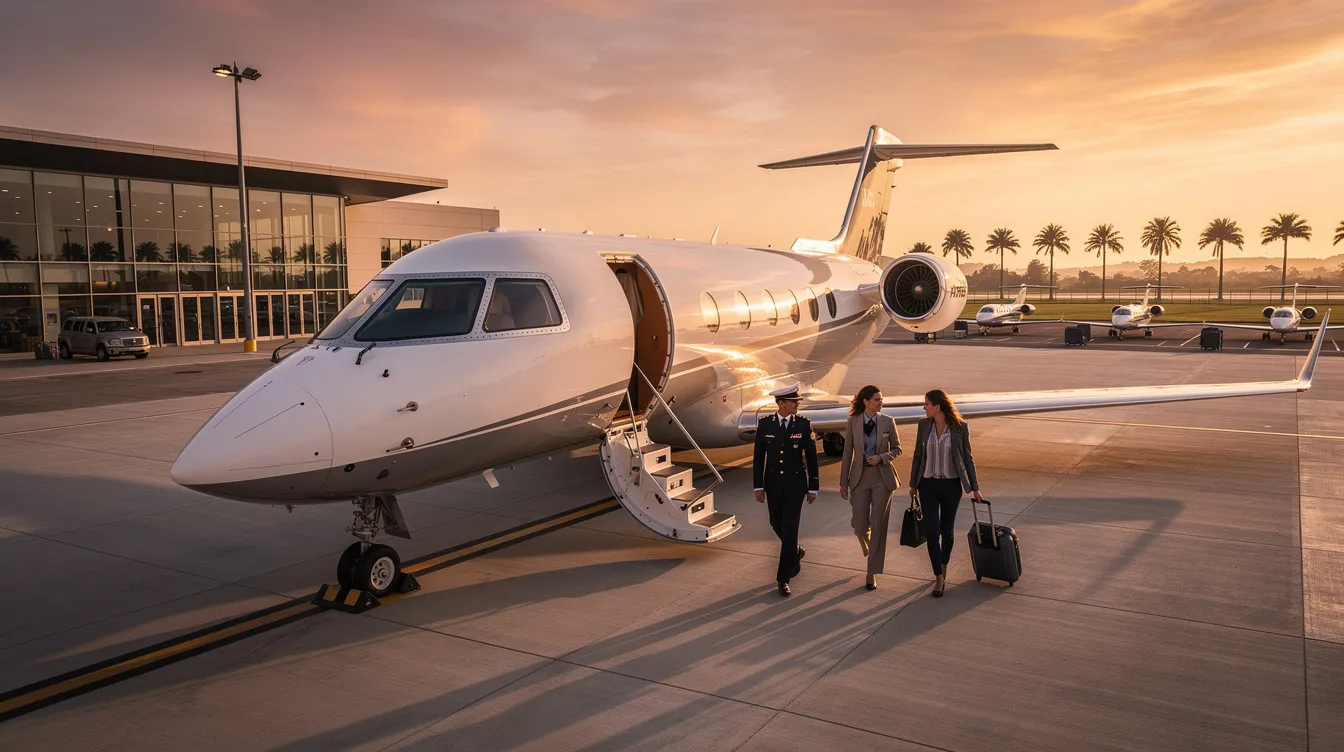
Flying privately is no longer only a marker of luxury. For executives, founders, family offices, and discerning leisure travelers, it is a strategic way to protect time, privacy, and control in an increasingly crowded air travel system.
Why Flying Privately Is a Strategic Advantage Today
In 2026, a New York–Los Angeles business trip can mean 6–7 hours door-to-door in commercial first class once you include the car ride, TSA, boarding queues, baggage, and hub congestion. With private jet access, that same journey can feel closer to 4 hours of controlled travel time: arrive at a private terminal, step through the door, board, and fly on your schedule, especially if you apply strategies for flying private more affordably, such as shared charters or empty legs.
That matters because airlines are constantly changing networks. British Airways has cut a total of 19 international routes from its plans between June 2026 and March 2027, compared to its schedule for January 2025 to May 2026. Fiji Airways recently withdrew its non-stop route to Dallas/Fort Worth due to unsustainable load factors, while maintaining its routes to Los Angeles, San Francisco, and Vancouver. In fact, the Airbus A220 is particularly well-suited for such medium-haul routes, offering efficiency and flexibility for airlines facing fluctuating demand. American Airlines is set to launch four new routes to Europe, including Dallas/Fort Worth to Athens and Zürich, and Philadelphia to Budapest and Prague.
BlackJet offers a modern company alternative to complicated aircraft ownership and inconsistent ad-hoc charter: premium Jet Card programs with prepaid access, guaranteed availability, digital booking, carbon-neutral flights, and proprietary safety review.
Key advantages include, especially for those using small private jets for efficient luxury travel:
Time savings: private flyers generally arrive 15–30 minutes before departure, compared with 90–120 minutes for many commercial trips.
Privacy: confidential calls, family space, and no public gate area.
Flexibility: a departure window can turn around a delayed meeting, a weather problem, or a last-minute city change.
Time Comparison: Commercial vs Private Flying (New York to Los Angeles)
Aspect | Commercial First Class | Private Jet Access |
|---|
Total Door-to-Door Time | 6–7 hours | ~4 hours |
Arrival Before Departure | 90–120 minutes | 15–30 minutes |
Boarding Process | TSA, queues at the gate | Private terminal |
Schedule Flexibility | Fixed | On-demand |
The Essence of Flying: From Basic Flight to Modern Private Aviation
At its simplest, flying is controlled movement through the air in a powered aircraft. Four forces act on an airplane that determine how it flies: lift, weight, thrust, and drag. Airplane wings are shaped like an airfoil, creating a pressure difference that generates lift. Jet engines or propellers push a massive amount of air backward to propel an airplane forward.
Birds offer the original story of flight: birds manipulate the shape of their wings to achieve both lift and thrust during flight. When a bird flaps its wings downward, it pushes air backward and downward, generating lift and thrust as per Newton’s third law of motion. Airplanes rely on rigid wings and external engines to fly, which is the key mechanical difference.
A few basics still matter in modern aviation, including how high private jets typically fly compared with commercial aircraft:
As altitude increases, air density decreases, affecting lift and engine performance.
Level flight means maintaining a constant altitude without climbing or descending.
The main control in an airplane is the yoke, which is used to pitch the airplane up and down and roll it left and right.
The purpose of modern design is efficiency: less drag, better range, and safer handling.
The history of business aviation moved from early mid-century aircraft to today’s Gulfstream G700 and Bombardier Global 7500, capable of ultra-long-range missions across the Atlantic. Flying privately also changes the place where travel begins: Teterboro instead of JFK, Van Nuys instead of LAX, a private terminal instead of a crowded concourse.
Aircraft, Pilots, and Safety: What Really Keeps You Safe in the Air
Safety acts as the foundation of premium aviation. Speed, service, and comfort matter, but the focus must begin with aircraft, pilots, operational standards, and pre-flight discipline, and understanding how safe private jets are in practice gives context for those standards.
Private flying uses different aircraft for different missions, and choosing the best small private aircraft for each type of trip is central to matching range, capacity, and cost, so understanding private jet sizes and how they fit different journeys is essential:
Aircraft Category | Example Models | Typical Use Case |
|---|
Very Light and Light Jets | Embraer Phenom 300, Citation CJ series | Regional trips |
Midsize Jets | Citation Latitude | More cabin space, baggage |
Super-Midsize Jets | Challenger 3500 | Strong range and comfort |
Large-Cabin Jets | Gulfstream G600, G700, Global 7500 | Long-range international travel |
On BlackJet-accessed flights, pilots must hold relevant type ratings, substantial flight time, and recurrent simulator training through providers such as CAE or FlightSafety International. Operators are reviewed against third-party standards such as ARGUS, Wyvern, and IS-BAO, while BlackJet’s own BlackJet Certified program evaluates operators, aircraft, pilots, and each flight. For frequent travelers, selecting the best Jet Card providers also means paying close attention to how they apply and exceed these safety benchmarks. BlackJet notes that only about 30% of U.S. charter operators have passed its certification requirements.
A winter London-to-Geneva example shows how safety becomes practical:
Severe weather, such as thunderstorms, poses significant hazards in aviation.
Ice accumulation on wings alters aerodynamic shape, increasing drag and necessitating de-icing.
Wind speed and direction influence aircraft takeoff and landing performance.
Reduced visibility from fog, mist, and low ceilings requires pilots to rely on instruments for safe flying.
Cold air is dense and provides better engine and aerodynamic performance than hot air.
High density altitude, caused by high altitudes, hot temperatures, and high humidity, reduces lift and engine power.
Before departure, crews review maintenance logs, weather, NOTAMs, runway conditions, fuel planning, and diversion options, while owners and flight departments must also budget for private jet pilot salaries and related operating costs.
Aircraft Ownership vs Jet Cards vs On-Demand Charter
There are three main ways to access private flying: full aircraft ownership, Jet Card membership, or trip-by-trip charter. The right choice depends on routes, annual hours, budget, and how much operational responsibility you want on your mind, and a clear private jet price list across access models helps frame that comparison, especially when you look at how much it costs to rent a private jet by the hour.
Access Model | Description | Pros | Cons | Typical Cost Range |
|---|
Aircraft Ownership | Full ownership, including management and operation | Ultimate control, availability | High upfront and ongoing costs | $10M+ for light jets; $70M+ for ultra-long-range |
Jet Card Membership | Prepaid blocks of flight hours with guaranteed access | Predictable cost, flexibility | Minimum hours commitment | Varies by hours and cabin |
On-Demand Charter | Pay per trip, no long-term commitment | Most flexible, no upfront cost | Pricing and availability vary | Per-hour charter rates |
Aircraft ownership can cost $10 million for a light jet and $70 million+ for ultra-long-range models, before crew salaries, hangar fees, insurance, maintenance, depreciation, and variable hourly costs. It can save time for a highly active traveler, but it ties up money and adds management burden, which is why many compare it with cheaper private aircraft and access models or even leasing a private jet as an alternative to full ownership before committing.
On-demand charter is flexible, but pricing and availability can shift during Christmas, Art Basel, Davos, or a peak ski week, particularly if you want to buy just a seat on a private jet rather than the whole aircraft. Understanding private jet charter pricing and what drives total trip cost is key here. A Jet Card is the middle ground: BlackJet offers 25-hour and 50-hour blocks across cabin classes, and understanding overall Jet Card cost and pricing structure helps you compare that predictable access against long-term ownership commitment.
Consider a family that has lived between London and a coastal home near Olbia, Sardinia, flying there and back three times each summer with children, pets, golf clubs, and bags, and occasionally exploring private plane rideshare options when extended family or friends join. For them, understanding when chartering a private jet is truly worth it is part of the decision. Repeated charter can become inconsistent; owning a midsize jet is excessive. A 50-hour Jet Card structure keeps the route simple, the cost visible, and the travel experience controlled.
Inside the Cabin: What the Flying Experience Feels Like with BlackJet
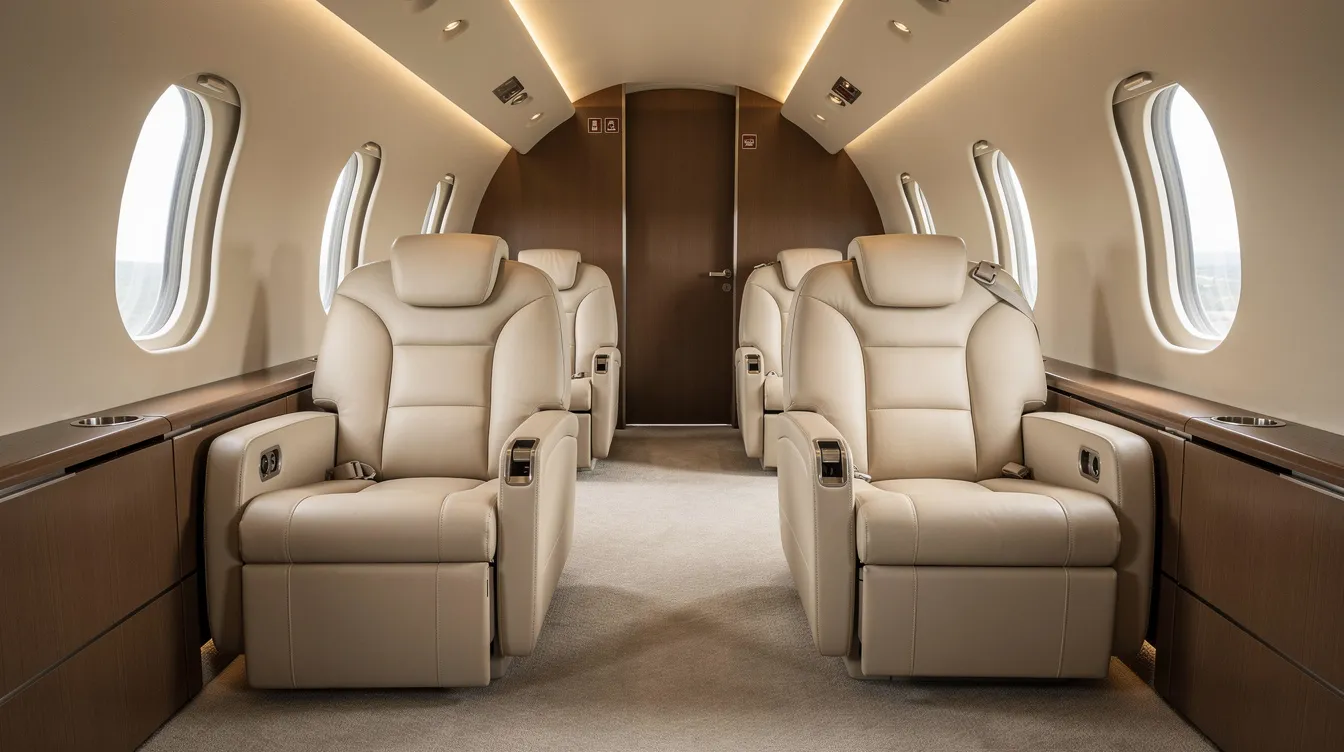
Inside, expect quiet cabins for board calls, Wi-Fi, curated catering, and layouts intended for work or family. If a CEO flying from San Francisco to Dallas has a board meeting run late, BlackJet’s response team can evaluate crew duty limits, airport slots, and a new departure time rather than leaving the traveler stranded. This raises the question: why would a CEO ever choose to fly on a competitor’s airline when a BlackJet 25+ Hour Jet Card offers such flexibility and control, especially when you understand how a 25-hour Jet Card is structured and priced?
Technology, Booking, and the Future of Sustainable Flying
Technology has made private aviation easier to manage. BlackJet’s platform is designed to make booking feel as simple as arranging a premium car service: choose cabin category, view estimated flight time, review aircraft options, and confirm the trip, whether you want to charter a small private plane for a short hop or book a longer mission.
A trip page can include the title of the itinerary, route details, safety status, a support link, and live updates rather than vague posts or scattered emails. Some clients prefer a phone call; others want a video consultation before their first month of flying.
Sustainability is also now relevant to high-end travel. Many travelers start by exploring the cheapest private jet and entry-level options or other affordable private planes and light-jet alternatives, and then look at how providers handle emissions. BlackJet ensures every journey is carbon neutral by default, at no extra cost to you. That means route emissions are measured, then balanced through verified carbon offsets such as reforestation or renewable energy projects. Sustainable Aviation Fuel may reduce lifecycle emissions by up to about 80%, depending on feedstock and production method, though supply and cost remain challenges. By the early 2030s, better engine design, cleaner fuel, improved routing, and selective electric or hybrid aircraft may change the community standard for premium aviation.
FAQs About Flying Privately with a Jet Card
What follows is a concise list of common topics high-frequency travelers ask before switching.
What annual flying justifies a Jet Card? A Jet Card often makes sense around 25–75 hours per year. Below that, charter may work. Above that, fractional or full ownership may deserve review.
How far ahead should I book? Many Jet Card flights can be arranged with 24–48 hours’ notice, but earlier is better for holidays, major events, and international trips, especially once you understand Jet Card pricing structures and associated fees.
Can I change destinations on the day of departure? Often, yes, subject to crew duty limits, airport permissions, customs, and aircraft position. This is one reason private access is different from commercial airlines and why travelers often compare Flexjet Jet Card costs and options with other membership models.
How are safety checks handled before each flight? BlackJet reviews operator status, aircraft readiness, crew qualifications, weather, and maintenance documentation before confirming the mission.
What is included in pricing? Hourly rates commonly include aircraft, crew, and standard fuel assumptions. De-icing, premium catering, peak-day surcharges, international handling, or special requests may apply, and the answer also varies by type of private jet and cabin category.
Can I fly internationally? Yes. Passports, visas, customs, and immigration still apply, but private terminals streamline the process. Typical routes include New York–London and Miami–São Paulo, and many travelers compare programs like NetJets’ Jet Card cost and structure with leading private jet charter companies in the USA when planning regular transatlantic missions.
How to Get Started with BlackJet and Elevate Your Flying
Rethink how you fly over the next 12–24 months. Compare your current mix of commercial flights, charter, and possible ownership against a structured Jet Card program, including whether a 100-hour Jet Card option matches your typical annual usage or if chartering an aircraft for around 100 passengers better fits large corporate or group missions.
The first action is simple:
Schedule an initial consultation by phone or video.
Review your common routes, annual hours, and cabin needs.
Select a 25-hour or 50-hour Jet Card tier.
Onboard to BlackJet’s mobile booking platform.
Premier safety standards protect every flight. As you evaluate providers, it can help to understand how top private jet companies compete on safety and service and how they differentiate their most premium, ultra-expensive private jet offerings, including the world’s top 10 private jets for ultimate luxury and performance. For travelers flying with larger groups or families, comparing the cost of a 12-seater private jet with the best private jet options for 20 passengers or even large private jets configured for 50 passengers can clarify the right cabin size. Carbon-neutral performance reduces the environmental impact of your travel. Seamless technology keeps every detail in one place from start to end.
Explore how BlackJet can reshape your flying experience with private jet access built around time, confidence, and choice.
Conclusion: Elevate Your Travel with BlackJet’s Private Flying Experience
Flying privately transcends luxury—it is a strategic investment in your time, privacy, and peace of mind. In an era of shifting airline routes and growing commercial aviation challenges, BlackJet’s Jet Card programs offer unparalleled flexibility, rigorous safety standards, and seamless technology to redefine how you fly. Whether navigating business trips from New York to London or leisure escapes to coastal retreats, private jet access with BlackJet ensures every journey is efficient, comfortable, and carbon-neutral. Discover how our commitment to safety, sustainability, and personalized service can transform your travel into a premier experience tailored to your unique needs. Elevate your flying—effortlessly—with BlackJet.


 Sign up with google
 Sign up with Apple


