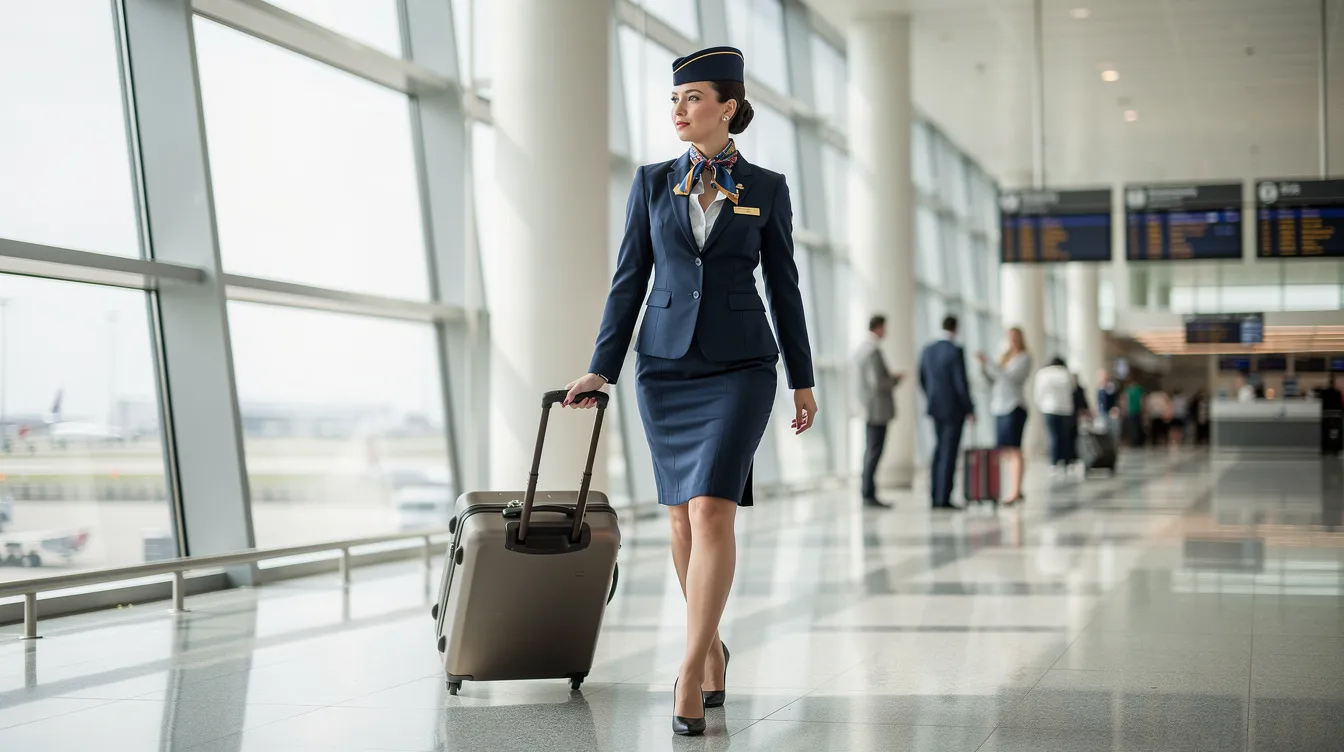
The average flight attendant salary per hour in 2026 is about $29.52 per flight hour in the U.S., though actual rates range from roughly $26 to more than $100 depending on airline type, seniority, and role. Flight attendant compensation is one of aviation's most misunderstood topics, because the posted hourly rate tells only part of the story.
For aspiring or current flight attendants, aviation professionals, and travelers curious about what cabin crews are really paid, the key is understanding how flight time differs from duty time and how commercial and private aviation pay structures split apart. Here's what the numbers actually look like in 2026, including career-stage pay progression, commercial vs. private jet crew compensation, added pay such as per diem and boarding pay, and the factors that shape earnings from airline and base to onboard role—context that also helps explain the service value behind private flying with BlackJet.
Key Answer: What Is the Average Flight Attendant Salary Per Hour?
The average flight attendant salary per hour in 2026 is approximately $29.52 per flight hour, based on recent U.S. data from major airline contracts and industry aggregators. That figure represents flight time only - the period from when the aircraft door closes until it opens at the destination - not total duty hours spent at the airport, during boarding, or on layovers.
The ranges are wide. Entry-level flight attendants often earn between $26 and $37 per flight hour in typical starting pay ranges for new hires, depending on whether they fly for regional carriers or major US carriers like American, Delta, United Airlines, or Southwest Airlines. Senior flight attendants can earn $67 to $100+ per flight hour at legacy airlines, particularly those in lead or purser roles on international routes.
To translate hourly into monthly and annual salary figures: most flight attendants log 75 to 100 flight hours monthly. A new hire flying around 76 credit hours at $30 per hour earns roughly $2,280 per month in flight pay, while a senior flight attendant at $85 or more per hour flying 90 hours can clear $7,650 monthly before extras.
For those in private aviation, the picture shifts. Experienced cabin crew on large-cabin private jets - the kind of aircraft that serve high-net-worth clients - can earn effective hourly rates that rival or exceed top commercial flight attendant pay when calculated per flight hour or per-trip day rate. Understanding the average flight attendant salary per hour helps travelers appreciate the professionalism, safety training, and service level embedded in every hour of flying - whether on a commercial flight or aboard a private jet.
How Flight Attendant Hourly Pay Really Works
Flight Time vs. Duty Time
Flight attendant hourly pay is based on "credit hours" or "block hours" - the window that begins when the aircraft door closes and the parking brake is released, and ends when the parking brake is set and the door opens at the arrival gate. Flight attendants are paid only for flight time, not duty hours. That distinction matters enormously.
A flight attendant works a 10-hour duty day but may only accumulate 6 hours of actual flight time. The remaining hours - spent on check-in, boarding passengers, ground delays, deplaning, and layover transit - are largely unpaid or compensated at a fraction of the flight-hour rate.
Boarding Pay Explained
Several major airlines now offer boarding pay to partially close this gap. At carriers like Delta and United, boarding pay is typically calculated at roughly 50% of the flight-hour rate for time spent managing passengers before the aircraft door closes. United's 2026 contract ratification valued boarding pay at approximately 7–8% of total flight attendant compensation - meaningful, but still far from covering all ground duty time.
Monthly Scheduling and Guaranteed Minimums
Monthly scheduling rules provide a safety net. Flight attendants typically receive guaranteed minimum pay for a set number of hours per month, often 70–80 hours, ensuring baseline income even when flights cancel or irregular operations disrupt the schedule. For example, SkyWest guarantees 76 flight hours per month for reserve crew members.
Average Flight Attendant Hourly Pay by Career Stage
Pay Progression by Seniority
Flight attendant pay follows a structured pay scale that rewards longevity. Most major U.S. airlines use a 12-to-13-year step system for pay increases based on seniority. Here's what the progression looks like in 2026:
New hire / first year (0–2 years):
Starting flight attendants at regional carriers earn roughly $18–$26 per flight hour. Endeavor Air, for instance, starts new flight attendants at about $26.23 per hour.
At major airlines, new hires fare better - United's 2026 pay scale begins at $37.10 per flight hour after initial training, while starting salaries at other major carriers fall in the $30–$37 range.
First-year flight attendants typically earn about $28,000 annually before per diem and bonuses.
Early career (3–5 years):
Step increases push the hourly rate to approximately $38–$50 per hour.
Schedule options improve, reserve days decrease, and many flight attendants gain access to more desirable domestic flights.
Mid-career (6–10 years):
Mid-career flight attendants can earn over $50–$60 per hour at major carriers, with improved bidding power and growing access to international flights.
United's Year 7 rate sits at $61.14 per flight hour.
Senior (11+ years):
Senior flight attendants can earn upwards of $85 to over $100 per hour at major airlines, with annual salary ranging from $80,000 to $115,000 or more.
United's top step reaches $100.13 per flight hour by Year 13+.
Crew members in purser roles with supervisory responsibilities earn additional premiums.
Seniority is airline-specific - changing carriers mid-career typically resets pay to near-entry levels, which is why many flight attendants stay decades with one airline.

Hourly Pay, Credit Hours, and Annual Salary: Putting the Numbers Together
Example Calculations by Career Stage
The relationship between hourly rate, monthly credit hours, and annual salary is rarely straightforward, because flight attendants never log a standard 160-hour month. According to the Bureau of Labor Statistics, flight attendants in the United States have median annual wages of approximately $67,130, with the average salary for flight attendants at approximately $68,370 annually. The median flight attendant salary reflects a career-average figure that blends new hires with decades-long veterans.
Here's how the math works at different stages:
New hire at $30/hour × 76 credit hours = ~$2,280/month in flight pay, or about $27,000–$28,000/year before per diem and bonuses. The average annual salary for a first-year flight attendant is $28,000.
Mid-career at $50/hour × 85 credit hours = ~$4,250/month, around $51,000/year.
Senior at $85/hour × 90 credit hours = ~$7,650/month, around $91,800/year before extras.
Per diem pay, profit sharing, holiday premiums, and lead/purser pay can add 10–30% to these figures for a well-scheduled senior crew. Pay also varies by base location - a senior flight attendant based in New York or San Francisco often earns more overall than one at a smaller hub, due to route mix and international flying opportunities. Irregular hours and seasonal demand cause month-to-month income swings, which matter for budgeting, just as geography and demand patterns influence jet card membership costs and value across providers and the overall cost to charter a small private plane.
Per Diem, Boarding Pay, and Other Add-Ons to Hourly Flight Attendant Pay
Per Diem Explained
Flight attendants receive additional compensation through per diem allowances and other premiums beyond their base hourly wages.
Per diem pay is an hourly allowance for every hour a flight attendant is away from their home base - from report time until final release - meant to cover meals and incidentals, similar in concept to how operating expenses and ancillary fees are factored into a comprehensive private jet price list and cost breakdown or guides to the cheapest private aircraft and budget-friendly options.
Per diem rates range from $2.00 to $3.00 per hour at most airlines, with some carriers offering more.
Southwest Airlines pays $3.04/hour domestic and $3.63/hour international.
SkyWest pays $2.25/hour.
For example: a four-day trip with 84 hours away from base at $2.25/hour generates roughly $189 in diem pay. Repeating similar specific trips weekly can add $700–$800 per month.
Boarding Pay and Other Premiums
Boarding pay, now part of recent contracts at United, Delta, and American, compensates crew at approximately 50% of the flight-hour rate for scheduled boarding time. Many regional carriers have not yet adopted this.
Additional compensation includes holiday pay (often 150% on specific holidays), premium pay for international routes, deadhead pay when repositioning as a passenger, and minimum-day pay guarantees.
On the tax side, per diem is often partially or fully non-taxable when treated as reimbursement for travel expenses under IRS guidelines, though specifics vary depending on individual circumstances.
Reserve vs. Lineholder: How Schedule Impacts Effective Hourly Pay
Reserve vs. Lineholder Schedules
Reserve flight attendants - usually junior crew members - are on call and assigned to flights on short notice. They're typically guaranteed 70–76 credit hours per month but face unpredictable reserve days, last-minute trip assignments, and airport standby shifts.
Lineholders, by contrast, hold a bid "line" of scheduled trips based on seniority, allowing them to choose specific routes and days off.
Commercial Airline Flight Attendant Pay vs. Private Jet Cabin Crew Compensation
Commercial Airline Pay Structure
Commercial flight attendants earn hourly flight pay plus per diem, following union-negotiated pay structures with transparent seniority steps. They typically serve 100–300 passengers per flight across a high volume of daily legs. The system is predictable, well-documented, and publicly available through airline career pages and contract disclosures.
Private Jet Cabin Crew Compensation
Private jet cabin crew typically earn salaries or day rates instead of hourly flight pay based on block hours, especially on light and midsize aircraft similar to typical $5 million private jets used for regional and transcontinental travel.
According to industry data, base hourly wages for private jet cabin crew average around $21/hour at smaller operators, with total compensation packages at larger operations ranging from $55,000 to $80,000 annually for standard roles.
However, experienced private jet crew on large-cabin, long-range aircraft serving ultra-high-net-worth clients can earn $90,000 to $140,000+ annually - figures that often exceed what many commercial peers take home, particularly on group missions aboard private jets configured for around 15 passengers with long-range capability.
Private jet crews provide highly personalized service to 1–14 passengers, managing bespoke catering, cabin presentation, and discrete service under Part 135 or Part 91 regulations, similar in many ways to the compensation structures outlined in this private jet pilot salary guide and broader analyses of how much a private jet pilot costs to employ, and they may also support larger-group operations on private jets suitable for around 20 passengers.
Entry-level private aviation roles may pay less than commercial positions initially. But experienced private cabin crew working fewer, longer missions - such as a 10-hour transatlantic leg with intensive one-on-one service - often achieve high effective per-hour earnings. For a deeper look at this career path, explore private jet stewardess salary expectations and private plane stewardess job opportunities. While commercial pay tables are public, private jet compensation remains more customized and often confidential, making industry ranges approximate.

Factors That Influence Flight Attendant Compensation: Airline, Base, Route, and Role
Pay varies significantly based on airline, union contracts, type of flight, and geographic location. Here are the primary variables that shift flight attendant compensation beyond simple seniority tables, much like the aircraft category, provider, and surcharge structure that determine jet card cost per hour in private aviation or the economics of leasing a private jet instead of owning outright:
Airline type: Major airlines like American, Delta, and United generally pay significantly more than regional carriers at comparable seniority - sometimes double the hourly rate. Airline policies around pay structure, new contract negotiations, and profit sharing create further gaps, just as brand, fleet, and service standards affect NetJets jet card costs and program pricing and the value proposition of the best $10 million private jet options for luxury travelers.
Base city: The highest-paying cities for flight attendants often include New York, Seattle, and San Francisco. Flight attendants in New York earn $40.90 per hour on average, reflecting access to international routes and higher diem rates, just as home region influences private aviation pricing in guides to private jet prices in rupees for Indian travelers.
Route mix: Long-haul international flights offer higher hourly rates, richer per diem, and language premiums of $2–$4 per flight hour for qualified speakers, mirroring how intercontinental missions shape cabin design and operating economics on typical $15 million private jets.
Role premiums: Lead, purser, or international service director roles add $2–$10 per flight hour depending on carrier and aircraft type. These positions carry supervisory responsibilities and reflect years of experience, similar to how senior crew roles are structured on larger $20 million private jets optimized for long-range missions.
Contract cycles: Wage growth surged in 2024–2026 as unions negotiated aggressively. United's new contract delivered an average 31% pay increase, and many airlines added boarding pay and improved hotel accommodations for crew. Health insurance and travel perks also vary depending on carrier and contract terms, much like how evolving offerings from providers such as Flexjet shape jet card program costs, benefits, and flexibility and influence decisions between fractional programs and private jets for sale under $10 million as more affordable ownership entries.
How Flight Attendant Pay Relates to the Cost and Value of Private Jet Travel with BlackJet
Understanding the average flight attendant salary per hour illuminates what BlackJet clients experience on every private flight. When you book through a BlackJet Jet Card or explore flexible options like the BlackJet 25+ Hour Jet Card, cabin crew compensation, training, and scheduling are integrated into the overall hourly rate - you're never billed separately for attendants, but their expertise is a core part of the value you receive from premium private jet card programs.
BlackJet works exclusively with operators that meet rigorous safety and certification standards, ensuring every cabin host is trained in emergency procedures comparable to or exceeding commercial airline requirements, similar to the scrutiny applied when evaluating top private jet companies for luxury travel and exceptional service. Where a commercial first-class ticket spreads a flight attendant's pay across hundreds of passengers, a BlackJet flight may have one highly trained crew member focused exclusively on a family or small executive team during a 6-hour New York–Los Angeles trip on a super-midsize jet - delivering bespoke dining, privacy, and seamless coordination via BlackJet's digital platform and real-time support.
BlackJet also ensures carbon-neutral flights at no additional cost, so every crew member's work happens within an operation committed to offsetting emissions - aligning with the values of discerning travelers who expect both excellence and responsibility, whether they opt for a 100-hour jet card for frequent private flying, choose a more modest 50-hour jet card program tailored to occasional trips, or focus on aircraft from the top private jets in the world that emphasize performance and sustainability.
FAQs About Average Flight Attendant Salary Per Hour
What is the average flight attendant hourly pay in 2026?
The national average is approximately $29.52 per flight hour. However, this reflects only paid flight time - real hourly income is lower when factoring in unpaid duty time during boarding, delays, and layovers.
How much does a first-year flight attendant make?
First-year flight attendants earn about $28,000 annually at U.S. carriers, though starting pay varies by airline type and credit hours. The range spans $25,000–$45,000 depending on whether they fly for regional or major airlines and how many credit hours they receive during their first year.
Can flight attendants earn six figures?
Yes. Senior flight attendants at major airlines with international routes, high hourly rates of $80–$100+, and strong schedules can reach $100,000–$140,000+ annually when including premiums, profit sharing, and per diem.
Is per diem counted in hourly pay?
No. Per diem is paid separately from flight pay at around $2–$3 per hour away from base. It effectively boosts total hourly earnings but isn't part of the posted flight-hour rate or the median annual salary figures reported by the Bureau of Labor Statistics.
Do private jet flight attendants get paid more?
It depends on experience and operator. Entry-level private roles can pay similarly or slightly less, but experienced private cabin crew on large-cabin aircraft often earn higher total compensation than many commercial peers. For BlackJet travelers, understanding crew compensation underscores the professionalism behind each private flight - but the value you experience is measured in time saved, privacy, and control, especially when leveraging the best jet card options for frequent flyers or even exploring innovative private plane rideshare solutions that lower per-seat costs.
Conclusion
Grasping the nuances of the average flight attendant salary per hour reveals much more than just numbers—it highlights the professionalism, dedication, and expertise that cabin crews bring to every flight. From entry-level hires to seasoned senior attendants, compensation reflects years of training, responsibility, and service quality that passengers often take for granted.
In commercial aviation, hourly flight pay combined with per diem and premiums ensures crew members are fairly compensated for the demanding nature of their work, despite the complexities of unpaid duty time and irregular schedules. Meanwhile, private jet cabin crews operate under different pay structures that emphasize bespoke service, flexibility, and exclusivity, often commanding competitive or higher effective hourly rates—particularly on larger aircraft such as 12-seater private jets, whose ownership and charter costs scale with size and capability.
For travelers, especially those considering private jet access through programs like BlackJet’s Jet Card membership, understanding crew compensation underscores the seamless, safe, and personalized experience that justifies the premium, and fits into the broader picture of what it costs to rent a private jet by the hour, how different models appear on a comprehensive private jet price list of ownership and charter options, and the nuances of jet card pricing, membership fees, and hourly rates. BlackJet’s commitment to rigorous safety certification, highly trained cabin crew, and carbon-neutral operations ensures every hour in the air delivers exceptional value beyond the flight attendant salary alone.
Ultimately, whether flying commercial or private, the investment in skilled cabin crew translates into elevated comfort, safety, and efficiency—an essential pillar of modern luxury travel that discerning travelers appreciate and deserve, and one that is matched behind the scenes by performance-based earnings for roles like private jet brokers who structure charter and membership deals and private jet sales professionals advising on high-value aircraft purchases. This same ecosystem supports everything from the most expensive private jet options in the market and large private jets for up to 50 passengers to premium UK private jets for sale and even the cheapest private jet models accessible to new entrants.


 Sign up with google
 Sign up with Apple