For high-net-worth individuals and corporations, private aviation is no longer a perk-it is a strategic asset. The ability to bypass commercial terminals, control your schedule down to the minute, and fly with complete privacy translates directly into recovered time and compounding productivity. Understanding airplane leasing rates is essential for anyone evaluating how to secure that advantage without overpaying.
Executive Overview: How Airplane Leasing Rates Shape Your Private Flight Strategy
In 2026, leasing a private jet typically costs $500,000 to several million annually, depending on cabin class and utilization. Monthly lease payment ranges span from roughly $55,000 for a turboprop to well over $1 million for a large-cabin, ultra-long-range jet. For context, monthly lease rates for a new Airbus A320neo and a Boeing 787-9 are around $400,000 and $1.05 million, respectively, using these commercial aircraft as market benchmarks. Monthly lease rates for large cabin jets exceed $1 million at the top end of business aviation, approaching what airlines pay for narrowbody aircraft.
This article focuses on business and private aviation leasing-what it costs, what drives those costs, and how leasing compares to alternatives like BlackJet's Jet Card membership and on-demand charter, complementing a broader comprehensive guide to leasing a private jet. For most private travelers, the predictable but rigid monthly payments of a lease are often less flexible and more capital-intensive than a Jet Card model designed around prepaid flight hours and guaranteed access to a vetted fleet.
How Airplane Leasing Works in Business Aviation
A private jet lease is a contractual agreement-typically 24 to 60 months-in which a lessor provides a specific aircraft to a lessee in exchange for a fixed monthly lease payment tied loosely to the aircraft's market value. Most leases also specify a contracted annual flight-hour range, often 150 to 400 hours, which helps the lessor amortize fixed costs.
Leasing eliminates the large upfront capital investments required for aircraft ownership: instead of a purchase price running into tens of millions, the lessee commits to monthly payments and a security deposit. Leasing structures impact overall operational costs significantly, because the lessee-not the lessor-bears responsibility for fuel, flight crew salaries, insurance, and maintenance in most dry lease arrangements.
The parties involved are straightforward: leasing companies (specialist aviation lessors or banks) provide the aircraft, while the lessee-whether a corporation, UHNW individual, or charter operator-operates it. A management company often handles day-to-day scheduling, crew, and dispatch reliability.
Consider a regional law firm that enters a 36-month dry lease on a 2019 Citation XLS+, committing to 300 hours per year. The firm controls a single tail number, bases the aircraft at its home airport, and manages crew-an entirely different model from the "always-available fleet" concept behind a BlackJet Jet Card, where aircraft access means booking from a network of vetted operators without managing a flight department.
Corporate flight departments often favor dedicated leased aircraft for route consistency, but this locks them into one aircraft type. BlackJet's premium private jet card programs, by contrast, provide availability across cabin classes-from turboprops to ultra-long-range jets-on demand.
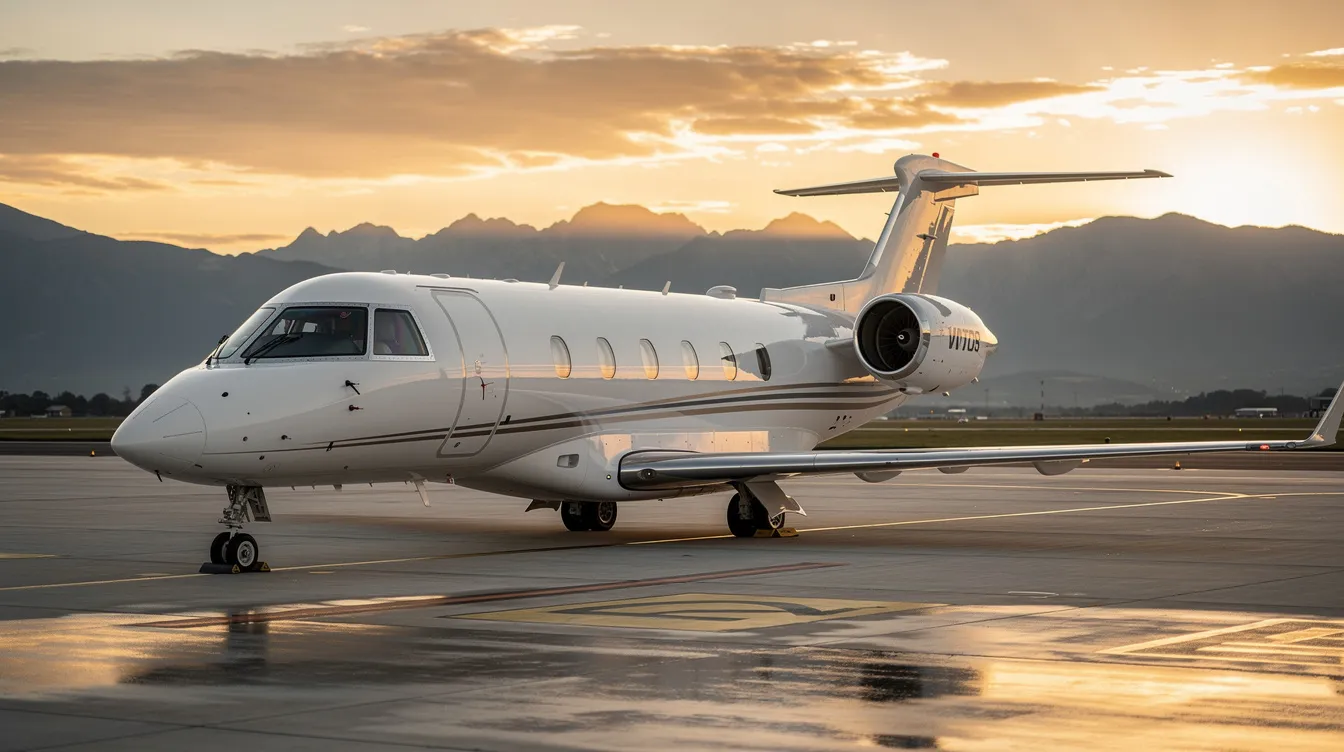
Lease Types That Drive What You Actually Pay (Dry, Wet, Damp & Hybrid)
The lease structure you choose shapes your true cost as much as the headline rate. Here are the main types:
Dry lease: The lessor provides only the aircraft without crew or maintenance. The lessee supplies a complete crew, arranges maintenance, secures insurance, and operates under its own certificate. This is the most common structure in business aviation for organizations with existing flight departments.
Wet lease (ACMI): A wet lease includes aircraft, crew, maintenance, and insurance-all provided by the lessor. The lessee pays for fuel, airport fees, and other operational aspects. ACMI leases include aircraft, crew, and maintenance, but not fuel. Airlines use wet leases for additional capacity during seasonal peaks or when manufacturer delivery delays constrain fleet growth.
Damp lease: Common in European markets, the lessor supplies aircraft, pilots, and maintenance, while the lessee provides cabin crew. This niche arrangement suits carriers needing capacity with branded service.
Hybrid and synthetic leases: Some structures bundle select maintenance items or crew for certain segments, blending elements of dry and wet leases to balance cost and control.
How airplane leasing rates are quoted depends heavily on structure. A dry lease shows a lower base rent, but the lessee budgets separately for crew, maintenance, and other expenses. A wet lease bundles these into a higher monthly number, simplifying accounting but reducing operational control.
Scenario 1: A seasonal wet lease for a large-cabin jet supporting Formula 1 2026 travel might run $600,000–$800,000 per month for three months, covering aircraft, crew, insurance, and maintenance; lessee pays fuel and handling, which you can weigh against the flexibility highlighted in a practical cost comparison of private jet chartering.
Scenario 2: A corporate dry lease on a King Air 350i for three years might carry a base lease of $60,000–$100,000 per month, with the lessee separately managing engine programs, crew training, and insurance.
For travelers who prefer not to manage any of these obligations, BlackJet's Jet Card programs provide guaranteed aircraft access with no long-term binding lease, no maintenance responsibility, and no crew management.
Key Factors That Influence Airplane Leasing Rates
Lease rates are not arbitrary. Aircraft leasing rates are influenced by the aircraft's market value, lease term, and interest rates-along with market demand and residual value expectations.
Market value and Lease Rate Factor (LRF): Airplane leasing rates are expressed as a Lease Rate Factor, which typically ranges from 0.6% to 1.2% per month of the aircraft's value. Higher initial market prices generally lead to higher monthly lease payments. An aircraft valued at $55 million with a 0.8% LRF translates to a base monthly lease of roughly $440,000. Lessors model the present value of expected future cash inflows against projected residual value to determine acceptable pricing.
Interest rates: Interest rates affect lease rentals as higher borrowing costs lead to increased lease rates-a dynamic that has kept rates elevated through 2025–2026.
Supply-demand imbalances: Supply and demand imbalances can significantly influence lease rates. OEM delivery delays, GTF engine groundings affecting hundreds of frames, and sustained post-COVID demand have created a significant increase in both market values and lease prices across categories. Market demand can increase lease rates by 20–50% during peak times.
Lease duration: Lease duration affects costs; shorter terms have higher rates because the lessor must amortize asset risk over fewer months. Short-term leases typically have higher monthly rates than long-term leases, while longer-term leases offer the lessor more predictable revenue.
Credit quality: Airlines with stronger credit ratings often secure lower lease rates, and the same principle applies in business aviation-lessees with weaker credit may pay 3–6 months of base rent as a security deposit.
Utilization: Higher contracted annual hours lower the effective per-hour cost but increase total monthly payments. A lessee flying 300 hours per year on a $250,000/month lease pays roughly $10,000/hour in fixed lease cost; at 150 hours, that doubles.
BlackJet clients sidestep residual value risk and market volatility entirely-Jet Card pricing is set at the time of purchase, with no exposure to shifting market values, and tools for understanding jet card cost per hour make it easier to benchmark these rates against lease scenarios.
Aircraft Type, Size, and Category: From Turboprops to Ultra-Long-Range Jets
Aircraft type is the single largest determinant of base lease cost. Here are typical 2026 dry lease ranges in business aviation, excluding fuel and variable costs:
Turboprops (entry level): King Air 250/350i, Pilatus PC-12 NGX - approximately $55,000–$120,000 per month for mid-2010s to early-2020s airframes, fitting into the broader landscape of small private aircraft for various travel needs.
Light jets: Embraer Phenom 300, Citation CJ3+ - roughly $80,000–$170,000/month depending on aircraft age, avionics generation, and engine programs. Light jet options are popular for regional missions under three hours.
Midsize and super-midsize: Citation XLS+, Challenger 350, Gulfstream G280 - typical monthly lease payment of $170,000–$400,000+ for 2015–2024 models. These versatile aircraft serve both domestic and shorter international routes and include options comparable to a 5 million private jet in the light to midsize class, and they sit in the middle of the broader private jet price spectrum across categories.
Large-cabin and ultra-long-range: Gulfstream G550, G600/G700, Global 6000/7500 and other longer haul models - rough bands from $450,000 up to well over one million dollars per month for late-model, commanding lease rates that reflect range capability and cabin volume, and overlapping with many of the leading 16 seat private jet options for group travel.
For commercial benchmarks, narrowbody aircraft lease rates are around $400,000 monthly for types like the A320neo. The Airbus A321neo leases for approximately $460,000 per month. The Airbus A320neo is valued at around $55 million, while the Airbus A321NX is valued at approximately $64 million. New-generation widebodies push far higher: the Boeing 787-9 leases for about $1.05 million monthly, and A350-900 lease rates are around $1.14 million per month. Fuel-efficient aircraft typically command higher lease rates than older models across both commercial and business aviation.
BlackJet's fleet access across aircraft categories lets members match each mission to the right cabin class-light jet for a two-hour hop, large cabin for transatlantic-without committing to the balance-sheet impact of a dedicated leased aircraft, while also opening the door to more affordable private jet options for cost-sensitive missions.
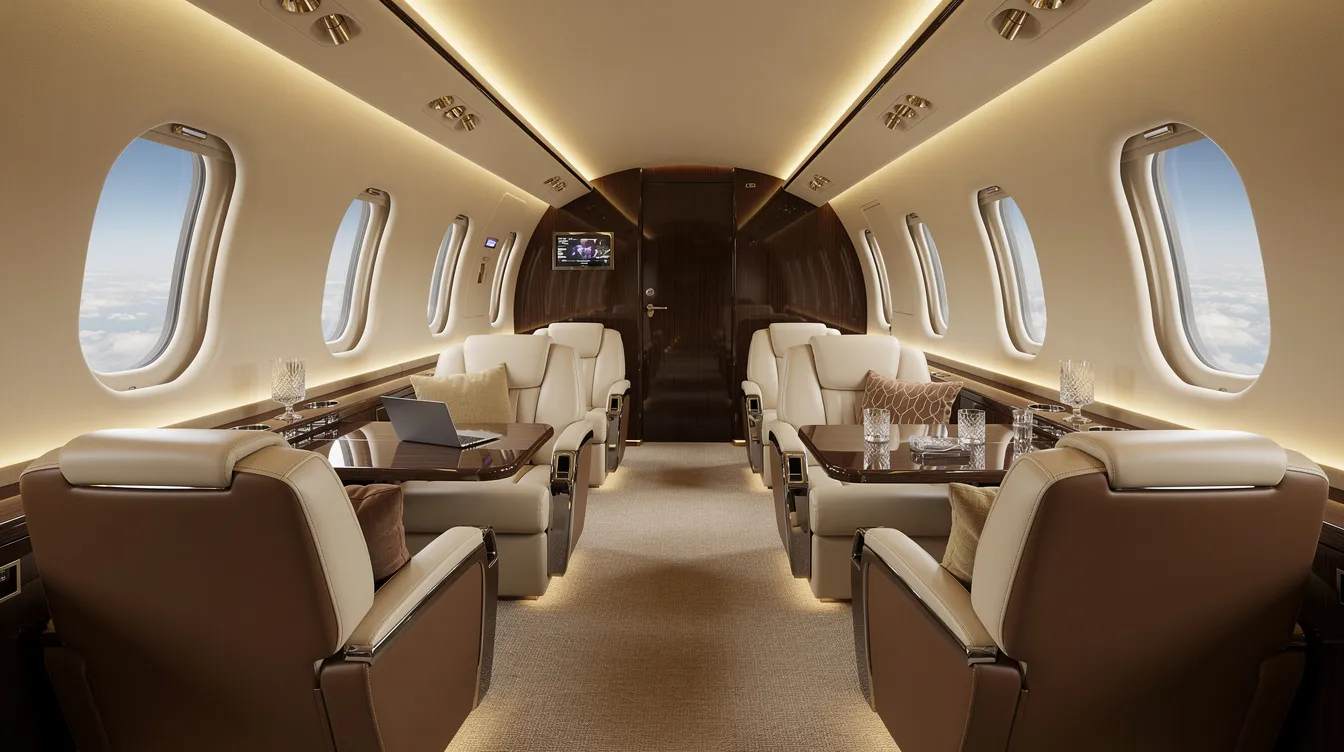
Aircraft Age, Previous Generation Models, and Market Values
Aircraft age impacts lease prices; newer jets cost more due to better fuel efficiency, lower maintenance risk, and stronger residual values. The gap between generations is stark.
In the narrowbody commercial sector, the new family of A320neo and 737 MAX 8 aircraft hold values near $55 million with lease rates around $400,000/month. Market values for previous-generation narrowbody aircraft have eased recently; mid-life A320-200 and 737-800 frames still achieve $230,000–$250,000 per month, buoyed by sustained demand from airlines needing capacity while awaiting new deliveries. Previous generation aircraft remain workhorses but carry higher per-seat fuel costs.
Among widebody aircraft, the Boeing 787-9 has shown strong market value recovery recently, leasing at about $1.05 million monthly. The A330-900 has exhibited the strongest recovery among new-generation widebodies, making it the best performer in its class. Meanwhile, a 12-year-old Boeing 777-300ER leases for about $450,000 monthly, and a 12-year-old Airbus A330-300 leases for approximately $330,000 monthly. Older widebodies face weaker recovery and increased operational costs, which explains why the most notable rebounds in generation-widebody values have occurred among newer types. These notable rebounds reflect long-haul travel recovery driving modern widebody aircraft to see rising lease rates.
In business aviation, the dynamic mirrors this pattern. Older aircraft-say a pre-2015 Gulfstream G450 versus a current-production G600-may lease for $50,000–$150,000 less per month but carry higher maintenance reserves and fuel burn. For some owners, the calculus also includes whether to step into 10-million-dollar private jet ownership options versus accessing similar aircraft through leasing or jet cards. BlackJet partner operators favor newer, fuel-efficient aircraft precisely because they deliver better dispatch reliability and a superior passenger experience while still aligning with sensible lease economics.
From Monthly Lease Payment to True Cost: What You Actually Spend
The headline monthly lease payment tells only part of the story. Leasing costs can increase by 30–60% when including operational expenses-fuel, crew, maintenance, insurance, and handling.
Key cost buckets beyond base rent include:
Fuel (often 25–35% of total flight operations cost)
Crew salaries, training, and recurrent proficiency, which mirror the broader economics of hiring and retaining private jet pilots
Maintenance reserves and unscheduled repairs
Insurance premiums
Hangar, handling, and airport fees
Navigation charges, catering, and Wi-Fi
Concrete example: A 2022 midsize jet such as a Citation XLS+ with a base lease of approximately $220,000/month. When the lessee flies 40–50 hours monthly, variable costs push total monthly payments to $320,000–$380,000. Fuel price volatility-jet-A has swung between $4 and $8 per gallon in recent years-directly affects per-hour costs more than it changes the base lease rate.
Lessees may pay extra for maintenance reserves, affecting total operational costs. Aircraft leases include usage-based maintenance reserves for upcoming heavy overhauls, sometimes collected as fixed monthly amounts, sometimes billed per flight hour. Return conditions at lease-end can trigger additional redelivery expenses if the aircraft doesn't meet agreed-upon standards; keeping transitions low requires careful planning throughout the lease term.
Ownership allows for direct management of operational expenses, but leasing shifts residual value risk to the lessor while still loading the lessee with operational burden. By contrast, BlackJet's Jet Card delivers a single, all-inclusive hourly rate covering aircraft, crew, insurance, and standard catering-no surprise maintenance invoices, no insurance renewals, and no unused hours going to waste- and aligns closely with what seasoned travelers look for in the best jet cards for frequent flyers.
Market Lease Rates in 2024–2026: Narrowbody, Widebody, and Business Jet Trends
The current aircraft leasing market is characterized by elevated lease rates across categories. Lease rates are indicators of the commercial aviation market's health, and the signals are clear: aircraft leasing is highly cyclical and influenced by market demand, and right now demand is outpacing supply.
Manufacturer delivery delays and strong passenger demand influence the current lease rate environment. New-generation narrowbodies have very strong lease rates due to production delays and high demand-the A320neo holds near $400,000/month and the A321neo around $460,000/month with market values of $55–64 million depending on variant. The trend toward lease extensions continues as airlines retain existing frames rather than wait for delayed deliveries, and demand for lease extensions across narrowbody fleets supports pricing stability.
Modern widebody aircraft are seeing rising lease rates driven by long-haul travel recovery. The 787-9 sits at approximately $1.05 million monthly; the A350-900 at about $1.14 million. Previous-generation widebodies- the 777-300ER at roughly $450,000/month and A330-300 at $330,000/month-reflect the gap between fuel-efficient newer frames and older types. Per IBA Insight data, these commercial benchmarks directly influence pricing expectations for large-cabin business jets, because both compete for the same capital from global lessors.
Regional aircraft demand is supported by fleet expansion and growth in secondary airports. Excess supply of aircraft in the market can lower lease rates, but current inventory tightness has prevented that dynamic in most categories, which is why many decision-makers benchmark lessor terms against top private jet companies and access models before committing capital.
Private investors and corporate flight departments should monitor these commercial trends because they affect residuals, financing terms, and the opportunity cost of capital tied up in a leased aircraft. For shorter terms or fluctuating needs, on-demand charter remains a viable alternative, especially for those comparing lease commitments against the cost of chartering smaller private planes and trying to understand the broader meaning and benefits of charter flights.
Leasing a Plane vs BlackJet Jet Cards and On-Demand Charter
The core question for most private travel decision-makers is straightforward: does committing to a leased aircraft with fixed monthly payments make more sense than using BlackJet's Jet Card programs or ad-hoc charter?
Utilization threshold: Leasing is more economical for users flying over 200 hours annually on stable, predictable routes. Below that threshold, Jet Cards and charter typically win on both cost and flexibility, and detailed breakdowns of a 100-hour jet card cost can help sharpen this analysis.
Operational responsibility: A lessee must manage crew, maintenance, regulatory compliance, and downtime risk. BlackJet members simply book and fly-every flight includes vetted operators, safety oversight, and a complete crew without any management burden on the traveler.
Flexibility: A leased aircraft locks you into one aircraft type and cabin size. BlackJet's network spans turboprops, light jets, midsize, super-midsize, and large-cabin options on a single program. There are no unused hours lost at the end of a term and no penalty for shifting between cabin classes as mission needs change.
Scenario: An executive flying 120 hours per year on North America–Europe routes. A large-cabin jet lease would cost at least $500,000/month in base rent plus operations. A BlackJet 50-hour Jet Card or 25+ Hour Jet Card plus selective charter for overflow missions could deliver the same flights at a fraction of total cost, with no balance-sheet liability and no residual value risk, especially when compared against Flexjet jet card cost structures and similar programs.
Balance-sheet impact: Leases tie up credit lines and can appear as long-term obligations. Jet Cards are prepaid service agreements. For family offices and entrepreneurs, this distinction matters for liquidity and borrowing capacity, particularly when planning around jet card tax deductions. Even fractional ownership programs, while offering partial aircraft access, still carry asset depreciation risk that Jet Cards avoid-a trade-off that becomes particularly stark when evaluating the economics of owning or leasing a 12-seater private jet.

Safety, Sustainability, and Technology: Beyond the Headline Lease Rate
Evaluating airplane leasing rates in isolation is a mistake. Discerning travelers weigh safety standards, sustainability commitments, and technology platforms alongside cost.
Lessees must ensure their operator maintains rigorous training, audits, and certifications-costs that may not be captured in the base lease payment but directly affect the safety of every flight. For buyers considering very small or economical aircraft, assessing the cheapest plane ownership options involves similar diligence around maintenance and safety. BlackJet's proprietary certification process vets every operator in its network, so members fly with confidence, much like a cautious borrower would when evaluating airplane financing options and structures to fund an acquisition instead of leasing.
Sustainability matters financially: newer, fuel-efficient aircraft-such as the G500/600 or latest-generation narrowbody aircraft-burn 15–20% less fuel than previous-generation types, reducing both operating cost and emissions-a major consideration when weighing whether to own a 20 million dollar private jet with next-gen technology or invest in a 15 million dollar private jet and its feature set, or access similar aircraft via lease. Carbon-neutral operations and sustainable aviation fuel can add modest per-hour costs, but BlackJet automatically offsets every flight at no extra cost to members.
Technology also shifts the equation. Digital booking tools, real-time support, and fleet optimization effectively lower the "felt" cost per mission-even when nominal hourly rates appear similar to competitors. For ESG-focused corporations, these capabilities are no longer optional and often align well with unlimited private jet membership models built around frequent, tech-enabled flying.
Who Should Consider Leasing vs Leveraging BlackJet Access?
Leasing makes sense for: major corporations with 300–600 annual executive flights, professional sports teams needing a dedicated aircraft for season travel, governments, and charter operators building fleet scale to serve additional capacity requirements, including those exploring charter solutions for 100 passengers on high-density missions or private jets configured for around 30 passengers.
BlackJet Jet Card membership suits: high-net-worth individuals, family offices, and executives flying 25–200 hours per year who want guaranteed access to premium aircraft without aircraft ownership complexity or multi-year commitments, and who are comparing that model against the baseline costs of renting a private jet on a trip-by-trip basis or even exploring private plane rideshare options to further optimize spend.
Real scenarios:
A West Coast tech founder flying SFO–NYC monthly (roughly 80 hours/year) benefits more from a 25-hour Jet Card renewed as needed than from a $300,000+/month midsize lease, particularly if they occasionally supplement with cheapest private aircraft options for shorter hops.
A European family doing seasonal transatlantic trips and ski holidays-perhaps 50 hours/year across different aircraft types-gains flexibility impossible with a single leased aircraft locked to one tail number, whether they charter whole aircraft or occasionally buy individual seats on private jets, a dynamic mirrored at the very top of the market in billionaire private jet price trends where ultra-wealthy travelers increasingly favor flexible access models.
A corporation could adopt a hybrid strategy: lease a midsize jet for high-frequency domestic routes while using BlackJet for long-haul or overflow missions requiring different aircraft types, perhaps benchmarking BlackJet's pricing against NetJets jet card costs and other providers.
BlackJet's membership structure delivers many of the availability benefits of lease-priority access, predictable pricing, and dedicated support-without multi-year commitments. The deciding factors come down to annual hours, route predictability, appetite for operational control, and ESG goals, as well as familiarity with the main types of private jets available and how each aligns with your mission.
Practical Next Steps: Evaluating Airplane Leasing Rates Against Your Travel Plan
A simple framework can clarify your decision:
Estimate annual hours across all anticipated flights-be honest about seasonal variation and business growth.
Identify your likely aircraft type based on typical mission length and passenger count.
Model total annual cost: for leasing, combine base rent plus operations (add 30–60%); for Jet Card, multiply hours by published hourly rates.
Gather current market lease quotes for your preferred category and compare them against BlackJet's published Jet Card rates.
Engage aviation tax and legal advisors if considering a multi-year dry lease; depreciation, deductibility, and regulatory control carry meaningful financial implications.
BlackJet's team can help benchmark aircraft options, route patterns, and sustainability goals-often in a single consultative call-without requiring any commitment to a lease, and can also clarify how private jet charter pricing is structured if you decide a pure charter solution fits better than long-term leasing.
For travelers who value time, flexibility, and premium service above all else, the math increasingly favors prepaid jet access over the complexity of a dedicated lease. Explore BlackJet Jet Card membership to secure high-end aircraft access, carbon-neutral private travel, and 24/7 real-time support-without locking yourself into today's lease rate cycle.


 Sign up with google
 Sign up with Apple


