Private aviation is no longer only a symbol of luxury. For high-net-worth individuals, business executives, and discerning leisure travel clients, it is a strategic advantage: control over time, privacy in motion, and access to destinations that commercial airlines do not serve efficiently.
This guide explains how to charter private jet travel with confidence, from defining your itinerary to comparing aircraft options, understanding pricing, verifying safety, and preparing for departure with BlackJet.
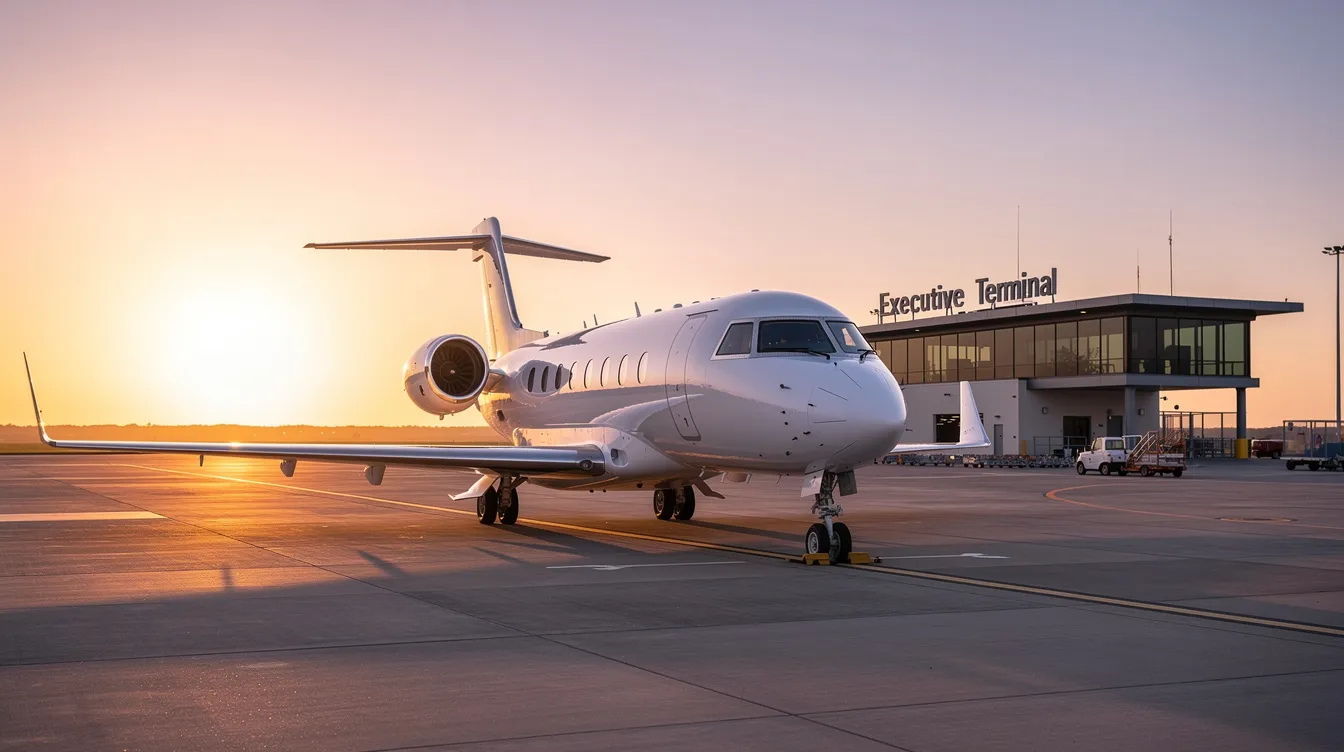
Why Chartering a Private Jet Is a Strategic Advantage (Not Just a Luxury)
A private jet charter gives you something commercial air travel rarely can: command over your schedule. Instead of arriving two hours early, waiting in security queues, boarding on an airline timetable, and routing through hubs, private jet travel lets passengers arrive at private terminals often 20–30 minutes before departure.
A charter flight is the exclusive use of an aircraft. You choose the route, travel dates, guest list, cabin requirements, and final destination. That may mean a same‑day New York–Chicago–Dallas itinerary for meetings, or a family flying directly into smaller airports closer to a ski lodge, vineyard, factory, resort, or private estate.
Chartering a private jet also provides the flexibility that commercial flights cannot offer. Travelers can set their own schedule, choose from a wider range of airports, and access regional airports not serviced by commercial airlines. That is why flying private can turn a two‑day business trip into one efficient day.
There are three primary ways to access private aviation:
On-demand private jet charter: book trip by trip with no long-term commitments.
Jet ownership: full control, but with major fixed costs, crew responsibilities, maintenance, and depreciation.
Jet card programs: prepaid access to private jet hours, typically with simplified billing and priority aircraft availability.
For most travelers, chartering a private jet is the most accessible starting point. It is generally more cost-effective than owning one, especially for individuals who fly less than 300 hours a year, because ownership entails high fixed and variable costs.
BlackJet is a premier air charter service, private jet broker, and jet card provider built for clients who expect premium service without unnecessary complexity, helping match each itinerary and set of preferences to suitable charter options. Our model combines curated aircraft selection, proprietary safety oversight, carbon-neutral flights, digital booking tools, and 24/7 expert support.
Step 1: Define Your Charter Flight Mission & Requirements
Every successful private jet charter flight begins with a clear mission profile. Before contacting a charter company, outline exactly what the flight needs to accomplish.
Use this checklist:
Departure airport and arrival airport
Preferred travel dates and departure windows
One-way or round-trip
Flexibility by a few hours or days
Passenger count
Luggage volume and special baggage
Pets, medical needs, security needs, or catering preferences
Wi‑Fi, sleeping, privacy, or meeting requirements onboard
Ground transportation needs at the origin and destination
For example, a Friday, February trip for four passengers from Teterboro on the East Coast to Miami has a different profile than eight passengers flying from London to Dubai for a three-day board retreat. The first may call for a light jet or midsize jet. The second may require larger aircraft with long-range capability, enhanced catering, and space for work and rest.
Private jets can accommodate a range of passengers, typically from 4 to 19, depending on the aircraft type and configuration. That range matters. A private plane that works beautifully for four travelers and two carry-ons may not be the ideal aircraft for eight passengers with golf clubs, ski bags, and presentation equipment. For around 20 passengers, entirely different private jet options may be appropriate for board meetings or extended families.
Private jets have varying baggage capacities, and certain light jets cannot accommodate excessive golf clubs or large ski bags. If you are planning golf trips, ski weekends, music tours, family trips, or charter flights for 100 passengers, share those flight details early.
Distance and duration also shape aircraft selection. Light jets generally seat 4 to 8 passengers and can travel distances of up to 1,500 miles before needing to refuel, making them ideal for shorter trips. A Boston–Toronto itinerary may work well on small jets, while New York–London requires a super midsize jet with a stop, heavy jets, or large cabin jets designed for oceanic range.
BlackJet’s trip planning team can refine your requirements in minutes by phone, app chat, or email. The more precise your travel plans are, the easier it becomes to recommend the right aircraft.
Aircraft Categories and Typical Use Cases
Aircraft Category | Passenger Capacity | Typical Range (Miles) | Ideal Use Case |
|---|
Turboprops | 4–9 | 600–1,800 | Short regional hops, access to small airports |
Light Jets | 4–8 | Up to 1,500 | Short domestic flights, quick business trips |
Midsize Jets | 6–9 | 1,500–2,500 | Regional to coast-to-coast travel |
Super Midsize Jets | 8–12 | 2,500–3,500 | Longer domestic or short international flights |
Heavy Jets | 10–19 | 5,000–7,000+ | Intercontinental flights, large groups |
Ultra-Long-Range Jets | 12–19 | 7,000+ | Nonstop global travel |
Step 2: Choose the Right Way to Fly Private (On‑Demand vs Jet Card)
The best way to fly private depends on how often you travel, how predictable your schedule is, and whether you value locked-in access over opportunistic pricing, especially when you begin comparing jet card cost per hour across different programs.
On-demand private jet charter services allow you to book a charter jet trip by trip. This model is ideal for occasional charter flights, first-time private flyers, or clients with irregular routes. You provide your itinerary, compare aircraft, approve the quote, and fly.
A jet card works differently. Jet Cards are prepaid blocks of flight hours, such as BlackJet 25-hour and 50-hour Jet Cards that are often evaluated using detailed 50-hour jet card cost comparisons and broader analyses of 25-hour jet card features and costs, or even 100-hour jet card pricing structures. They are designed for frequent flyers who want predictable access, priority availability, and simplified billing across multiple cabin classes and aircraft types.
Here is how the access models compare:
On-demand charter: high flexibility, no upfront commitment, variable charter rates.
Jet card: prepaid hours, predictable pricing, priority access, stronger cost efficiency for repeat travel.
Fractional ownership: share of a specific aircraft, capital commitment, monthly fees, and asset risk.
Whole ownership: maximum control, but crew, maintenance, compliance, storage, and depreciation are your responsibility.
Consider two use cases.
An executive flying New York–Miami twice a month may benefit from a BlackJet jet card because the repeat route and increased demand during winter make predictable access valuable. A family taking two transatlantic international flights per year may prefer on-demand private charter unless total annual usage rises.
BlackJet’s Jet Card model simplifies budgeting with access to a global network, transparent pricing, and standard charter services that include carbon offsets. For travelers comparing jet card cost and membership pricing, BlackJet’s buying power can help deliver the best prices over time while reducing the administrative burden of sourcing each flight individually.
Empty legs can be useful, too. These are repositioning flights that may be discounted when the route matches your needs and are a core strategy for flying private more affordably. They also illustrate many of the same dynamics discussed when evaluating overall private jet charter pricing or understanding how much it costs to rent a private jet. Empty legs can be suitable for flexible leisure trips and last-minute travel, but they are less reliable when guaranteed availability matters. If your meeting, wedding, or board retreat cannot move, a jet card is more strategic.
Step 3: Understand Aircraft Options & Safety Standards
Aircraft selection influences cost, range, comfort, baggage capacity, runway access, and the overall experience more than almost any other decision.
Typical aircraft options include, and can be further explored through comprehensive guides to the many types of private jets for different travelers:
Turboprops: efficient for short regional hops and airports requiring short field performance. Examples include Pilatus PC‑12 and King Air aircraft, and several affordable private plane options that make regional flying more accessible.
Light jet: seats about 4–8 passengers and works well for short domestic missions up to roughly 1,500 miles.
Midsize jet and super midsize jet: stronger range, more cabin space, often stand-up cabins, and better luggage capacity.
Heavy jets and ultra-long-range business jets: suited for intercontinental travel, sleeping configurations, full galleys, and larger groups, and overlap with many of the largest private jets available for ultra-luxury travel, and several models are featured among the top private jets in the world.
Heavy jets are designed for long-range travel, typically flying distances of 7,000 miles or more, making them suitable for international flights and even specialized private jets for 50 passengers on VIP or corporate missions. A Gulfstream or Global aircraft may support nonstop New York–London or LA–Tokyo missions, depending on configuration, payload, weather conditions, and routing.
Think of aircraft categories this way:
A turboprop is practical for a regional resort or island airport.
A light jet may be the best aircraft for Boston–Toronto or Los Angeles–Las Vegas.
A midsize jet may be better for New York–Miami, with more cabin comfort.
A super midsize aircraft, such as a Challenger 350, may suit coast-to-coast trips.
Heavy and ultra-long-range jets are ideal for international flights and overnight missions.
Safety should be reviewed with the same care as aircraft comfort. Chartering a private jet involves selecting the right aircraft, sourcing quotes, verifying safety standards, and understanding how safe private jets are in practice, and how high a private jet typically flies compared to commercial aircraft can help you ask better questions.
In the United States, the FAA enforces FAR Part 135, a regulation that oversees commercial charter operations to guarantee stringent safety standards for on-demand flights, including air taxis and small commuter services. Operators must adhere to strict safety standards, including obtaining an Air Carrier Certificate and meeting specific pilot qualifications and maintenance standards.
You should verify the operator is licensed, such as FAA Part 135 in the US, and holds independent safety ratings from auditing firms like ARGUS, WYVERN, or IS-BAO. Safety ratings such as ARGUS Platinum, IS-BAO Stage 3, and Wyvern are indicators of a private jet operator’s commitment to safety and operational excellence, reflecting adherence to industry best practices.
The Federal Aviation Administration provides the regulatory framework, but premium charter companies go beyond minimum requirements. BlackJet reviews operator quality, aircraft maintenance records, pilot experience, flight crew readiness, duty-time limitations, and backup options before clients fly.
A reputable provider will outline their response time and backup aircraft options in case of mechanical issues.
BlackJet only works with audited, highly rated operators through our proprietary BlackJet Certified approach, providing access to many aircraft while keeping safety central to every charter service.
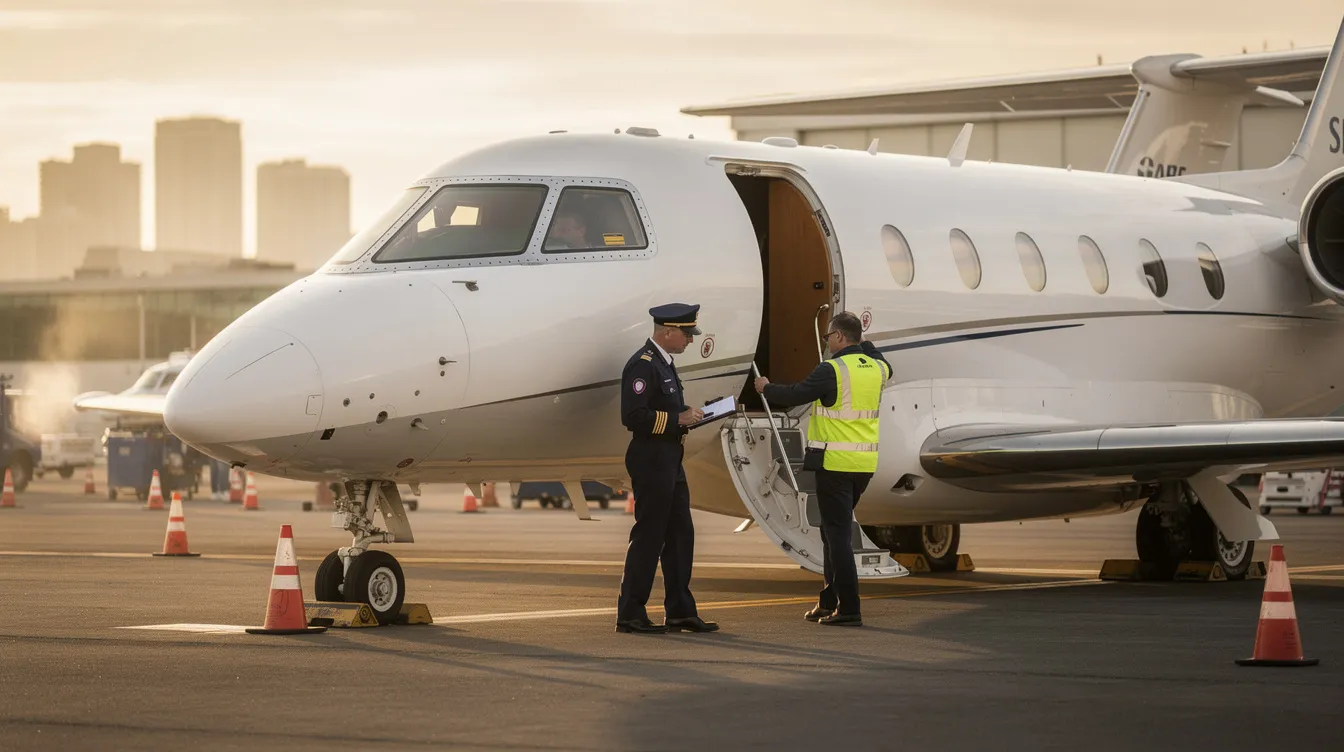
Step 4: Request and Compare Charter Quotes Transparently
Private jet pricing is quote-based. It changes according to route, dates, aircraft size, availability, repositioning needs, and market conditions, all of which are core to the broader meaning of charter flights and how they work.
When requesting a quote, provide:
Departure and arrival airports
Date and preferred departure time
Time flexibility
Passenger count
Baggage details, including skis, golf clubs, pets, or equipment
Catering preferences
Ground transportation requests
FBO preferences when multiple private terminals are available
The cost of chartering a private jet is typically calculated on an hourly basis, with prices influenced by the type of aircraft and the duration of the flight, leading to higher costs for larger jets and longer flights. When chartering a private jet, the cost is generally based on the size of the aircraft and the distance traveled, with larger jets and longer flights resulting in higher fees, and smaller missions often aligning with the frameworks used to estimate how much it costs to charter a small plane.
A private jet quote may include:
Aircraft hourly rate
Positioning and de-positioning fees
Crew costs and overnight expenses
Airport fees, landing fees, handling, and FBO charges
Federal Excise Tax and other taxes
De-icing, catering, permits, or customs fees if applicable
Peak days can change availability and pricing quickly. Major holidays, Super Bowl weekend, Art Basel, the Monaco Grand Prix, and last-minute ski-season departures often bring increased demand.
Do not compare only the headline number. Compare the aircraft age, cabin refurbishment, Wi‑Fi capability, safety ratings, baggage capacity, backup aircraft options, and included charter services. A cheaper quote may not be the best value if the aircraft is older, slower, less comfortable, or poorly positioned.
BlackJet’s quoting experience begins with instant digital estimates in the app, followed by a line-item, human-verified quote from a charter specialist who acts like a private jet broker, comparing available aircraft and coordinating quote details before booking. That combination gives clients speed and transparency while offering an alternative to longer-term structures like leasing a private jet through dedicated programs.
For example, a 2.5-hour light jet flight may be less expensive than a midsize option, but the midsize cabin may offer more luggage space, improved weather performance, better comfort, and fewer compromises for a group of six. In private aviation, the right aircraft is not always the lowest hourly rate.
Step 5: Confirm Your Charter Flight and Complete Payment
Once you approve the quote, the booking process moves to contract and payment.
A standard charter agreement typically covers:
Assigned aircraft or tail number
Departure and arrival details
Cancellation and change policies
Crew duty-time protections
Weather, ATC, or operational contingency language
Passenger manifest requirements
Payment terms
Aircraft options are usually held for a limited time, often around 24 hours. If the agreement is not signed and payment is not completed, the aircraft may be released back to the market.
Common payment methods include bank wire and credit card. BlackJet Jet Card members can simply deduct hours from their balance instead of managing per-trip invoices, similar in concept to other membership models such as NetJets jet card programs, and avoid many of the ownership costs like hiring and retaining private jet pilots.
Documentation matters. Domestic private charter flights usually require government identification. International flights require full passenger manifests, passport details, and visa considerations where applicable. If pets are traveling, documentation may include vaccination records, import rules, and breed-specific requirements.
This is also the stage to finalize:
BlackJet’s 24/7 operations team monitors every flight from contract signature through landing. If weather conditions, air traffic control, or mechanical issues require adjustment, the team can proactively evaluate alternate routings, revised timing, or replacement aircraft, whether you are chartering a small plane for a nearby hop or arranging private jet charters in Karachi and other global hubs.
Step 6: Prepare for Departure Day and Enjoy the Private Jet Experience
Departure day is where the difference becomes visible. Instead of the commercial terminal, you arrive at a Fixed Base Operator, commonly called an FBO.
Private jet charters operate out of Fixed Base Operators (FBOs), allowing passengers to arrive just minutes before departure, bypassing the long waits associated with commercial airline terminals. For domestic charter flights, many travelers arrive 20–30 minutes before departure. For international flights, plan slightly more time for passport, customs, and security requirements, especially if you are using shared options or buying a seat on a private jet instead of chartering the whole aircraft.
At the FBO, you can expect:
Private lounges
Discreet check-in
Luggage is handed directly to the crew
Faster screening
Direct ramp access where permitted
A car-to-aircraft experience at many airports
Private jet travel allows for significant time savings, as passengers can bypass long security lines and check-in processes, often arriving just minutes before departure. It also provides a level of privacy and comfort that surpasses commercial airline travel, allowing for personalized in-flight services and the ability to travel with pets or extra luggage, and even access innovative private jet rideshare options for shared seats on certain routes.
Chartering a private jet provides unparalleled flexibility, enabling travelers to set their own schedules and choose from a wider range of airports, including those not serviced by commercial airlines. It also allows travelers to set their own schedule, providing flexibility that commercial flights cannot offer, especially for accessing regional airports that airlines may not service.
Onboard, flying on a private jet offers enhanced comfort and privacy, allowing passengers to enjoy spacious cabins, personalized service, and the ability to conduct business or relax without interruptions. Depending on the cabin, expect tailored catering, Wi‑Fi for work, conference seating, lie-flat seats on longer missions, and a crew focused solely on your charter party.
BlackJet flights are carbon-neutral by default. Verified carbon offsets are used to address flight emissions, and optional Sustainable Aviation Fuel may be available in select locations. Sustainable Aviation Fuel can reduce lifecycle emissions substantially, although supply remains limited across the industry. Research published in Communications Earth & Environment has also highlighted rising private aviation emissions, which makes responsible flight planning increasingly important.
After landing, you can usually walk directly from the aircraft to the waiting car. There is no luggage carousel, no terminal crowd, and no scheduled routes dictating your next step. BlackJet may also share flight summaries and request feedback to improve future trips.
How Much Does It Cost to Charter a Private Jet?
Private jet charter costs vary widely by aircraft category, route length, passenger count, aircraft availability, and market conditions, aligning with broader benchmarks on how much it costs to rent a private jet. The key point is that charter flights are priced per aircraft, not per seat.
Typical 2026 hourly ranges include:
Turboprops: about $2,500–$4,000 per hour, with many travelers looking at the best small private aircraft for regional missions when deciding how to balance comfort and cost
Very light jets: about $3,500–$4,500 per hour
Light jets: about $4,500–$6,500 per hour
Midsize jets: about $6,500–$9,500 per hour
Super midsize jets: about $8,500–$12,500 per hour
Heavy jets: about $11,000–$16,000 per hour
Ultra-long-range jets: about $12,000–$25,000+ per hour, similar to the categories you would evaluate when exploring 12-seater private jet options and their costs
Charter costs vary significantly based on factors such as aircraft size, distance traveled, and the number of passengers, with short domestic flights for 5-9 passengers costing less than $1,000 per hour per passenger, while international flights may start at more than $10,000 per hour in total.
Example missions:
New York to Miami: often a light jet or midsize jet mission, depending on passenger and luggage needs.
Los Angeles to Aspen: aircraft selection depends heavily on airport performance, altitude, weather, and baggage.
London to Nice: a short European private charter where comfort, baggage, and airport access may matter more than maximum range, and illustrates how entries on a private jet price list translate into real-world trips.
Because the aircraft is booked privately, the cost per passenger improves for families, boards, executive teams, and large groups, especially when you start comparing private jet options sized for 15 passengers or more. A trip costing tens of thousands may be more efficient when six to nine travelers share the cabin and avoid overnight stays, missed meetings, or complicated airline connections.
Minimum usage can also affect pricing. Some aircraft have 1.5–2.0 hour daily minimums, even for short flights. Repositioning fees apply when the aircraft must fly empty to reach your departure airport or return to base.
Empty legs can lower costs on specific routes and dates, but they come with trade-offs. The schedule may change if the original charter changes, and cancellation terms can be restrictive.
Jet Cards help standardize billing in simple hourly blocks. For frequent flyers, BlackJet’s Jet Card model can protect against seasonal spikes, simplify budgeting, and provide access to the best aircraft category without repeated quote shopping, especially when you understand jet card pricing structures and how to compare the best jet cards for frequent flyers.
Chartering a private jet will nearly always cost more than commercial first class. The value lies in time saved, privacy, productivity, route control, and the ability to reach destinations not easily found on Google Flights, which is why many travelers evaluate whether chartering a private jet is worth it for their specific routes and schedules.
Safety, Technology, and Sustainability in Modern Private Aviation
Premium private aviation is built on three pillars: safety, technology-driven convenience, and responsible flight operations—considerations that also matter when evaluating 10 million dollar private jet ownership and access options.
Safety starts before the aircraft is offered. BlackJet evaluates operators, aircraft maintenance records, pilot credentials, flight crew duty time, and operational readiness. Jet operations commonly include two pilots, recurrent training, and real-time monitoring by our operations center. The goal is to ensure that every private jet charter flight meets BlackJet’s standards before departure.
Technology makes the experience faster and more transparent. Through BlackJet’s digital booking platform, clients can request quotes, review aircraft options, track flight details, manage Jet Card hours in a mobile wallet, and access charter specialists in-app 24/7. If a tech CEO needs to re-route mid-trip after a meeting moves from San Francisco to Seattle, BlackJet support can evaluate options without the client starting the booking process from scratch.
Sustainability is now part of serious private jet travel. BlackJet provides carbon-neutral flights through verified offsets and supports optional Sustainable Aviation Fuel where available. Many travelers also consider more efficient aircraft types, including the cheapest private jet options, to balance comfort, cost, and emissions. According to the International Air Transport Association, SAF is a key aviation decarbonization pathway, though current availability varies by airport and region.
Efficient aircraft selection also matters. Sending large cabin jets on short flights with two passengers may not be the most responsible choice when smaller aircraft can complete the mission safely and comfortably.
These standards distinguish a premium charter company from a lower-cost provider focused only on price. In private aviation, trust is not a feature. It is the foundation of the flight, even when you are exploring budget-friendly private aircraft options, reviewing leading private jet charter companies in the USA, comparing top global private jet providers and their models, or even browsing premium private jets for sale in the UK.

FAQ: How to Charter a Private Jet with BlackJet
How far in advance do I need to book a charter flight? For routine domestic travel, several days to two weeks is helpful. For holidays, major events, or international flights, book earlier for better aircraft selection and pricing.
Can I charter a private jet for large groups? Yes. Private jets typically carry 4 to 19 passengers, depending on configuration, and BlackJet can source larger aircraft for large groups when needed.
What is the difference between an on-demand charter and a Jet Card? On-demand charter is pay-as-you-go. A jet card provides prepaid hours, priority access, simplified billing, and predictable rates for frequent flyers.
What does a private jet broker do? A private jet broker helps match a traveler’s needs with suitable aircraft and charter options, compares availability, and coordinates the booking process. BlackJet helps clients source the right aircraft and manage charter arrangements based on trip requirements, schedule, and preferences.
Can I change my itinerary after booking? Often, yes. Changes depend on aircraft availability, crew duty limits, airport slots, and contract terms. BlackJet support is available before, during, and after every flight.
How much luggage can I bring? It depends on the aircraft. Some light jets have limited baggage space and may not fit excessive golf clubs, skis, or oversized equipment.
Can pets fly on a private jet? Yes, many private charter flights are pet-friendly. Advance notice is required, and international travel may require vaccinations, health certificates, or import documentation.
What identification is required? Domestic flights typically require government-issued ID. International flights require passports and any required visas.
When should I arrive at the FBO? For domestic departures, 20–30 minutes is often sufficient. International departures may require more time.
Are BlackJet flights carbon-neutral? Yes. BlackJet ensures carbon-neutral flights through verified offsets, with optional Sustainable Aviation Fuel available where supply permits.
How do BlackJet Jet Card hours work? Members purchase prepaid flight hours, then eligible trips are deducted from the balance instead of being billed as separate one-off invoices.
What happens if my plans change mid-trip? Contact BlackJet’s 24/7 team by app, phone, or email. Our operations specialists can review new routing, timing, aircraft availability, and operational constraints in real time.
Elevate Your Travel: Charter a Private Jet with BlackJet
Chartering a private jet is a practical tool for travelers who value time, discretion, control, and comfort. It removes the limits of scheduled routes, reduces friction at the airport, and gives you the ability to design air travel around your life rather than the other way around.
BlackJet brings structure to that freedom. With curated aircraft selection, rigorous safety oversight, carbon-neutral flights, Jet Card flexibility, digital booking tools, and real-time support, we make private jet access more seamless and more accountable.
Explore BlackJet’s private jet charter services, request a tailored quote, or speak with an aviation advisor about our Jet Card programs. Discover how BlackJet can redefine what it means to fly private - on your schedule, on your terms.
Conclusion: Experience the Strategic Advantage of Chartering a Private Jet with BlackJet
Chartering a private jet with BlackJet is more than a luxury—it is a strategic decision that elevates your travel experience through unmatched flexibility, safety, and personalized service. Whether for business or leisure, the ability to tailor every aspect of your journey—from aircraft selection to departure times and onboard amenities—translates into significant time savings and enhanced comfort.
Our commitment to rigorous safety standards, Federal Aviation Administration compliance, and independent safety audits ensures peace of mind on every flight. Meanwhile, our focus on sustainability with carbon-neutral flights and access to Sustainable Aviation Fuel reflects a responsible approach to modern private aviation.
Choosing BlackJet means gaining access to a premier global network of aircraft, expert support, and innovative digital tools that simplify booking and flight management. Elevate your travel—seamlessly and sustainably—with BlackJet’s private jet charter services and Jet Card programs. Discover how effortless private flight becomes when control, safety, and luxury converge on your terms.


 Sign up with google
 Sign up with Apple