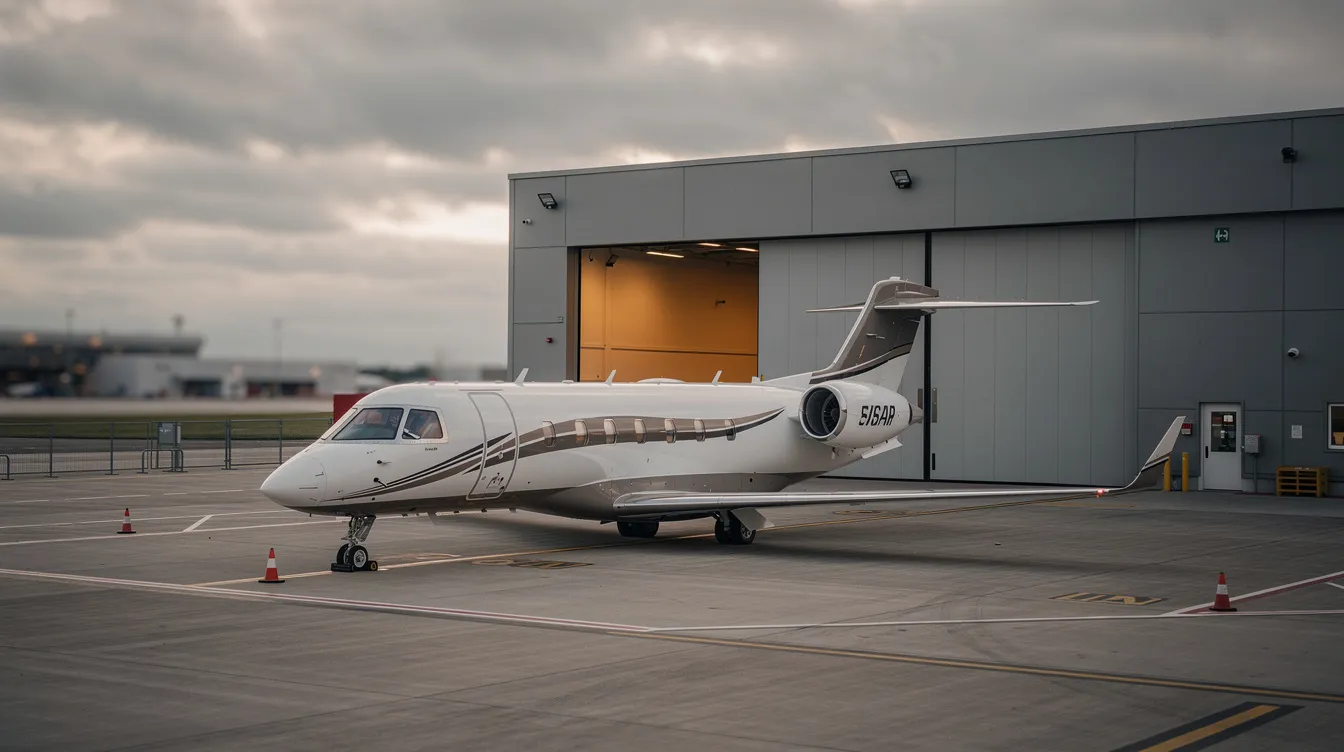
Private jet access is not simply luxury; for executives, families, and discerning travelers, it is control over time, exposure, and outcomes. Unlike commercial airports, which are publicly accessible and regulated, a private airport is a free and exclusive facility, independent from public control, designed for the use of oneself or a select group. This environment fosters a sense of belonging, offering personal space and privacy akin to private property. A private airport or FBO changes the equation: fewer people, faster movement, and more discretion.

Why Private Airports Are a Strategic Advantage, Not Just a Luxury
Commercial hub travel often requires 2–3 hours of ground time. At a private airport or FBO, passengers commonly arrive just 20–30 minutes before departure, saving time and reducing friction. Passengers using private airports often experience shorter wait times for security and boarding, enhancing the overall travel experience.
For a very private person, the advantage is deeper: private terminals protect private life from public view, cameras, queues, and unnecessary talk. Unlike the widely known and public nature of commercial airports, private airports offer a discreet and exclusive environment.
BlackJet Jet Cards and private jet programs turn this network into practical infrastructure.
Key advantages include:
Exceptional time savings and shorter wait times for security and boarding, enhancing the overall travel experience.
Scheduling flexibility for more personalized travel itineraries.
Absolute privacy, including control over who is on the aircraft.
Access to thousands of smaller airfields closer to final destinations.
Reduced executive fatigue and health risks associated with commercial travel environments.
Wider types of private jets for different travel needs and preferences.
What Is a Private Airport? Definitions, Facilities, and Access
A private airport is an airfield, runway, hangar complex, or private-use terminal that may be privately owned, located on private property, or operated separately inside a larger public airport.
Fully private airfields may be owned by a company, private individual, or organizations and are intended for the exclusive use of their owners or designated guests.
Private-use sections include FBOs such as Signature or Atlantic at major airports, intended to serve private jet travelers seeking dedicated services, including those exploring top affordable private planes and entry-level options.
Exclusive-use terminals are intended for members, operators, or clubs, providing tailored amenities and privacy, much like the structured access offered by the best jet cards for frequent flyers.
Facilities often include a private room, lounge, crew rest area, hangar, airside vehicle access, and security for a small group.
Examples include Teterboro, London Farnborough, and Van Nuys, along with specialist markets where premium UK private jets for sale make ownership near these hubs especially attractive.
Access is controlled by membership, flight plan verification, or prior permission; specific rules or permissions pertaining to each facility or operator mean a private person cannot simply walk in without an associated flight.
Language matters: private comes through Middle English from Latin privatus and Latin prīvātus, a past participle related to deprive, meaning separate from public use or state control. It can describe a private citizen, private school, private beach, private patient, private detective, private recipe, private soldier, or private capacity. In the army and Marine Corps, private can mean the lowest military rank, the lowest rank, the two lowest ranks, or the lowest enlisted ranks.
Privacy and Security: How Private Airports Protect Your Private Life
At a private airport, privacy is operational, not decorative.
Arrive curbside and move from car to aircraft in minutes.
Boarding is confidential, with no public announcements.
Staff manage identity checks without exposing a particular person publicly.
Private terminals are separated from the public terminal environment.
Vetted crews, certified operators, and regulated screening preserve safety.
Commercial first-class lounges still sit inside crowded public spaces.
A high-profile entrepreneur flying Teterboro to Opa-locka on a BlackJet 25-hour Jet Card can keep a private conversation, private meeting, family movement, and security detail off-radar.
For the private man, private individual, private citizen, or person who has private reasons to avoid public life, the value is practical. Whether she's retired, she's holding public office, she's involved in public affairs, or she's traveling with children, a private place can protect personal space without making the journey secret.
Private Property, Ownership, and Control: Who Really “Owns” a Private Airport?
Many private airport facilities are owned, leased, or operated by aviation companies, while runways may remain under an airport authority or public body. Government agencies still regulate airspace, safety, customs, and environmental rules.
Ownership structure and position:
Airport authority: holds the highest position, controlling runway rules, slots, curfews, and official operating limits.
FBO or terminal operator: occupies a key position in managing services, fuel, lounges, ground handling, and hangars.
Aircraft owner or Jet Card provider: has the position of coordinating aircraft, crew, passenger services, and member standards.
Traveler: holds the position of gaining access through membership, charter, or ownership, but does not have automatic property rights.
Private property status allows stricter privacy rules, confidential staff protocols, and controlled access affecting who enters the room, ramp, or aircraft.
Ownership Role | Responsibilities | Control Level |
|---|
Airport Authority | Runway rules, slots, curfews, operating limits | Highest |
FBO / Terminal Operator | Services, fuel, lounges, ground handling, hangars | High |
Aircraft Owner / Jet Card Provider | Aircraft coordination, crew, and passenger services | Operational |
Traveler | Access via membership, charter, or ownership | Access only, no property rights |
How BlackJet Uses Private Airports: Jet Cards, Aircraft Types, and Scheduling
BlackJet Jet Card programs, including 25-hour and 50-hour options, provide prepaid private jet access through curated private airports and FBOs, where staff and crew are engaged in private employment rather than public or governmental employment, and follow a transparent jet card pricing structure for predictable costs.
Book through 24/7 digital web or app tools.
Choose airports near home or office, such as Farnborough over Heathrow.
Private aviation grants access to over 5,000 public and private airstrips in the U.S., which can be leveraged with the cheapest private aircraft and budget-friendly options, as well as with larger cabin jets.
Small private jets and light jets suit regional trips, and a dedicated guide to the best small private aircraft can help align aircraft choice with mission and budget.
Understanding private jet sizes shows how mid-size and super-mid jets suit coast-to-coast or intra-Europe travel and what it means when evaluating the cost of a 12-seater private jet.
Largest private jets and large-cabin jets support transatlantic routes, overlapping with many of the top 10 private jets in the world favored by global travelers.
Private jet cabins serve as flying boardrooms equipped with Wi-Fi and spacious seating, especially when flying higher than commercial aircraft for smoother, more direct routes, a hallmark of many 15-passenger private jet options.
BlackJet partners with certified operators, reviews pilot qualifications, and prioritizes third-party safety ratings, reflecting the realities of private jet safety standards.
BlackJet flights are carbon neutral through offsets and sustainable aviation fuel, where available, a sustainability focus that also underpins emerging affordable private plane rideshare options.
Example: a corporate team books a BlackJet 25+ Hour Jet Card flight from a Bay Area private airport to Austin, schedules multiple legs in one app session, and lands closer to the investor meeting.
Experience at a Private Airport: What the Journey Actually Looks Like
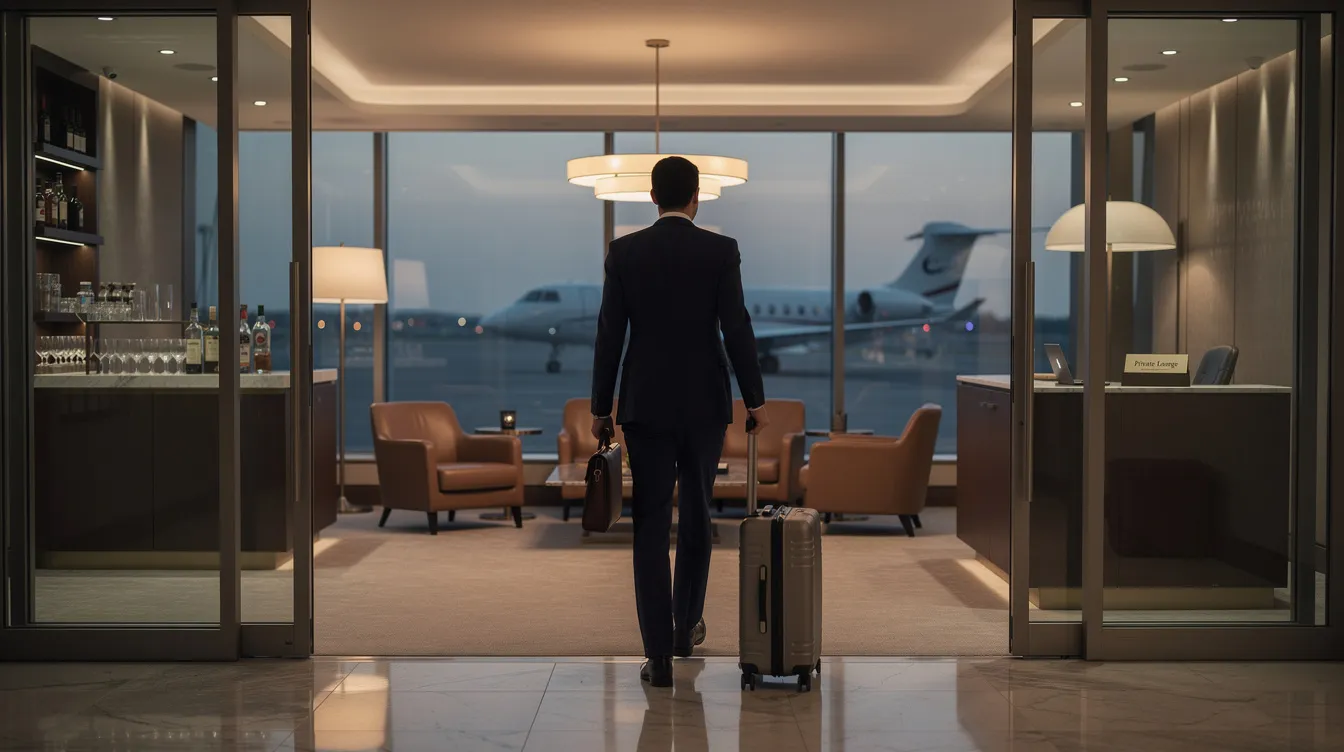
You arrive at the FBO, meet one staff member, confirm ID, and enter a quiet lounge with Wi‑Fi, refreshments, showers, business services, and a private bathroom. Minutes before departure, you are escorted directly to the jet.
Checklist:
Car arrival at the FBO.
Check-in and light screening.
Quiet lounge or private room.
Airside escort.
In-flight work or rest.
Arrival and direct ground transport.
Cost, Convenience, and Alternatives: Private Airport vs. Jet Ownership, Charter, and Commercial
Private airports can be used through ownership, charter, Jet Card membership, or premium commercial travel, each with its own private jet price structures and options, and understanding the cost to charter a small plane helps clarify how aircraft type, distance, and fees shape the overall investment.
Ownership: maximum control, but acquisition, crew, maintenance, insurance, hangar costs, and even leasing a private jet, compared with chartering a private jet and its value.
Charter: flexible, but trip-by-trip pricing can vary; affordable private jet options and a clear view of how much it costs to rent a private jet can mitigate overall spend.
Jet Card: prepaid hourly access, known standards, and fewer surprise surcharges, complementing other ways to buy a seat on a private jet and the broader guide to jet card costs and membership pricing.
Commercial: lower seat cost, but less privacy and flexibility than leading private jet companies for luxury travel, especially in regions with distinct pricing, such as those outlined in this guide to private jet prices in rupees.
Landing fees at private airports can vary significantly, typically ranging from $100 to $1,000 depending on the airport and the size of the aircraft, with costs scaling further for private jets carrying up to 50 passengers and even larger charter planes for around 100 passengers. Membership costs for private airport services can range from a few thousand dollars to over $20,000 annually, depending on the level of service and benefits provided. Some private airports charge additional fees for services such as fuel, hangar space, and ground handling, which can add to the overall cost of using these facilities.
Safety, Certification, and Sustainability at Private Airports
The experience may feel effortless, but private aviation is highly regulated.
BlackJet works with certified operators that meet or exceed industry standards, including providers operating private jets suitable for around 20 passengers and the best private jets for around 15 passengers.
Maintenance records, crew training, and duty-time limits are reviewed.
Weather minima and aircraft suitability guide dispatch decisions.
Ground safety includes runway maintenance, de-icing, fueling rules, and authority coordination, which become even more critical when handling private jets for around 30 passengers or other top 16-seat private jet options.
Sustainability is built in through carbon-neutral flights.
Emissions are calculated by aircraft type, distance, fuel burn, and passengers.
SAF is prioritized where available at leading private airports, including key hubs like those used for private jet charters in Karachi and private jet charters in Lahore.
FAQ: Private Airports, Private Life, and BlackJet Jet Cards
Can a private person land at any private airport with BlackJet?
Not always. Access depends on runway length, slots, operating hours, aircraft type, and PPR rules.
How far ahead should I book?
Some flights can be arranged same-day; complex international routes usually need more planning.
Is my identity confidential?
Yes. Passenger information is handled discreetly and is not publicly broadcast.
What documents are needed internationally?
Passports, visas, customs information, and flight permits may be required.
Are private airports safer or just convenient?
They are both. Less congestion improves flow, while aviation regulations remain strict.
How is flightcarbon-neutral?
BlackJet funds verified offsets and uses SAF where practical.
How do private property and private terminals protect my private life?
Controlled entry keeps the group, media, and general public away from the journey.
How to Choose the Right Private Airport and Join BlackJet
Choose by proximity, runway length, customs availability, aircraft compatibility, operating hours, and privacy level. BlackJet advisors and digital tools help compare options so a neighbourhood airport may be more useful than a major hub.
To join, begin with a consultation, select a 25-hour or 50-hour Jet Card, fund the card, and access BlackJet booking and real-time support.
Call to Action: Elevate Your Private Travel with BlackJet
Discover how BlackJet can turn private airports into your personal, on-demand network. Redefine travel on your terms with Jet Card access, rigorous safety standards, carbon-neutral operations, and the private satisfaction of moving through the world with discretion.
Conclusion: The Ultimate Private Airport Experience with BlackJet
Private airports are far more than exclusive locations—they represent a strategic advantage that transforms travel into a seamless, secure, and personalized experience. For the individual person seeking control over time, privacy, and comfort, BlackJet’s Jet Card programs unlock access to a curated network of private airports and terminals, combining premier safety standards, sustainability, and technological innovation.
By choosing BlackJet, travelers gain not only exceptional convenience and flexibility but also the assurance that every journey respects their private life and privacy. Whether flying for business or leisure, the ability to land closer to your destination, avoid public crowds, and operate within a trusted, certified ecosystem elevates private aviation beyond luxury into essential efficiency.
Explore how BlackJet can reshape your travel—where private airports become your gateways to freedom, discretion, and effortless sophistication. Join our Jet Card program today and experience private flight on your terms.


 Sign up with google
 Sign up with Apple