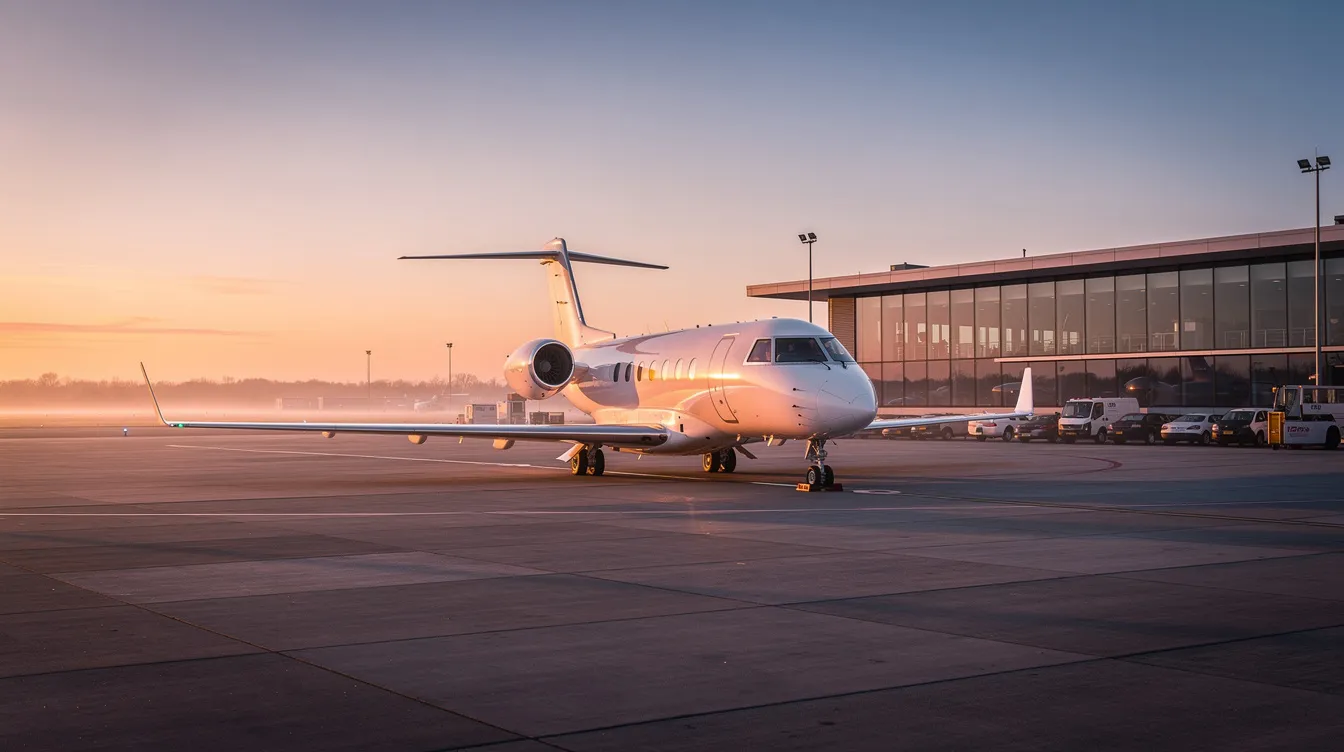
Purchasing a private jet is not simply a luxury decision. It is a strategic choice about time, privacy, control, and capital. This guide explains private jet ownership, the true cost of owning, and when BlackJet jet cards may deliver the same access with less complexity.
Why Private Jet Access Is a Strategic Advantage (Not Just a Luxury)
A private jet can save 2–4 hours per trip versus commercial aviation by using private terminals, direct routing, and smaller airports closer to your destination. A New York–Los Angeles round trip in commercial first class may involve 10–12 door-to-door hours, while a private flight can reduce that to roughly 6–7 hours, with secure productivity and fewer interruptions.
Key advantages include:
Owning a private aircraft provides enhanced privacy, allowing you to conduct important discussions securely and enjoy personal time without unwanted attention.
Private jet ownership offers unmatched convenience, enabling you to travel according to your schedule without the constraints of commercial flight times.
Owning a private jet allows for a customizable travel experience, where you can tailor the interior and in-flight services to your personal preferences.
Private jets provide access to remote locations that are often difficult to reach via commercial flights, allowing for direct travel to smaller airports closer to your destination.
CEOs, investors, families, and owners with complex schedules gain freedom, security, and the ability to protect valuable time.
BlackJet offers premium private jet cards and jet card programs as a flexible alternative to full ownership, with access to multiple private jets and cabin classes without the capital burden.
Is Owning a Private Jet Right for You? Key Thresholds and Use Cases
Full private jet ownership usually makes sense above about 200–300 flight hours per year. The industry breakeven for whole aircraft ownership versus fractional programs is generally accepted at 200 to 250 hours annually; below that threshold, fractional access is typically more economical, so reviewing a broader private jet price list and access options is essential.
Consider ownership if you are:
A founder shuttling weekly between New York and Miami.
A family office managing Europe–U.S. travel needs.
An athlete or entertainer with changing tour operations.
A business leader who requires complete availability and predictable crew standards.
Before deciding, review 24–36 months of travel:
Routes and shorter distances versus long-haul missions.
Passenger counts and comfort preferences.
Average trip length, passenger capacity, airport accessibility, and runway capabilities.
Expected future use by flight hour.
Ownership is logical when utilization is high, and control is essential. Fractional ownership works when usage is moderate. Jet cards and on-demand charters provide private travel without the commitment of ownership, making them suitable for those who fly occasionally.
Understanding Private Jet Ownership Models
There are four access models: on-demand charter, jet cards, fractional ownership, and full ownership. BlackJet specializes in jet cards, sitting between pay-per-flight charter and equity-based fractional ownership, helping travelers decide whether purchasing a private jet is necessary and how the different types of private jets for every traveler align with specific missions.
Full Private Jet Ownership
Full ownership means you own the aircraft title and assume the purchase price, ongoing costs, crew salaries, hangar fees, insurance, maintenance, and management.
Full ownership of a private jet provides complete control and availability, making it ideal for frequent travelers who value flexibility.
In 2025–2026, light jet acquisitions may run $3M–$8M, super midsize $10M–$25M, and larger jets $30M–$75M+, and buyers with smaller budgets can explore 2 million dollar private jet options in the preowned and personal-jet categories.
Benefits include schedule control, custom interiors, new paint, branding, technology, and selected pilots.
Drawbacks include depreciation, capital tied up, regulatory oversight, and long-term maintenance.
Under roughly 200 hours per year, compare jet ownership against BlackJet’s jet cards before you invest.
Fractional Ownership
Fractional ownership allows multiple owners to share the costs and usage of an aircraft, making it a more affordable option for those who do not fly frequently enough to justify full ownership, and it can complement leasing a private jet through structured programs for additional flexibility.
Shares such as 1/16 or 1/8 commonly provide 50–100 hours annually.
Costs include an initial share purchase price, monthly management fees, occupied hourly rates, and thoughtful planning for fractional jet ownership depreciation and its tax implications.
Pros include guaranteed windows, professional safety oversight, less capital than aircraft ownership, and potential tax benefits of fractional jet ownership when structured correctly.
Cons include 3–5 year contracts, repositioning fees, peak-day fees, and less flexibility than jet cards.
Jet Cards
Jet cards are prepaid blocks of private jet time, such as 25-hour jet cards and their features and costs, or 50-hour jet card programs with detailed pricing like BlackJet Jet Cards.
BlackJet provides access to light, midsize, super midsize, and large-cabin aircraft.
Members receive 24/7 mobile booking, real-time support, safety-vetted operators, and carbon-neutral flights, mirroring many of the benefits outlined in the best jet cards for frequent flyers.
Jet cards suit travelers flying roughly 25–150 hours per year who want predictable availability without owning a jet, and understanding jet card cost and membership pricing alongside a broader view of jet card cost per hour across programs helps clarify how they compare to ownership or charter.
For many, the total value is not just lower costs, but no resale risk, no hangar burden, and no bot-like booking maze.
On-Demand Charter
Selecting the Right Private Jet: Sizes, Missions, and Example Models
The right aircraft depends on range, passengers, runway performance, and mission type. Even BlackJet members benefit from understanding cabin categories because each trip may require a different jet model, from a Cessna Citation to a Gulfstream, so a clear view of private jet sizes and cabin classes is useful.
Very Light and Light Jets
Very light jets (VLJs) are designed for short trips, typically covering about 1,000 miles and accommodating four to six passengers, making them some of the cheapest private aircraft options for efficient regional travel and among the best small private aircraft for flexible missions. Small jets in this category also exemplify many of the small private jets' luxury travel options available to owners and charter clients.
Light jets can travel approximately 1,500 to 1,900 miles and usually seat seven to eight passengers, featuring amenities like a private lavatory and limited electronics.
Examples include the Cessna Citation Mustang, Embraer Phenom 100, Cessna Citation CJ3+, and CJ4.
Advantages include lower fuel burn, lower operating costs, and access to regional airports.
Limitations include tighter cabins, limited baggage, and shorter non-stop range.
For regional hops under two hours, a 2012–2018 pre-owned Citation CJ series can offer strong value.
Midsize and Super Midsize Jets
Midsize jets are suitable for longer trips, ranging from 2,000 to 3,000 miles and seating five to ten passengers, often equipped with spacious cabins and productivity features.
Examples include Hawker 800XP and Citation XLS+.
Super-midsize jets can cover distances of approximately 3,200 to 3,600 miles and typically seat eight to ten passengers, offering luxurious amenities and in-flight comfort options, which overlap with many 12-seat private jet configurations and cost profiles, and even larger 16-seat private jet options for ultimate comfort and convenience.
Examples include Citation Sovereign, Citation Latitude, Gulfstream G280, and Challenger 350.
A BlackJet client might fly 30 times per year between New York, Dallas, and San Francisco using a super midsize aircraft.
In the pre-owned market, 8–12 year old super midsize aircraft can balance performance and purchase price, but require a thorough pre-buy inspection.
Heavy and Ultra-Long-Range Jets
Heavy or ultra-long-range jets are designed for extended intercontinental trips, seating nine to sixteen passengers and capable of flying between 4,000 and 7,500 miles, giving travelers access to destinations around the world, with some ideal private jet options for 15 passengers when you need more seats.
Examples include Bombardier Global 6000 and Gulfstream G550, while certain VIP-configured airliners serve as the best private jet for 20 passengers when very large groups are involved.
They suit New York–London, Los Angeles–Tokyo, and Dubai–Singapore, and similar large-cabin platforms can be configured as top private jets for 30 passengers for corporate or entertainment travel.
Features include full galleys, crew rest, conference seating, lie-flat beds, and multi-zone cabins, with the largest VIP airliners offering private jet options for 50 passengers, complete with lounges and private suites.
These aircraft carry substantial ongoing costs, so BlackJet members often request large-cabin access only when the mission requires it.
The True Cost of Purchasing a Private Jet
The sticker price is only part of the true cost. Aircraft prices can range significantly, from approximately $3 million to over $90 million, necessitating budgeting for both fixed and variable costs. The purchase price of a private jet can range from $2 million to $100 million, depending on the model and whether it is new or pre-owned, and some buyers start by comparing the cheapest private jet options available or evaluating the best features of a 5 million jet before committing to higher tiers.
Aircraft Purchase Price and Acquisition Process
Preowned light jet: roughly $3M–$6M, sitting within the bracket of top private jets for sale under 10 million, while a new or nearly new model may resemble the top features of a 15 million dollar private jet.
Super midsize: roughly $8M–$20M, aligning with several 10-million-dollar private jet options for luxury travelers.
New heavy jet: often $40M–$75M+, while select large-cabin models illustrate the best features of a 20 million dollar private jet in terms of technology, comfort, and range.
New jets typically offer manufacturer warranties, modern avionics, and customization, but come with a higher upfront price.
Deciding between a new or pre-owned jet impacts maintenance, technology, and upfront costs, and many buyers begin by reviewing the best small private aircraft for different missions before moving into larger categories.
Pre-owned jets have a lower initial purchase price but require careful evaluation of engine logbooks, damage history, and upcoming major overhauls, especially when comparing them to the top 10 best private jets in the world and their latest-generation features.
It is essential to check if the engines of a private jet are enrolled in manufacturer-backed maintenance programs, and whether the APUs' enrolled status is current.
A pre-buy inspection is crucial and usually takes three to five days, producing a squawk list that can lead to price renegotiation or deal termination if serious issues are found, particularly in competitive markets such as premium UK private jets for sale.
A pre-buy inspection often costs $25,000–$80,000+ and includes structural checks, engine borescope, corrosion review, and avionics verification, which is especially important when evaluating 2-million-dollar private jet candidates in the pre-owned market.
Buying a private jet is a complex process involving millions of dollars and strict aviation regulations.
Purchasing a private jet requires a careful evaluation of your travel mission, total cost of ownership, and aircraft specifications.
Define exactly how you plan to use the aircraft to narrow down your options.
The process of buying a private jet typically runs 60 to 120 days, starting with mission analysis and budget definition before browsing listings.
A specialized team is required for purchasing a private jet, including an aviation broker, an aviation tax attorney, and a maintenance inspector.
Use an experienced broker, an independent technical advisor, and aviation counsel.
Lenders typically require a 15% to 20% down payment for aircraft-specific loans, along with a review of financial statements.
Buyers should engage their lender before making an offer to avoid delays in loan approval that can disrupt the closing timeline after the pre-buy inspection.
Closure of a private jet sale involves escrow services, final title searches, and registration processes.
Additional costs include legal work, tax planning, ferry flights, interior refurbishment, repainting, and possible Gulfstream Savannah service coordination.
Ongoing Costs of Private Jet Ownership
Significant ongoing expenses for private jet ownership include fixed costs and direct operating costs, all of which factor into any realistic private jet pricing and cost comparison and into broader jet card pricing guides that explain costs and benefits.
Fixed costs related to private jet ownership include hangar fees, crew salaries, insurance, and recurrent pilot training. Other fixed costs include subscriptions, connectivity, navigation data, a hangar or tie-down, and management fees.
Direct operating costs for private jets include fuel, landing fees, and hourly maintenance reserves. Variable costs also include handling fees, catering, de-icing, crew travel, and carbon offsets.
Annual fixed costs for owning a midsize jet typically range from $800,000 to $1.2 million, while variable costs can add $2,200 to $2,800 per flight hour. Ongoing costs for private jet ownership can vary widely, with general estimates for annual recurring costs ranging from $500,000 to $1,000,000, influenced by the aircraft’s age and condition.
Older aircraft may lower upfront investment but increase fuel burn, maintenance reserves, parts delays, and ownership risk.
Summary Table: Estimated Costs of Private Jet Ownership by Aircraft Category
Aircraft Category | Purchase Price Range | Annual Fixed Costs | Variable Costs per Flight Hour | Typical Passenger Capacity | Typical Range (Miles) |
|---|
Very Light Jets (VLJ) | $2M – $5M | $500,000 – $800,000 | $1,200 – $1,800 | 4 – 6 | ~1,000 |
Light Jets | $3M – $8M | $700,000 – $1,000,000 | $1,800 – $2,500 | 7 – 8 | 1,500 – 1,900 |
Midsize Jets | $5M – $15M | $800,000 – $1,200,000 | $2,200 – $2,800 | 5 – 10 | 2,000 – 3,000 |
Super Midsize Jets | $8M – $25M | $1,000,000 – $1,500,000 | $2,800 – $3,500 | 8 – 10 | 3,200 – 3,600 |
Heavy / Ultra-Long-Range Jets | $30M – $90M+ | $1,400,000 – $2,500,000 | $3,500 – $5,000+ | 9 – 16 | 4,000 – 7,500 |
Safety, Compliance, and Environmental Impact
Safety and sustainability are non-negotiable in modern private aviation. For owners, these responsibilities shift to the owner and the management company. BlackJet partners only with operators meeting rigorous safety standards and delivers carbon-neutral flights as standard.
Regulatory and Safety Responsibilities
Jet owners must comply with FAA, EASA, or local aviation authority rules, including maintenance schedules, airworthiness directives, and crew training. The FAA aircraft certification framework shows how detailed this oversight can be.
Owners should:
Work with certified management for dispatch, SMS, audits, and operations.
Plan for A, B, C, and D checks that affect availability and cost.
Understand owner liability under private or commercial rules.
Understand tax depreciation benefits and aviation staffing and safety regulations.
Confirm pilots, crew, and maintenance providers have the right resources and certifications.
BlackJet centralizes operator vetting, audit standards, and support to protect passengers without requiring them to operate an aircraft.
Sustainability and Carbon-Neutral Flying
Private aviation faces scrutiny because emissions per passenger can exceed commercial flight emissions. Studies reported by Phys.org note sharp growth in private-jet carbon output.
Mitigation options include:
Sustainable Aviation Fuel, where available.
Carbon offset programs.
More efficient aircraft selection.
Longer average stage lengths.
Transparent reporting for corporate accounts and ESG needs.
BlackJet provides carbon-neutral flights by default, with offset methodologies designed for modern sustainability expectations.
Alternatives to Full Ownership: When a Jet Card Makes More Sense
Many travelers attracted to private jet ownership achieve better economics with a premium jet card. The key factors are annual flight hours, aircraft-size flexibility, tolerance for capital lock-up, and desire to avoid operational complexity, especially when evaluating whether a larger 100-hour jet card cost structure matches long-term flying needs.
For example, owning a pre-owned super midsize jet for three years may involve acquisition capital, depreciation, insurance, crew salaries, hangar fees, fuel, maintenance, and resale risk. A 50-hour-per-year BlackJet Jet Card can provide comparable mission access for substantially less total exposure, especially when business cycles shift, and comparing it with NetJets jet card cost and program structures can help benchmark overall value.
BlackJet also removes downtime risk during heavy maintenance and provides effortless booking through its mobile platform, while travelers comparing models may also look at how much it costs to rent a private jet for individual trips or even how to buy a seat on a private jet via shared and semi-private options.
How to Move Forward: From Evaluation to Your First Private Flight
Begin by preparing a 12–24 month forecast: monthly New York–Palm Beach, quarterly London–Dubai, family holidays, and board meetings. Then compare ownership, fractional ownership, jet cards, and charter side by side.
A conversation with BlackJet can model your routes against projected jet ownership costs. If you ultimately buy, BlackJet can still provide supplemental lift during maintenance downtime or special long-range trips through programs like the BlackJet 25+ Hour Jet Card.
Elevate your travel effortlessly. Explore BlackJet’s Jet Card programs for premier private jet access with safety, sustainability, flexibility, and freedom built in.
Conclusion: Making the Right Choice for Your Private Jet Journey
Purchasing a private jet is a significant strategic investment that transcends luxury—it is about reclaiming time, enhancing privacy, and gaining unparalleled control over your travel. Whether full ownership suits your needs or a BlackJet jet card provides flexible access without the complexities of ownership, understanding your travel patterns, mission requirements, and financial considerations is essential.
With rigorous safety standards, carbon-neutral flight options, and a range of aircraft sizes and ownership models, BlackJet empowers discerning travelers to elevate their journeys effortlessly. Begin your private aviation experience with confidence—explore how BlackJet’s premium Jet Card programs can offer you seamless access to the world’s most exclusive travel, tailored precisely to your lifestyle and ambitions.
Elevate your travel—effortlessly. Discover how BlackJet can reshape your private flight experience today.


 Sign up with google
 Sign up with Apple